Catching the Bus Along the Amalfi Coast, Italy.

We had booked four full days in Sorrento with the thought that we would use it as a base to see the Amalfi Coast.

Sorrento is not actually on the Amalfi Coast, it sits on the northern side of the peninsula and the AC runs along the south side. On the map below you can see Naples in the north, Mount Vesuvius and Pompeii in the middle and then the route the bus takes from Sorrento to Amalfi. To go from Sorrento all the way to Salerno to see the whole Amalfi Coast takes two buses and about 3.5 hours – you have to change at Amalfi. Amalfi is also where the buses leave to climb up into the hills to reach Ravello.

Screen Shot 2018-07-20 at 4.49.08 pm

Although it is not far in a straight line from Sorrento to Amalfi or onwards to Salerno, the route is incredibly twisty-turny and the road hugs the cliffs. On our second day in Sorrento we bought the ten euro day pass and caught the 6:30am bus to Amalfi where we stopped for a hearty and not-at-all-Italian breakfast.
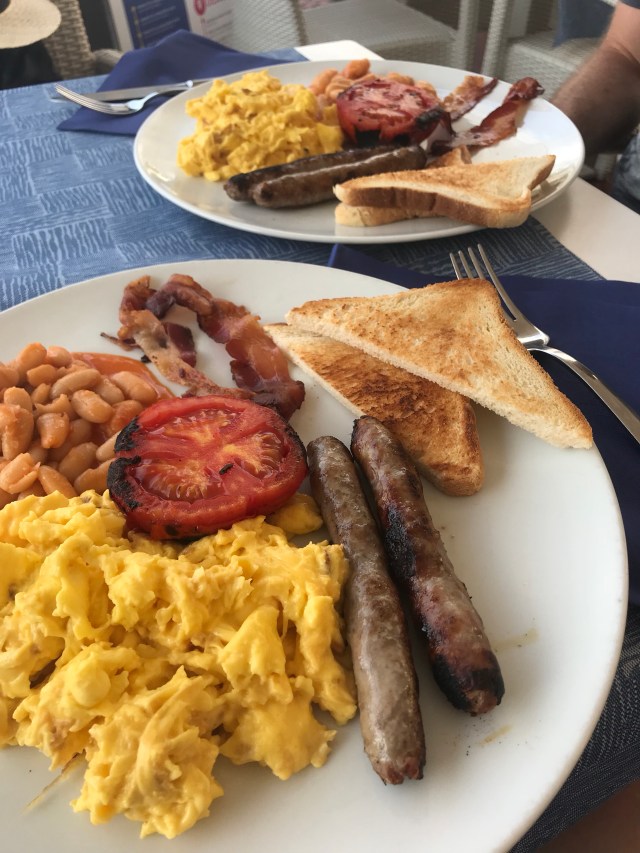
Then we continued on to Salerno and then back, stopping in Amalfi for lunch. While the first bus was less than half full when we set off at 6:30, it was standing room only before it got to Amalfi and every bus thereafter was full to the absolute limit, often turning away customers.

Just being on the buses along the route is an experience. The buses have a very loud and distinctive horn that they blast before all the sharp bends in the (often vain) hope that people will stop in an appropriate place so the bus can make it around the turn without having to stop. Usually people either don’t know what to do or don’t care and come on anyway, which means that they then have to reverse back around a corner. Traffic builds up so quickly that it sometimes takes quite a while for people to make enough space for the bus to move forwards and clear the road.

Frequently people have parked along the side of the narrow road, making the bus driver’s job even harder. There are tow-away signs all over but no-one seems to care.

People also seem to dump rubbish, either in bags or just in pieces, along the road and it’s kind of infuriating that Italians (and tourists I guess?) don’t seem to respect the unbelievable heritage and natural beauty they’ve been given – and on the other hand, if you’ve been elsewhere in Italy you just have to shrug and acknowledge that it could be so much worse.

The coastline is stunning. Easily one of the world’s most dramatic and beautiful and enhanced by the ancient towers that dot the promontories, built over a thousand years ago to watch out for Saracen and Turkish raiders. The houses and hotels lean vertiginously over cliff edges and lemon and olive groves cascade down mountainsides.

Positano is the most steep, the oldest, and possibly most picturesque of the seaside towns.  We didn’t get off the bus in Positano but it is easy to admire from the road.
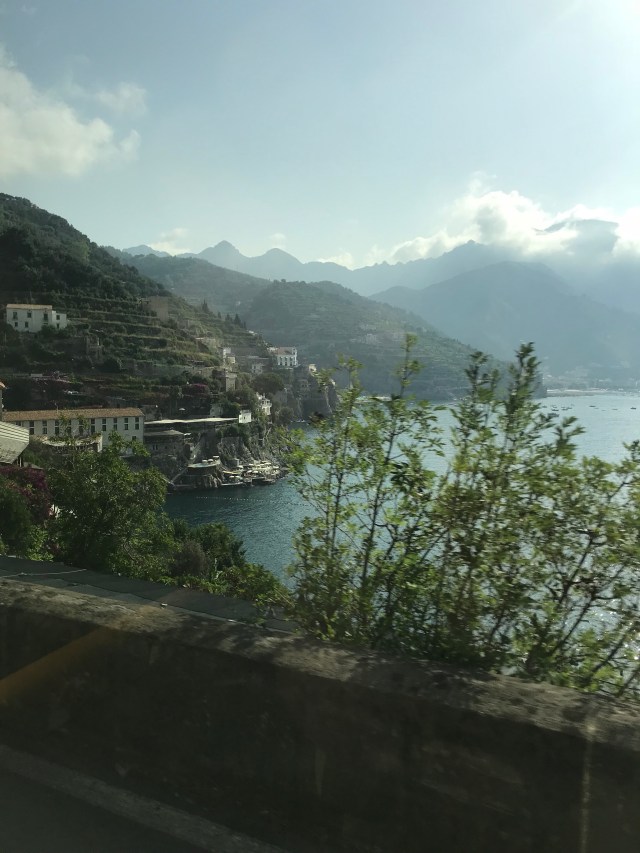
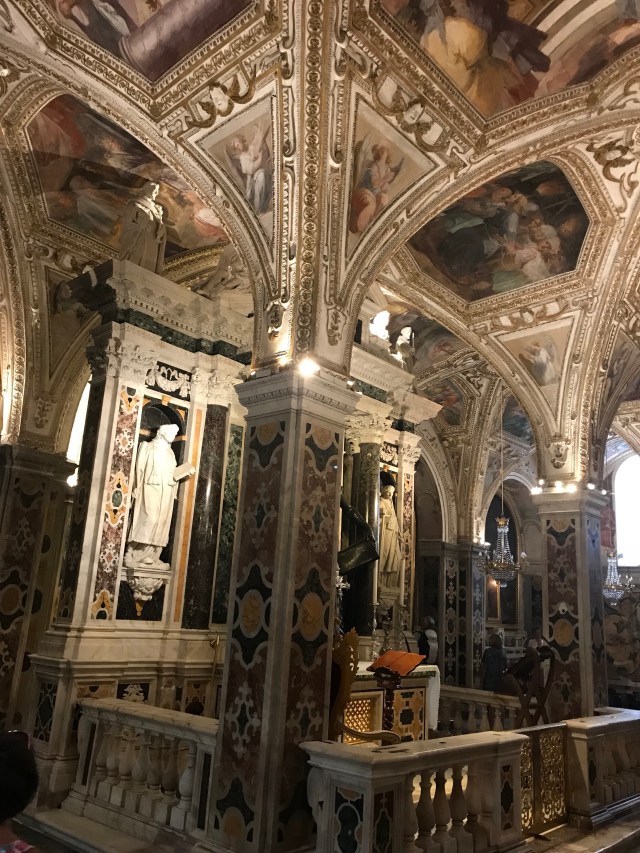
We spent some time looking around Amalfi and particularly at the cathedral, which is very grand for such a small place – this is because Amalfi was once a maritime hub, so powerful it minted its own coins. It was devastated by a tsunami and plague centuries ago but signs of its past wealth remain.

In all the towns along the coast beaches are divided into sections. The largest is for the people who rent loungers for the day and a much smaller part is sectioned off for people who just want to lay a towel down. I find this process offensive – beaches should be for everybody, not a select few, but at least in Amalfi people can put their towels down even between the loungers if there’s space.

Admittedly Luke and I didn’t swim at any of the beaches. Apart from the beaches consisting of boiling hot grey pebbles or grit, it is hard to enjoy a beach when there are only two of you. There’s no way we’d leave our bags unattended which means only one of us could get in the water at a time.

Fortunately Luke did some research and found that were at least three hotels in Sorrento that would let non guests use their pools for a fee. We found the Hotel Central was cheapest and enjoyed several cocktails and a peaceful swim in their small and quiet pool. Happy days!

Luke loves the blue drinks!

Also check out the little awning on the beach chairs here! You’ve probably all seen this before but I thought it was nifty. More useful if the chair is actually in the sun but you get the idea.

So, we spent one of our days in Sorrento travelling the length of the coast, then our last full day saw us head back to Amalfi, again on the 6:30am bus, to catch the next bus to Ravello. Obviously the next Ravello bus departed just as our bus pulled in (because Italy) so we waited for half an hour then managed to grab a seat. The ride up to Ravello is perhaps less hair-raising than the drive along the cliffs but the road is even narrower in places (at one point it is only one car wide) and the hairpin bends are even more tight.

Ravello town square.

We had breakfast and a wander around Ravello, looking at the Cymbrone Gardens (where parts of Wonderwoman were filmed) and admiring the views of the hills from higher up before heading back to the bus.

There was a huge crowd waiting to catch the bus back and Luke made it on before the bus driver cut everyone off. I called out ‘my husband!’ and pointed to Luke and the driver kindly let me board last. This meant I had to sit right next to the bus door with my back pressed against the front window and leaning against it so the driver could see his mirrors.

Going through a tunnel backwards in a bus.

Going through a tunnel backwards in a bus.

It was kind of fun in a white-knuckled way and an older lady in the front seat kept smiling and grimacing understandingly at me when we sped up or turned a tight bend. When people got up to get off towards the end of the route everyone was very courteous about making space and letting older people sit down, as well as letting the driver know what was going on at the back door of the bus.

By the time we got back to Amalfi to catch our last bus to Sorrento there was a huuuuuge group of people waiting in the bus bay and so I went off to investigate other options and we ended up deciding to pay an extra ten euro to buy a seat on the private ‘city explorer’ bus (you know those red ones you see in major cities) that only sold enough tickets to fill the seats. No standing room and better aircon. Totally worth it!
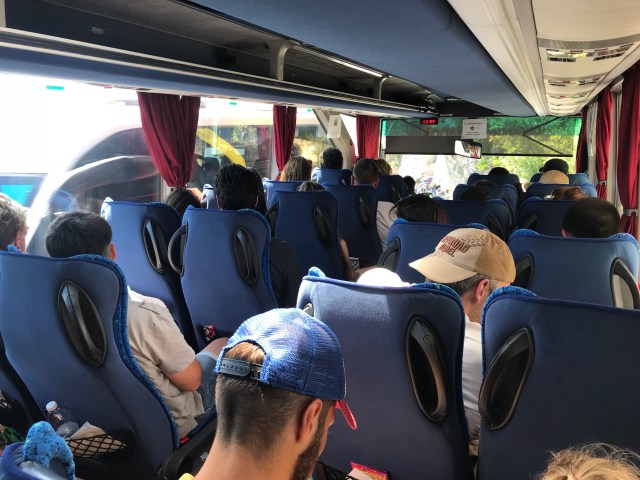
Catching the buses along the Amalfi Coast is quite an experience and can be exhausting. There are big scrums, people push and shove a bit and it’s frustrating if you don’t know precisely where the bus stop is. Staying in Sorrento worked out well as we were at the beginning of the line and therefore always got a seat in the mornings – important when the ride is nearly two hours long.

If you’re thinking of visiting the area and catching buses my advice would be to go out of season. Of course if you enjoy combat sports and the smell of sweaty strangers and bus exhaust fumes then by all means go in Summer!

The lady with the red bag kept my spirits up;-)

The driver who let me ride shotgun. He looks so relaxed!

Perfectly suited to a full size bus.
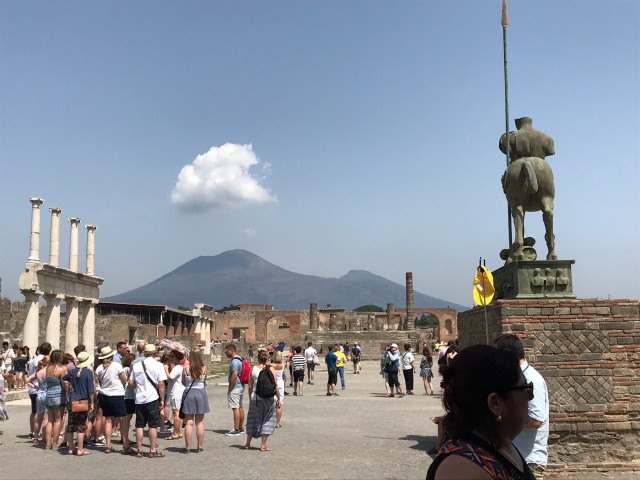
Naples to Sorrento Via Pompeii

Due to our Airbnb host getting back to us rather late on the morning we left, we were not able to take an early train to Pompeii.

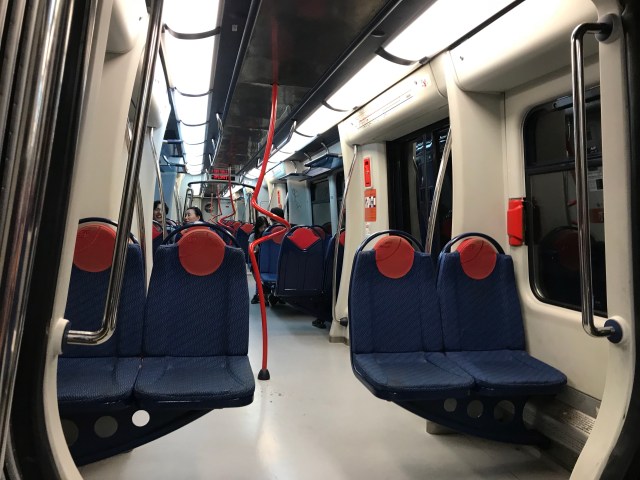
We arrived at the main station in Naples at about 10am to find the platform rammed with people waiting for the notorious Circumvesuviana, the private train that runs around Mount Vesuvius from Naples to Sorrento, stopping at Pompeii Scavi (scavi means ‘ruins’) and about 30 other stops along the way.

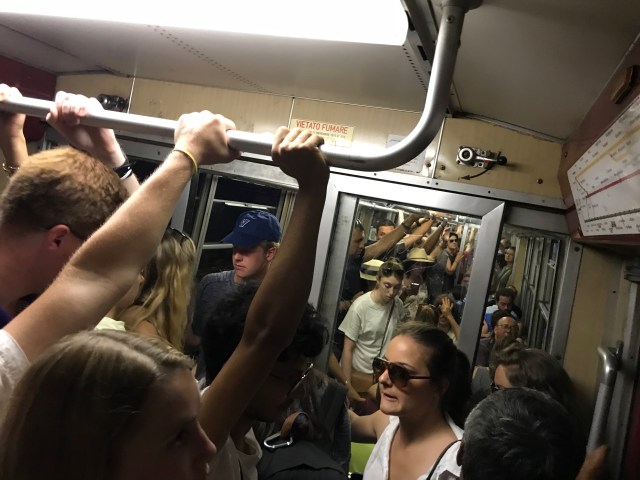
It is an old dirty train and it was PACKED. We were standing up the whole way and it was hard to avoid knocking into other people as the train sped up and slowed down to stop at places where hardly anyone got on or off.

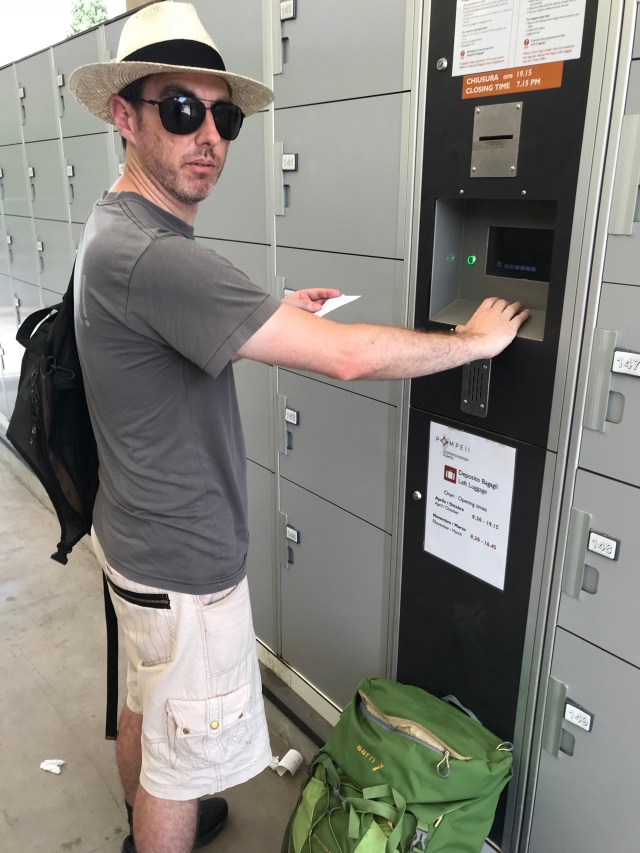
At Pompeii the train pretty much emptied and we’d read that the entrance to Pompeii was about 500 metres up the road. This wasn’t true – it was almost opposite the station. Super handy, as were the free bag lockers that were, quite miraculously, mostly empty. We’d brought along all our luggage and were a tiny bit concerned that our bags wouldn’t fit but they did, plus there was an office for super large bags near the ticket windows.

We put our bags in then sat at one of the two open air restaurants opposite the entrance to the site and had a sandwich and a drink. Even at such a touristy location the prices weren’t awful – we could have food and a drink from about ten euros each. The restaurant also had quite an interesting display of labeled herbs and fruit trees spread around the tables. Here’s some lemons that were on display. Huge!

Eventually we sucked up our courage (it was a very hot day) and ventured out. The ticket queue was long but moved at a reasonable speed and we downloaded a Rick Steves audio tour of Pompeii while we waited.

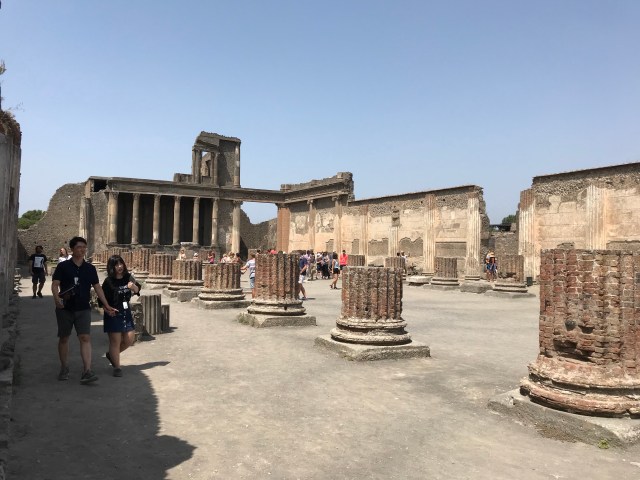
Eventually we got in and wandered around, stopping in shady spots (there aren’t many) to listen to the podcast tour. If you haven’t heard of Rick Steves and you like travel, he’s worth investigating. My friend Jess’ mother, Wendy, recommended him to us. He’s an American who runs tours and writes and makes travel videos about Europe. He talks to locals, promotes sustainable and low cost travel and has quite a nice accent and enthusiastic manner. We listened to quite a few of his podcasts and watched his videos before we left.
The audio tour was quite informative and we also listened in to a few bits of guided tours that happened around us. It did seem that a few of the major buildings were closed while we were there and so we didn’t see the public baths and a few houses.

We stayed for about two hours but eventually the heat defeated us. There are taps on many of the street corners and so I did what I do at summer music festivals and soaked a cotton scarf and wrapped it around my head and shoulders. It helped somewhat but the reflected heat from all the dirt and stone was intense.

I think my favourite part of the city was the mosaic of Alexander the Great – someone I studied in high school and found fascinating. The mosaic (a replica, the original is in Naples) depicts a battle between Alexander and Darius, who led the Persian army. The guide who was talking near us was asking his group if they knew about Bucephalus (Alexander’s horse – a legend in itself) and various other things and I wanted to butt in and show off but managed to restrain myself with great difficulty.

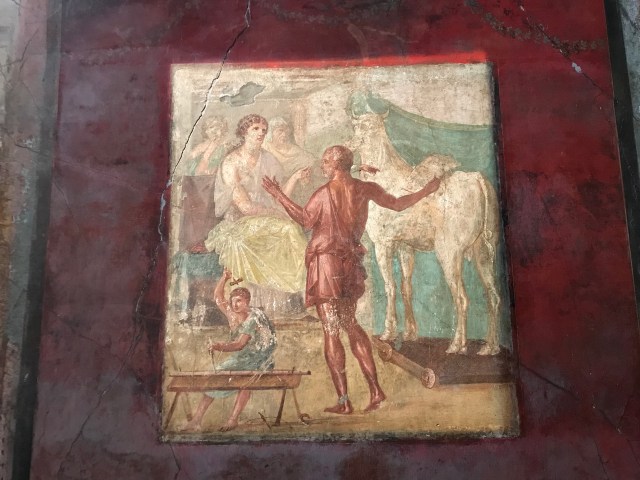
We left knowing we hadn’t seen it all and probably wouldn’t come back. I did enjoy getting a feel for the layout of the city and the technology and everyday life of people who lived so long ago. I would love to see parts of the city restored more fully – we didn’t see any actual work going on while we were there and weeds seemed to be taking over many of the central buildings, with ancient frescos open to the elements. Considering what a tourist draw and money spinner  the place is, it’s hard to believe there isn’t money or interest in looking after it better.

We collected our bags and walked back to the station to find a sign being displayed at the kiosk saying that for the princely sum of four euros (rather than the regular price of two) we could buy a ticket on the express train to Sorrento. Yes please! When the train pulled up there were staff in the doorway making sure only the people who’d paid extra got on the express, which meant that we and perhaps another ten people got to enjoy a slightly newer and cooler train for the rest of our journey.

Why they didn’t offer this service (or perhaps didn’t advertise it) for the rush-hour period to get there I couldn’t say. That’s Italy for you.

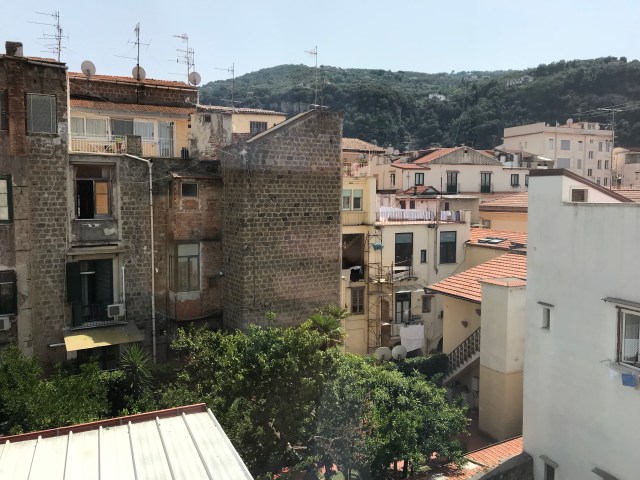
Anyhow, we arrived in Sorrento to find that our next Airbnb was three flights up in a building right in the middle of the old town. One of those places that is an apartment block with a central atrium full of plants and laundry.

Our apartment had windows on three sides, a rooftop deck and a shower with disco lighting.

We celebrated our arrival with cool showers and then enjoyed wearing nothing but our undies and drinking some ice cold limoncello on the roof.

Saluti!

Pizza in Naples

Since this is a part of the trip I’ve been looking forward to, I thought I’d write my own post about the experience. I imagine quite a bit of it will be doubling up on what Amanda has already written, so apologies for that.

Although I definitely appreciate pizza more than some others, I could never call myself an aficionado. Not when I know there are people out there that obsess over all aspects of pizza making. As Amanda mentioned previously, I was a kickstarter backer of a documentary focused on Scott Weiner, of Scott’s Pizza Tours in New York. Now THERE is a guy who is an aficionado. A flour company that specialises in products for pizza makers once flew him to Italy to consult on upcoming products before releasing them to market. The guys who make the pizzas say that Scott knows more about pizza than they do.

All this is to say, I’m just a guy who enjoys a good slice. (Also watch that documentary if you get a chance, it’s really fun and interesting!)

I’m not going to go too heavily in to the history of pizza (Amanda touched on it briefly), suffice it to say that Naples is the birthplace, so any pizza lover owes it to themselves to try the pizza here if they can.

They have two “traditional” pizzas in Naples:

  1. The Marinara, which is topped with tomato, garlic, oregano and extra-virgin olive oil.
  2. The Margherita, which is topped with tomato, sliced fresh mozzarella, fresh basil, and extra-virgin olive oil.

Writes Devorah Lev-Tov on The Spruce Eats:

Neapolitan pizza, or pizza Napoletana, is a type of pizza that originated in Naples, Italy. Neapolitan pizza is prepared with simple and fresh ingredients: a basic dough, raw tomatoes, fresh mozzarella cheese, fresh basil, and olive oil—no fancy toppings. One of its defining characteristics is that there is often more sauce than cheese, leaving the middle of the pie wet or soggy and not conducive to being served by the slice.

Because of this, Neapolitan pizzas are generally pretty small (about 10 to 12 inches), making them closer to the size of a personal pizza. Neapolitan pizzas are cooked at very high temperatures (800 F-900 F) for no more than 90 seconds.

I like cheese too much not to go for the Margherita, so that’s what I decided to try at each pizzeria…

img_0609

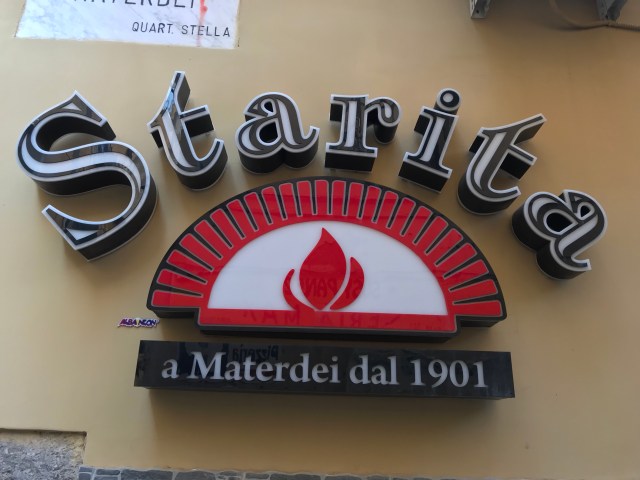
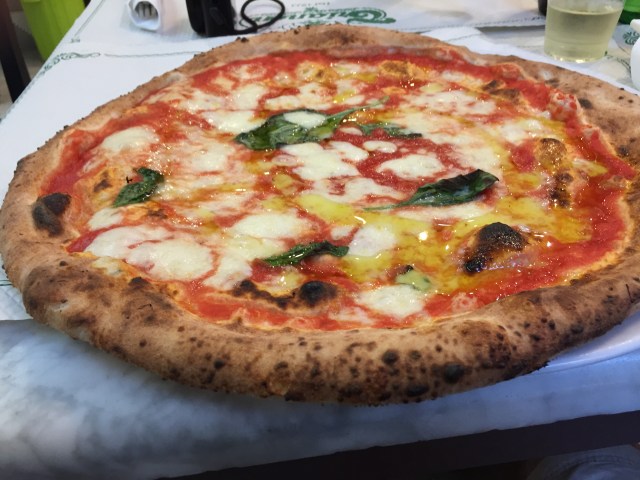
…except for the very first one! The first pizzeria we went to on the evening we arrived in Naples was Pizzeria Starita, which, I’d discovered, is known for its fried-base pizza called the Montanara. Everyone said it was the thing to try, so we ordered one of those and a Margherita and ate half each.

img_0613

It was honestly hard to say which pizza was better. The Montanara had a delicious light crispy crunch to the base due to the frying, and the sauce was wonderfully balanced against the cheese to make a sweet and tangy topping. I noticed the base wasn’t as heavily charred as it might have been, so the bitter smoky taste only came through around the edges of the crust. Contrast that against the Margherita, which was an explosion of rich, tangy tomato which complemented the more smoky dough. Both pizzas were exceptionally good! It was entirely possible we had just had the best pizzas of our lives…

The next day we went on a food-focused walking tour around Naples. Amongst other things, we tried one Margherita pizza from Antica Pizza Fritta da Esterina Sorbillo.

img_0676

Overall I wasn’t super impressed. It certainly lacked the wallop of flavour of the pizzas from Starita. I’ve heard that Sorbillo is supposed to be quite good, so I’m not sure why we got something substandard. I think there’s three separate eateries all named Sorbillo, one of which is the really famous one you hear heaps about, and another which is the bit we were in. I suspect that if you went to the proper one during the “queue for an hour to get one slice” time rather than when we were there for our food tour, it might be quite different. They did, however, have a pizza (more like a calzone really) that was deep fried and filled with ricotta, buffalo mozzarella, provolone and ham. That was super good!

Our breakfast pizza the next day was from Antica Pizzeria e Friggitoria Di Matteo in the old district. One small Margherita to share between the two of us.

img_0747

This was a classic Naples Margherita street pizza. Hot, cheap and served in some grease paper folded in to quarters. The ingredients were runny but not too soupy, and there wasn’t too much or too little of either sauce or cheese. There was evenly spaced charring across the base. There was the telltale tang of the sweet regional tomatoes mixed with the salty mozzarella. In a word, for a hit-and-run Naples street pizza, it was perfect. As you can see the ingredients had slipped due to being held sideways while we were walking, but you can eat the pizza sideways so as to mash everything together anyway. It certainly didn’t detract from the taste!

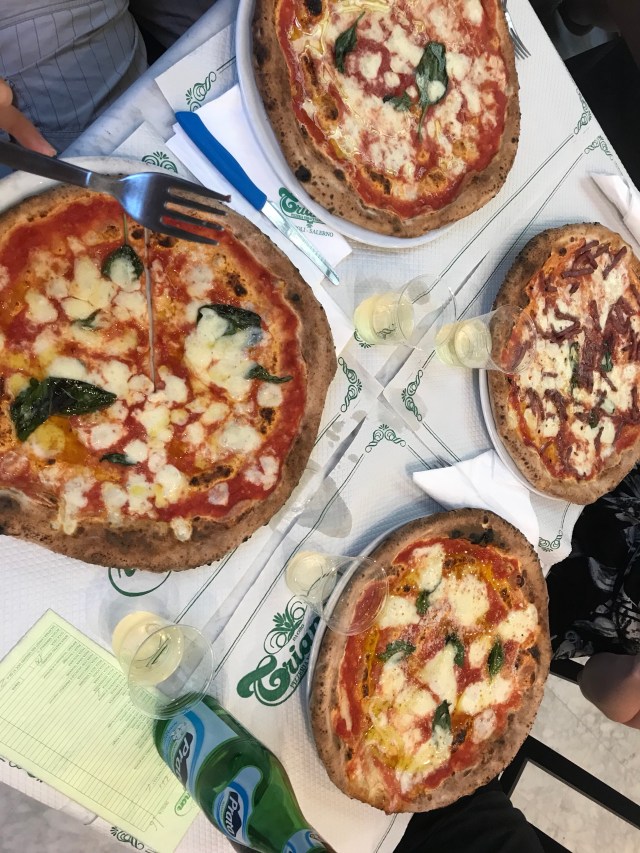
That evening we went out to dinner with some friends who also happened to be in Naples. We went to Pizzeria Trianon da Ciro as they had a good range of pizzas and had a large amount of seating, which made it good for a group. Again I ordered a Margherita, although this time I decided to try one with additional olive oil.

The extra oil didn’t make that much of a difference for me, so I probably won’t order that again, but the pizza certainly tasted good. Not as good as Starita, not even as good as the street pizza from Di Matteo, but it was certainly tasty. And huge! So much bigger than all the pizzas we’d had so far.

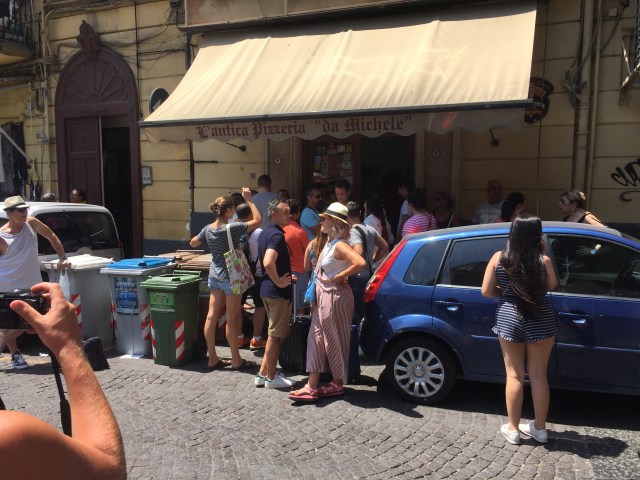
As we neared the end of our time in Naples, I’d only have time to fit a few more places in. So I chose Antica Pizzeria Di Michele for the next day’s first pizza. This is the pizzeria made famous (apparently?) in the movie “Eat Pray Love” but it was certainly very popular before then.

After we worked out that we had to go and collect a ticket from the doorman to secure our place in the queue, we waited for a table. Considering the amount of people there were, and how few spaces there are, it was surprisingly quick.

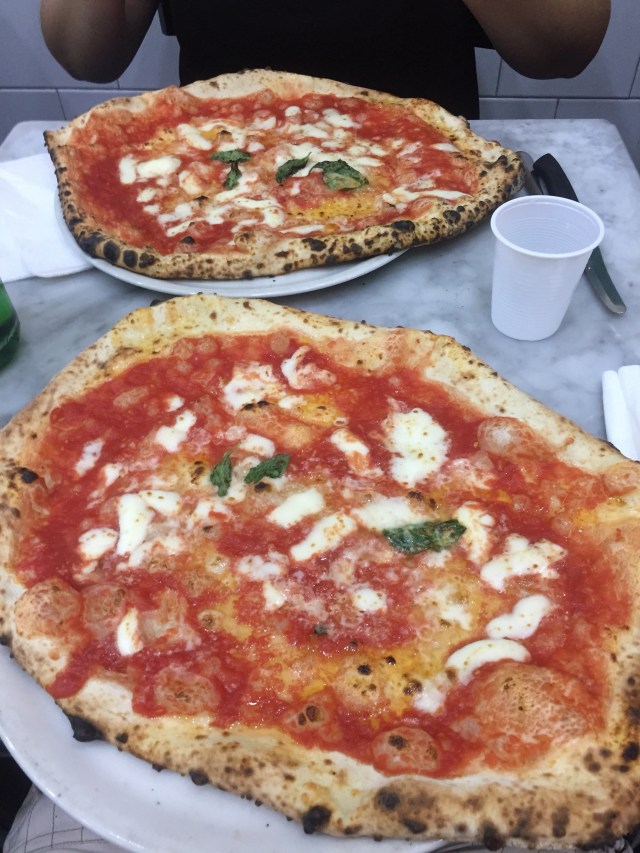
Di Michele only has two pizzas on their menu – the Marinara and the Margherita – and a very small selection of drinks. You’re there for the pizza, not a dining experience. The time we were seated to the time we walked out the door was less than thirty minutes. And at least half of that time was spent eating super delicious pizza.

Here was where our research bore some fruit. We could tell that the Di Michele Margheritas were very good, but we noticed some differences against the pizzas from Starita.

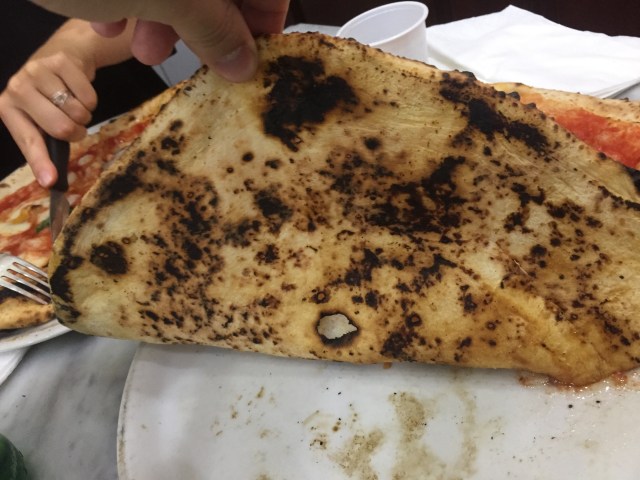
These were charred a bit more on the base, and either they were using different tomatoes, or the smoky flavour cut against them too much, because they didn’t have the same burst of flavour. But they were still excellent, delicious pizzas, and not even as soupy as I’d been expecting – although there’s no way I’d attempt to consume one without a knife and fork.

That night we were meeting up with another friend of ours for dinner, and because she was coming in via boat and only had a small amount of time to spare, I suggested an upmarket pizza restaurant called 50 Kalò, as it was close to the marina and I’d read that it was supposed to be good.

Although there were a great number of pizza toppings and flavours on offer, I decided to stick with the Margherita so as to make it a fair test against all the others. And despite the fact that the restaurant was clearly popular – it was teeming with people and there was a massive queue to get in by the time we left – my pizza left a lot to be desired.

I can’t even describe it to you. At the time, I remember thinking that it just tasted like… nothing. None of the flavours took centre stage, or were very bold.

If ever there was a clear marker of just how amazing pizza in Naples CAN be, this pizza, by failing to make any sort of impression, was it. I had been spoiled with amazing flavour up until this point. It was a bit of a rude shock, and a sad segue back in to non-Naples pizza.

That doesn’t mean I’m not going to angle for some great slice in other parts of Italy, of course! 😉

If I had more time in Naples, I would have liked to try the pizzas from El Presidente (owned by the brother of the guy who runs Di Matteo, so I’d hope the pizzas would be of similar quality), Antica Pizzeria Port’Alba (widely regarded as the very first pizzeria in the world – although apparently the quality has gone downhill) and Pizzeria Brandi, which is the Pizzeria that (allegedly) invented the Margherita. Maybe next time?

References:

The Serious Eats Guide To Pizza In Naples

Where to Eat the Best Pizza in Naples Italy – A Naples Pizza Guide

Last Days in Naples

If you’ve been to Naples you probably have strong opinions about it. It’s a city that stands out in ways that are both good and bad and slaps you in the face from almost the moment of arrival.

Although there are many downsides to the city it would be very fair to say it wears them on its sleeve. There’s no avoiding the rubbish, the traffic, the dirt or the noise, and I don’t blame anyone who finds it all too much – I certainly wouldn’t want to live there.

However I can honestly say it’s been my favourite city since Luke and I left the UK a few weeks back.

I like the ‘realness’ of it. Despite the fact that we stayed only a few blocks away from the main tourist area we never felt that it was a tourist town. Locals spend their lives on the streets and in the evenings everyone is out playing soccer, bringing out plastic chairs and chatting (or shouting), shopping and making out. When you walk along the narrow footpaths doors are open onto living rooms and even bedrooms. This is the most densely populated city in Europe and it feels like it.

People hanging out near the funicular station in the evening and using their scooters to sit on.

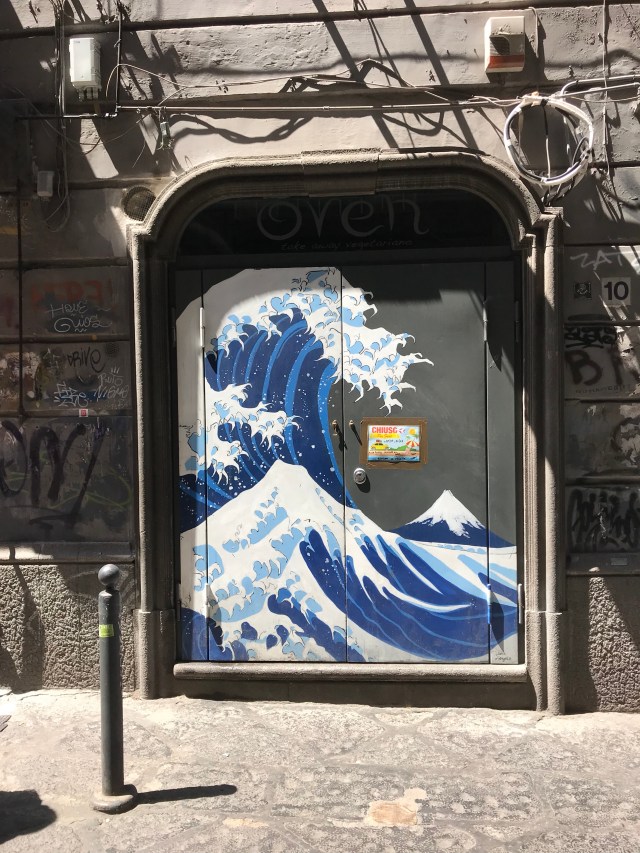
The street art in Naples is often in a more simple style than that in cities such as  Melbourne, Belfast or Berlin but that gives it a charm of its own and it is far more prolific than Rome. Several of the Metro station are famous ‘art stations’ and we saw a few interesting and large artworks at Dante, our local stop. Many doorways throughout the city seem to provide frames for work.

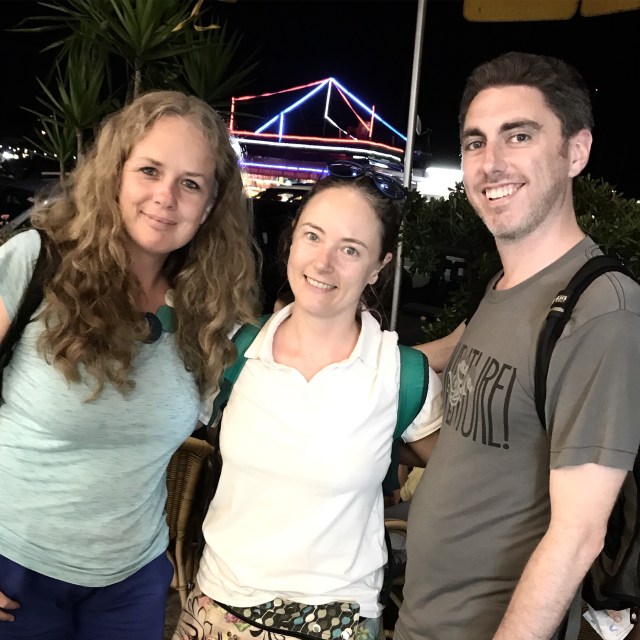
Of course it helped that we met up with friends not once but twice – pure good fortune that Rui and Lauren were also on a trip to Europe and in Naples for one of the nights we were there, and also our friend Joni, who is working on chartered yachts as a chef. What a life!

Of course we went to pizza places to meet up. To Trianon de Ciro with Rui and Lauren first. It began as a bit of a funny experience as the staff directed us up to the third floor and we were the only people there for a while. The pizzas were good though and the conversation even better!

With Joni, as she had more limited time, we met at 50 Kalo, a slightly swankier restaurant on the harbour. She brought her crew mates, Pam and Owen. Pam was Irish and Owen was from Sydney and it was lovely to meet some new people and hear what it’s like to crew a yacht that sails the Mediterranean and Atlantic.

When we left the restaurant that night we didn’t realise the trains finished running quite early in the evening and ended up catching a taxi the 20 minutes back to our Airbnb. That was quite the experience with the driver smoking and checking his phone while zipping in and out of traffic and beeping anyone who got in his way. He did ask if we minded him smoking and we said no – the least of our worries!

One of our last experiences in Naples was a trip to L’ Antica Da Michele, one of the most famous pizzerias. Although we got there early we still needed to queue. Thankfully they had a numbered ticket system rather than the ‘crowd around and shout the loudest’ system that Sorbillo’s uses. Once again, excellent pizza but just a tiny bit shy of Starita. I think we were in and out in 20 minutes. It had almost a school canteen vibe. So loud and rushed!

We did nearly everything we wanted to do in Naples but I wouldn’t have minded a couple more days and some cooler weather for wandering around. We had planned to visit a cathedral but arrived at 2pm, right in the middle of the 12-4pm closing time. It’s always worth, in Mediterranean countries particularly, checking opening times for attractions. Things can be closed when you think they’d be open and vice versa.

To finish off, here’s a few photos of things I enjoyed about the city!

Granita saved my life several times;-) We also loved the complimentary bowls of snacks that came with drinks.

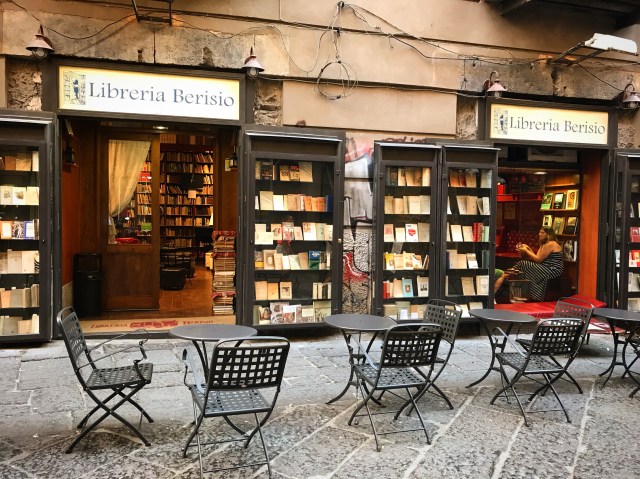
A bookstore and bar in one. 

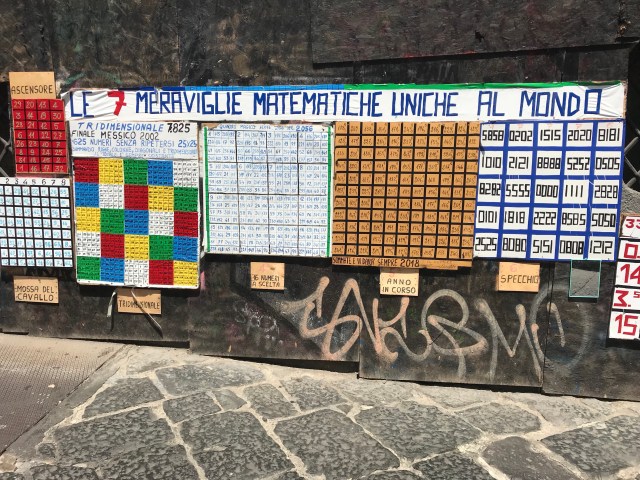
Along a public wall were sudoku and maths puzzles – no idea why. 

Impressive!

These bins sat outside our apartment and were empties every day. Look how sparklingly clean the street is once the bin men have been. 

The fruit and veg shops are an artwork. I loved them!