Geneva

I wrote this post just after we left Geneva and then completely forgot to post it. So here it is, three weeks late and completely out of order.
It would be fair to say that we probably didn’t get the most out of Geneva. The hot weather combined with uncomfortable accommodation meant that we felt fairly flat. We had three nights and spent almost all but one of our days just relaxing. We did manage to see a few things though and we both agreed that CERN was the highlight.

We did do a few other things though. If you look up ‘things to do in Geneva’ the list is pretty sparse.

We looked (sniggered) at the floral clock.

I’m not saying there’s anything wrong with clocks or flowers… well, certainly not with flowers, but if you’re a pretty major city and your floral clock gets mentioned in every ‘Top Ten Things To See and Do’ list, well… that’s not good, is it? Also when we went to Budapest years ago our walking tour guide said that their moving clock was the most over-rated attraction in the city and we couldn’t help but agree. I mean, if you’re a clock fanatic, go for it! You have every right to get excited. But if you’re not normally into clocks then it’s not really a draw card.

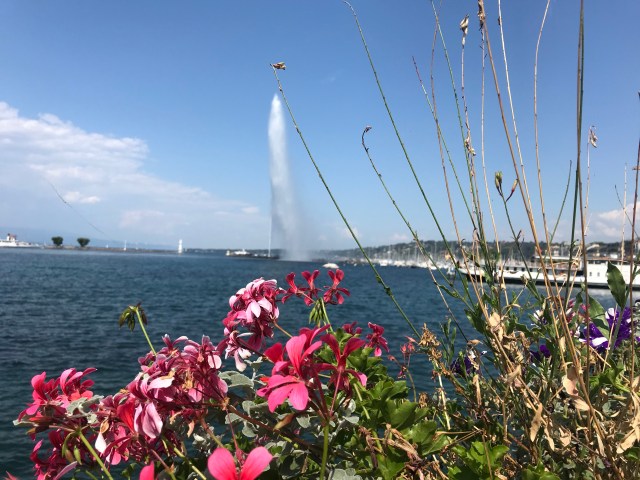
We walked along the shores of Lake Geneva. It is a nice lake. People swim in it and the water looks beautifully clear and blue. It has a huge jet of water, much like the one in Canberra. Probably because a single huge jet of water is something I associate with Australia’s underwhelming political capital, I didn’t find the jet in Geneva particularly impressive. We dutifully trotted out along the pier to stand very close to it but it didn’t even reward us with a cooling spray. Lame.

We took a walk around the Old Town too. Thanks to Martin Luther’s no-frills approach to life (he’s the reason Swiss jewellers turned to watch making when they were banned from making fripperies) the old town is kind of lacking in ornamentation. Nice but it’s more plain than most other cities we’ve visited. Apparently it’s more fun now than it used to be…

Geneva does have quite a bit of art and some interesting architecture, possibly due to being seriously multicultural. I probably should’ve mentioned this first because it was actually the best bit. We were staying near Plainpalais, a huge, desert-like square that made us feel like Lawrence of Arabia every time we struck out across it in the Saharan heat. It was the size of a soccer field but all gravel and it must be just as inhospitable in winter. However, there were a number of statues around it, mostly bronze figures that each had a story to tell. Not literally – in fact there was no information anywhere we could find near the sculptures themselves, but I looked them up online and it was fascinating.
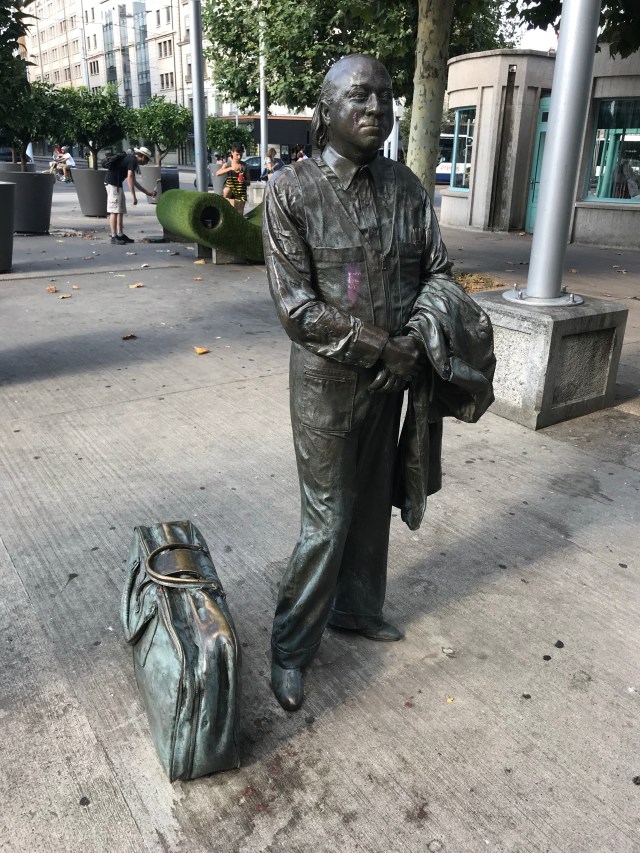
One of the sculptures was of Frankenstein’s monster.

Apparently in the book Plainpalais is where the monster kills his first victim and the sculpture has layers of meaning referring to the homeless people and disenfranchisement. Mainly, though, it’s just really neat.

The others you’ll just have to come see for yourself. Also I didn’t take any photos and can’t recall their meanings. Apart from the bronze statues there are several other monuments to various things and the descriptions online are delightfully pretentious. The first night we arrived we walked around the area and saw a bunch of huge neon signs on top of many buildings and couldn’t work out what was going on as they didn’t seem to be the names of businesses or have any intelligible meaning. Turns out they were also art and had certainly achieved their aim of creating dialogue and challenging perceptions. Great stuff.

All over the city were large and small examples of street art. One of the ones I liked best was near our apartment.

We also spent an hour walking around a suburb called ‘Le Grotte’ (somewhat unfortunate) where a bunch of architects had been influenced by… well, can you guess?

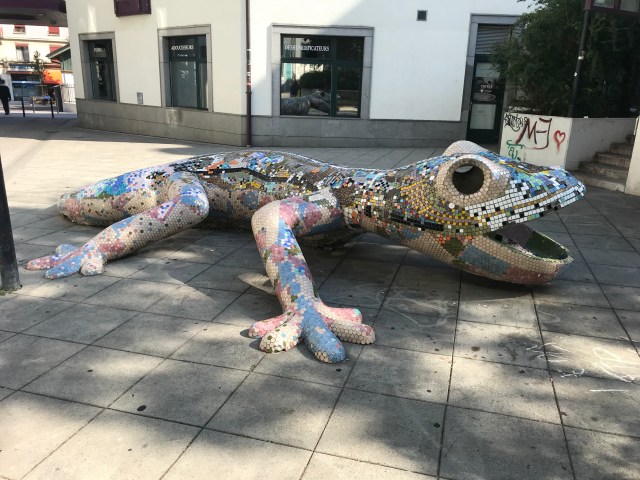
If you’ve been to Barcelona you’ll have shouted ‘Gaudi!’ At your screen, and you’ll have been right. In fact if you have any interest in architecture at all you’ll have picked it up. Lovely organic lines and detail, bold colours and lines. Well worth a look around and right next to the main station too. My photos are a bit rubbish but hopefully you get a bit of an idea.
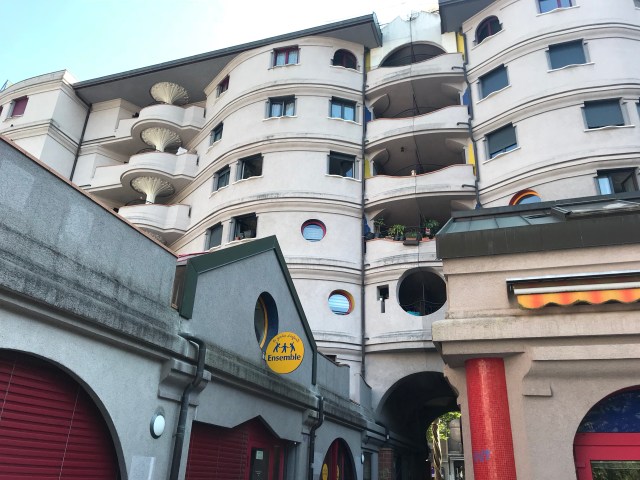
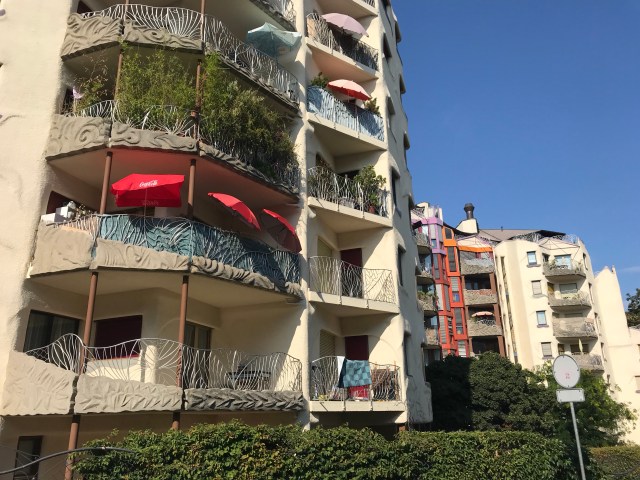
I think we should’ve seen and done a lot more if we hadn’t been crippled by the heat, but at least we saw more than just the floral clock and that’s worth something, I think.
Cycling around Colmar

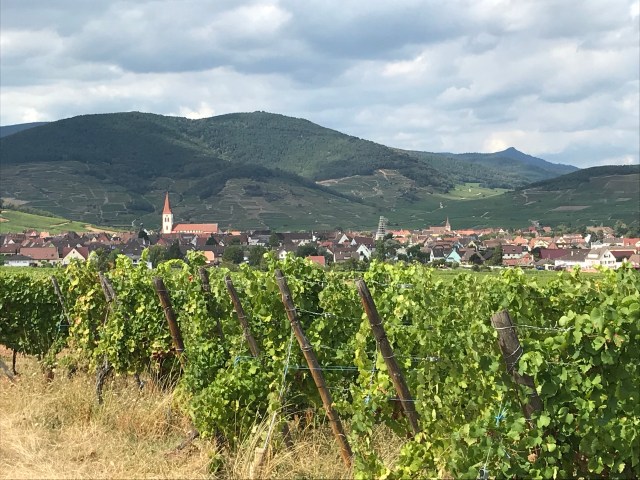
Our main goal during our time in Colmar was to do some cycling through some scenic villages and Alsace vineyards as we’d not done any cycling on our previous travels. We also hoped we’d find a few nice restaurants and sample some local produce – wine being top of the list!

We hired two electric bikes from Lulu Cycles in Colmar. We’d originally planned to get normal bikes but a mother and her two daughters were returning some electric bikes when we went in and they strongly recommended them so we decided to give them a go.

Our first day of cycling followed a route that went through the villages of Turckheim, Katzenthal and Ammerschweir and ended up being a loop that was about 20kms.

I had problems on the first day with my bike as the pedals would lock if I tried to use the electric assistance going up hills – which is obviously when I most wanted it. Never having used an electric bike before and with neither of us being mechanically-minded we had no idea what was wrong and how we could fix it. I ended up having to push the bike up hills. Fortunately none of the hills were very big or very steep but it was quite annoying. It turned out, when we took it back, that I had the bike in the wrong gear, so on our second day I knew what to do and it was all fine.

Luke expresses his disapproval for my bike with a dirty look.

The villages around Colmar are all very picturesque. Some more so than others, of course. Each of the ones we visited on the first day was nice and we noticed that every church we came to had a shallow but large metal basket on the roof and in most of them were nesting storks. Andrew tells me that this solves the problem of storks nesting on chimneys and creating fire hazards!
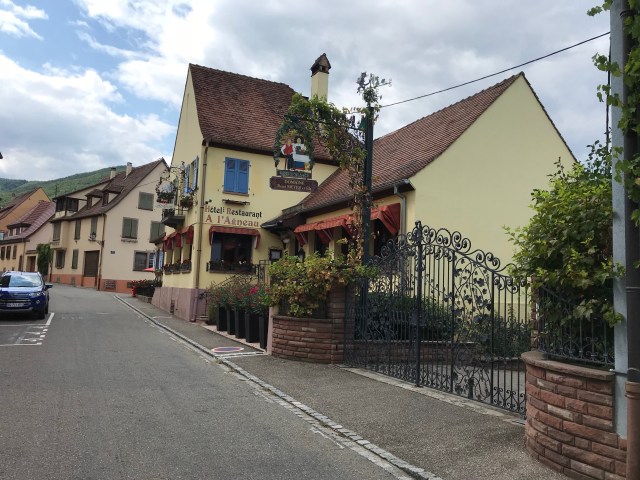
We arrived in Kazenthal in time for lunch and the first restaurant we happened upon had a Michelin plate on the outside – a good sign!

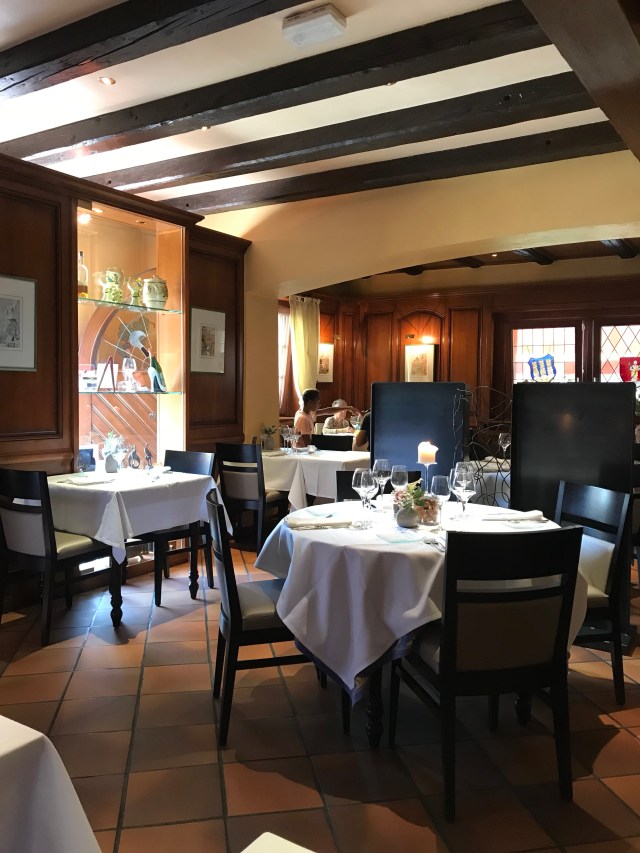
A l’Agneau (don’t ask me to pronounce it) was delightful. They didn’t raise an eyebrow at our sweaty faces or rumpled cycling clothes, despite the fat that everyone else there looked like they had a special occasion happening. We choose a €28 three course lunch that also included an amuse bouche and petit fours. All the food was deliciously fresh and perfectly cooked with lovely presentation. The manner of the staff was also excellent – despite a low level of English they asked where we from and recommended other things to see in the area as well as recommending wines to match each course.

I don’t think I could pick my favourite course, every element was superb. After drinking and eating so much we both had a cappuccino before getting on the bikes to continue our ride. I rarely drink coffee but I have come to understand its value after a heavy meal!

Thankfully most of the remaining ride was downhill and fairly straightforward. One of the downsides of this sort of sight-seeing is having to stop frequently to check the map as we didn’t know the area. It would’ve been good to have some way of attaching my phone to the handlebars to use as a satnav. I also wouldn’t have minded a rear view mirror when we were on the roads so I could see cars and how far Luke was behind me.

Our second day of riding was even more successful. This time I had the gears+electrics worked out and after a brief attempt to use my headphones with google navigation so we wouldn’t have to stop so often, we were on our way, hurtling through corn fields and feeling the wind in our hair. Well.. except when google maps took us into muddy fields and knee-high grass.

Our second day took us through the villages of Herrlisheim-près-Colmar, Eguisheim, Wettolsheim and Wintzenheim. If you’re planning on visiting any villages around Colmar I strongly urge you to leave Eguisheim until last because anywhere you go after that looks a trifle dull.

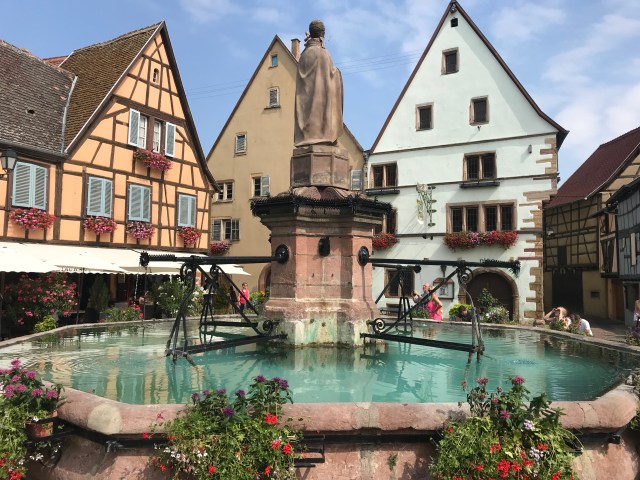
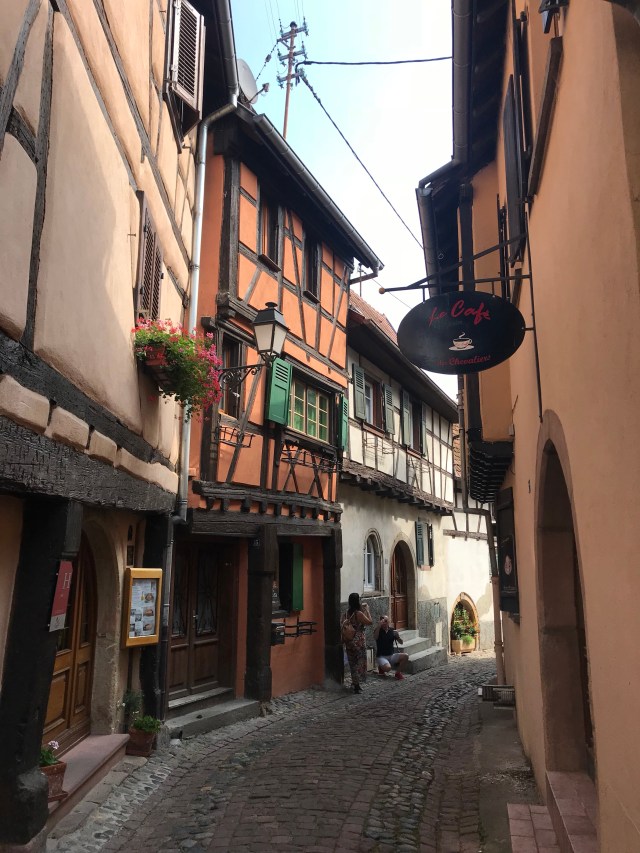
Eguisheim is even prettier than Colmar and is made up of roads that are concentric circles.

It makes it a very pleasant place to wander around, even if it’s hard to know when to stop. It’s full of places to do wine tastings – we wished we had booked a night there so we could have taken advantage of it all.

We ended up eating at Au Vieux Porche, another Michelin-listed restaurant and almost, almost, as good as A l’Agneux. If anything was missing it was possibly the attentiveness of the service. There was no effort to engage us in any conversation and when we were ready to pay it took twenty minutes for the maitre d to come to our table. Otherwise the food was excellent and it was about the same price – nearly €90 for the two of us to have three courses each, wine pairings and coffee. My first ever espresso – predictably dreadful but with the desired effect of allowing me to continue riding without falling asleep on the bike.

Unfortunately the lighting was quite dim so my photos are a bit rubbish but believe me, it was all delicious! Well, except the coffee and that wasn’t their fault.

Although we hired the bikes for four days we only used them on two due to rain and hot weather and being lazy. We really enjoyed both days despite the few issues and it is definitely a lovely and accessible part of the world for riding if you’re not super experienced.

Here’s a few more photos from Eguisheim to finish off!

Colmar, France

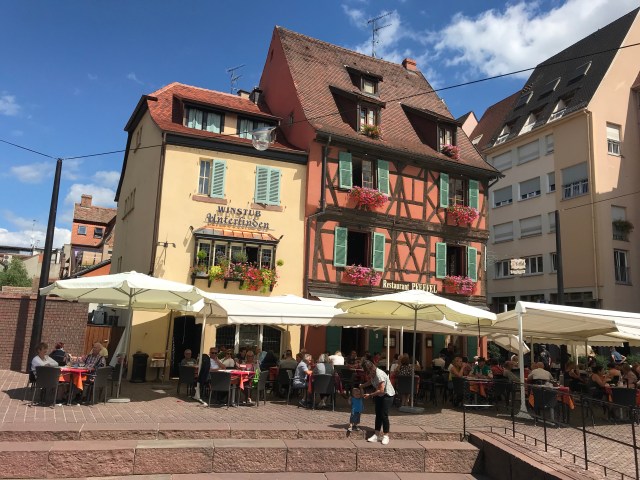
Colmar is the second largest city in Alsace, a north eastern province of France that borders Germany. Despite being right in the middle of a great deal of action in both world wars the medieval centre of town is astonishingly well-preserved.

The style of architecture could well be categorized as ‘German gingerbread’. Or possibly ‘pastel dollhouse’. No matter what you call it, it’s delightful.

Since we’d chosen the place as nothing but a base for exploring a wine region, we had no idea that we’d hit on one of the most beautiful cities and most popular tourist destinations in the north of France.

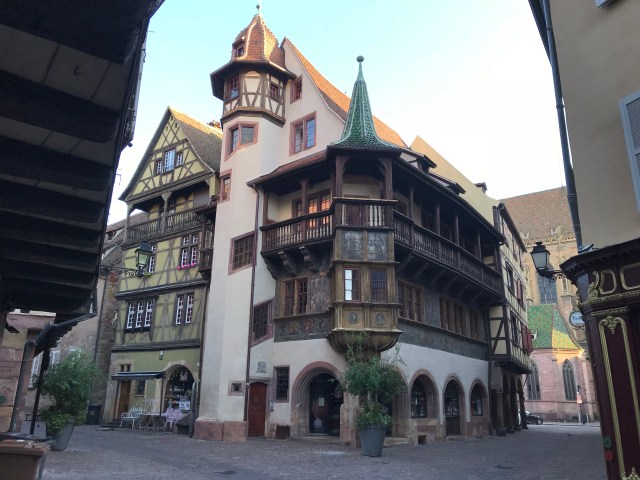
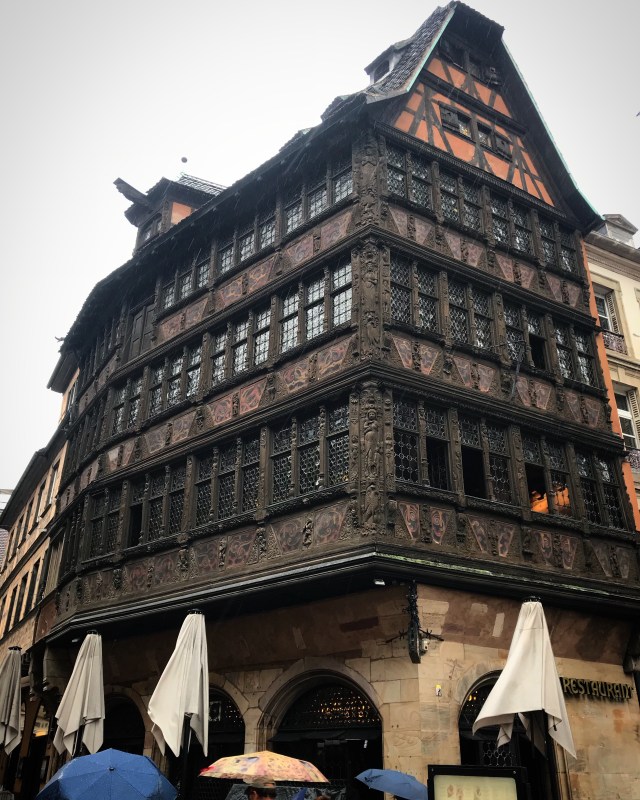
This is the ‘house of heads’ because it is decorated with over 170 heads. I like to hope that in medieval times they used the heads of people who stop walking right in the middle of footpaths. It was a more enlightened age.

On our first full day in town I got up at the crack of 7am and went for a wander through town so I could take photos that didn’t have families in active wear ruining the charm.

As it was, only myself and a handful of Japanese people wandered the streets, happily snapping away.

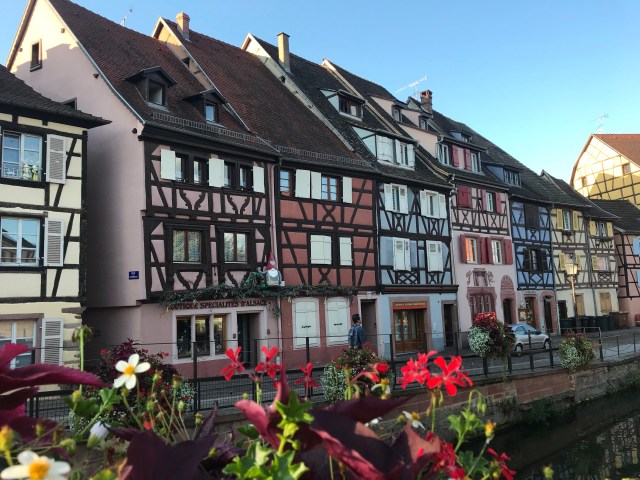
Through a small amount of research prior to booking we had ascertained that Colmar had at least one very pretty street in an area called ‘little Venice’ but it turned out that in reality Colmar has a positive maze of lovely alleys and byways and it is hard not to take hundreds of almost identical photos – as you can see!

Next: cycling around Alsace – we hire electric bikes and it is mostly successful.

A Day In Strasbourg

On our way to Colmar we stopped for a few hours in Strasbourg, the capital of Alsace. I have been to Strasbourg before, in the year 2000, travelling with a friend who was a huge fan of the Sound of Music. We spent a couple of days in the city wondering where all the Sound Of Music stuff was then left. I only later (much later) learned that Saltzburg was the place she probably should’ve gone.

This time we were only stopping briefly. We left our bags at the train station where a man put us through a rigorous bag-scanning procedure before we could stow our rucksacks and walk into the middle of town.

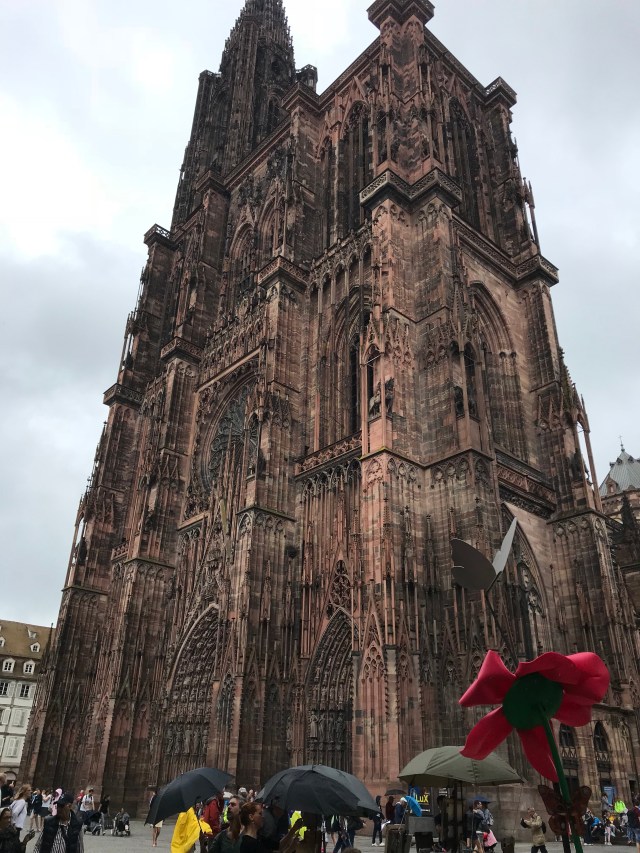
The old centre of Strasbourg is an island in a river and it is very pretty. We probably didn’t see it quite at its best as it was a rainy day but we enjoyed it anyhow. There is a huuuuuuge cathedral in the middle of the city. It is made of a pink stone that has blackened with age. The line to go in was about half a kilometre long so we didn’t bother but admired it from outside. Excuse my rubbish photo but I couldn’t get far enough back from it to get the whole thing in.

It reminded me of the duomo in Florence. Not in looks but in the way it just sort of rises up between the buildings and appears only once you get quite close. Where Florence’s cathedral is a light and airy masterpiece this is a dark gothic hulk but still beautiful.

In fact much of the architecture is dark but I like the solidity, the heavy presence.

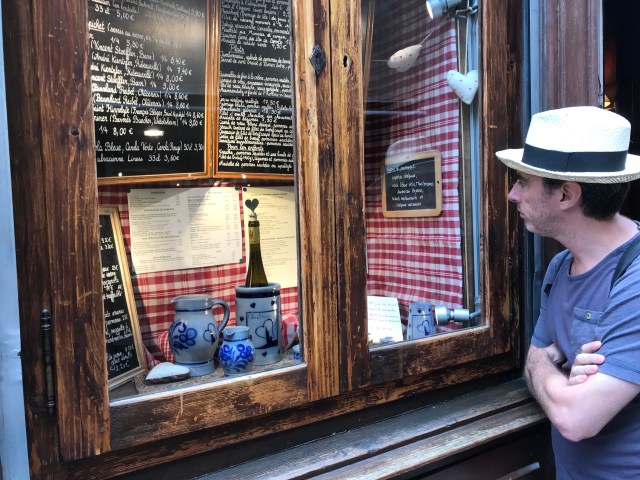
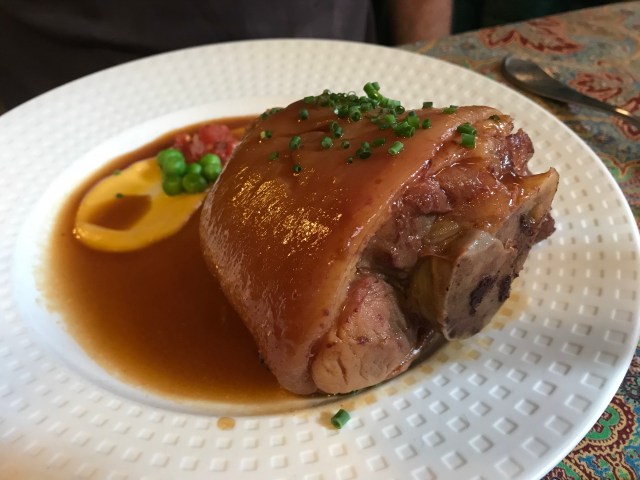
After admiring the cathedral we found a very German restaurant for lunch. No matter what the signs here say, this whole area is so German that it’s a constant surprise to have French spoken to us in shops and cafes.

Luke ordered the pork knuckle, obviously.

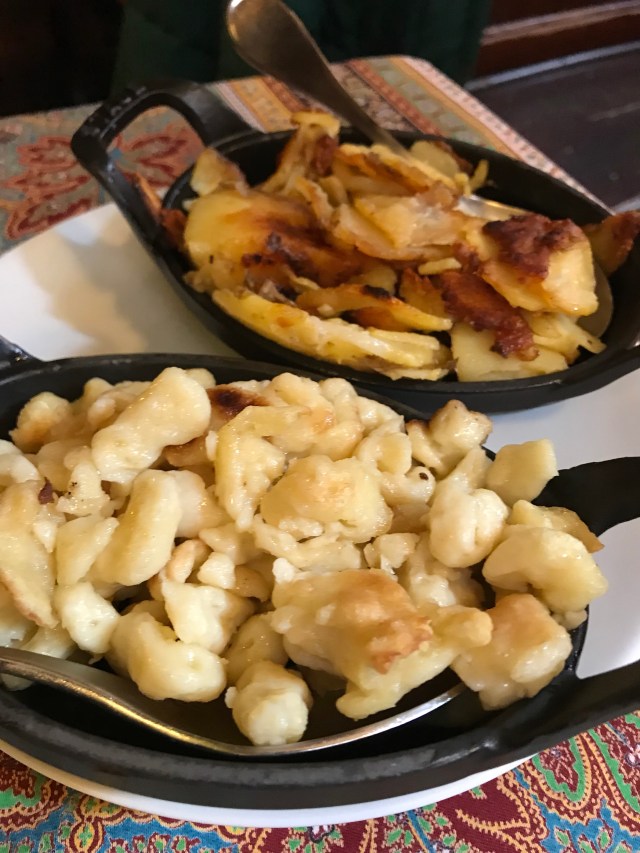
I had coq au vin but with a white riesling sauce. Delicious! And spaetzel, the local pasta that looks knobby, like twisties.

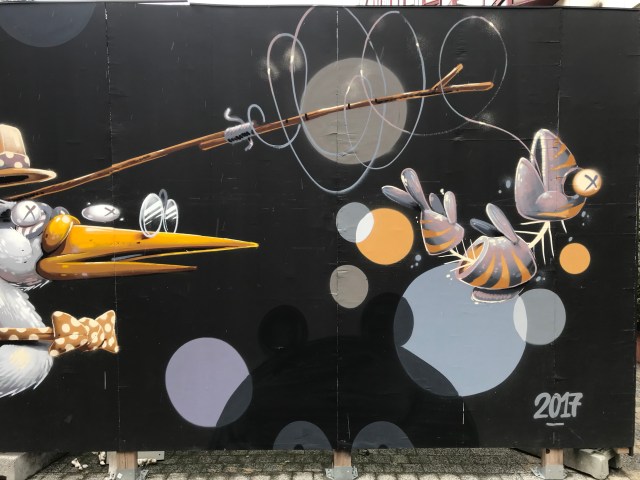
After all that heavy food we wandered around town and admired a work site hoarding that had been painted beautifully by local artists.

I liked it more than anything I’d seen in Paris.

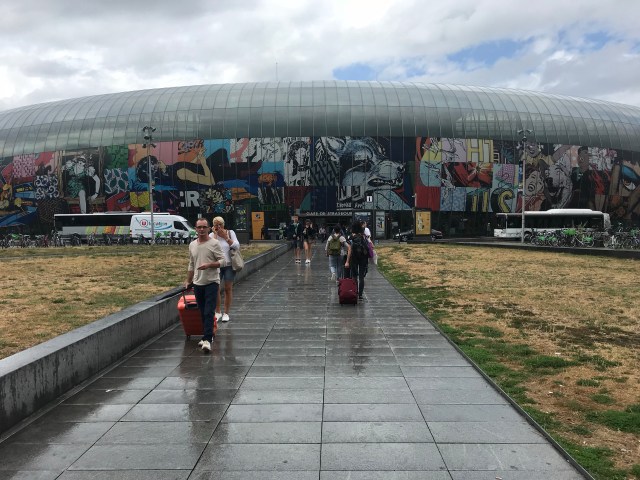
Lastly a coffee undercover as the rain lashed down then back to the train station, which was decorated with comic book art.

Next: Colmar!

Paris: Wine Tasting at Ô Chateau.

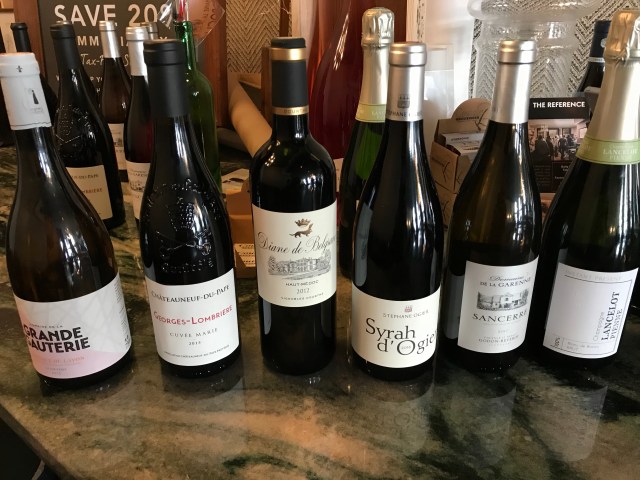
While doing our food tour in Nice we met Sheandra, a lawyer from Atlanta in the US who was great fun and we all got along like the proverbial chateau flambé. We ended up going out for a few glasses of wine after the food tour and then deciding to meet up again in Paris, this time for a Rick Steves-recommended wine tasting lunch at Ô Chateau.

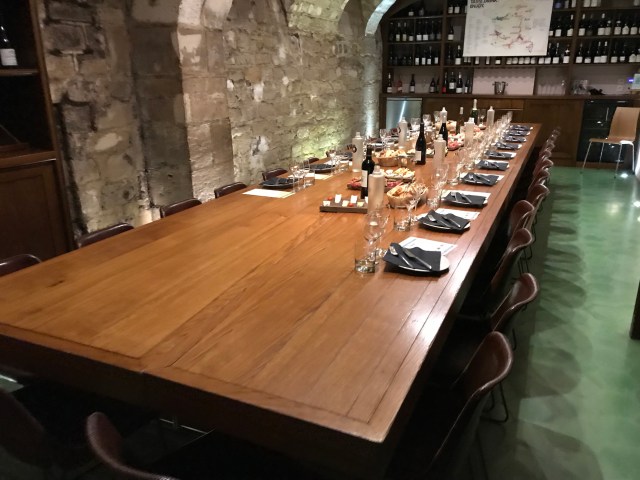
We all arrived a little early and caught up on what we’d done since we’d last seen each other then went downstairs into the stylish cellar where the tasting would take place.

Our instructor for the day was Gerald, a man with excellent English and even better wine knowledge. His presentation not only covered how to taste wine and how to discuss it, but also the history and geography of French wine. If you are an aspiring connoisseur or just interested in wine I’d hugely recommended it. If you already know a lot about wine they have an experts course too.

Some of the things I learned were:

1. How the sediment is removed from champagne bottles without the gas being lost. The neck of the bottle (where the sediment had settled) is frozen, then the plug of ice removed before the bottle is resealed.

2. What ‘brut’ refers to. I’ve always wondered yet never bothered to look and it turns out that it means a minimum of sugar is added to flavour the champagne and sometimes none. So when a champagne is ‘brut’ it means that it is dry. Champagne that is ‘extra brut’ is in fact more sweet because extra sugar is added.

3. When a champagne is labeled ‘Blanc de blanc’ it means ‘white of whites’ which means only Chardonnay grapes have been used. The other two grapes used to make champagne are red – Although champagne is never red because the skins are discarded.

4. NVB stands for Non Vintage Brut. This means that grapes from multiple seasons have been mixed to provide a more standard flavour.

5. Champagne glasses are tall with narrow stems because until modern methods were involved, the yeast sediment used to settle in the bottom of the stem.

6. To see if a red wine is aged you can tilt the glass over a white background and note that the pinker the tint of the wine the younger it is and the redder, or browner the colour the more it has aged.

Of course we learned a great deal more but, thanks to drinking about 8 glasses of wine, I seem to have forgotten most of it. C’est la vie!

I found that we knew quite a bit about wine terminology and a bit about production. Where we always fall down is in the actual tasting, although Gerald explained so well and gave us a few hints and so we did pick some of the flavours. Or perhaps it would be more accurate to say that we guessed successfully.

The cheeses were paired nicely and each came from the same region as the wine.

Number three was my favourite pairing and the Sancerre (a Sauvignon Blanc) was my favourite wine, but I was tickled to be trying a Chateauneuf du Pape. Partially because I had just read about there being a pope who chose Avignon as his capital (traveling around Europe is like piecing together an endless historical puzzle) but mainly because it is mentioned in a Beastie Boys song and every time I read it I start singing Body Movin’ to myself.

Anyhoo, we were properly fuzzy when we left and we said goodbye to Sheandra before heading to the Musee d’Orsay.

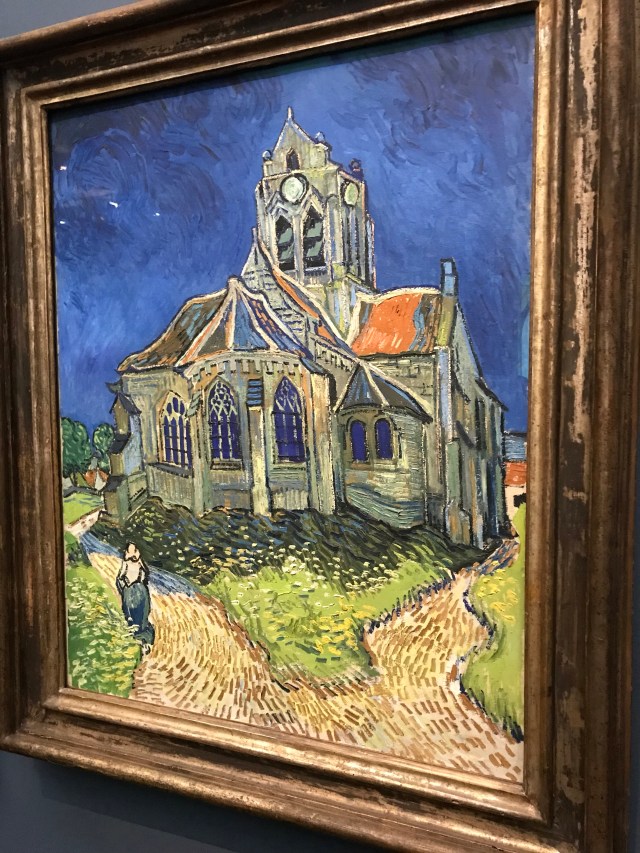
We had a quick look at some very elegant Art Nouveau furniture and then their impressive collection of Van Gogh works. Van Gogh is always amazing, but seeing his work surrounded by other artists of the period really impresses on you how special he was. So vibrant and expressive. I took a photo of this one for Jess, as it featured in one of my favourite Dr Who episodes.

Last night (a week later) Luke and I had a long discussion about art we liked since we’ve seen so much lately. We both agreed that we thought the very best art (fine or otherwise) was the kind that appealed to many people on many levels. Work that could be enjoyed or be controversial or in some way stimulating for everyone, whether you were trained to appreciate it or not, but which held layers of meaning so that the more you knew the more there was to appreciate. I think this is why I find some modern art so interesting – the more technically skilled but also provocative it is, the better I like it.

I’d be interested in what other people think about so leave a comment if you have thoughts!