Cycling around Colmar

Our main goal during our time in Colmar was to do some cycling through some scenic villages and Alsace vineyards as we’d not done any cycling on our previous travels. We also hoped we’d find a few nice restaurants and sample some local produce – wine being top of the list!
We hired two electric bikes from Lulu Cycles in Colmar. We’d originally planned to get normal bikes but a mother and her two daughters were returning some electric bikes when we went in and they strongly recommended them so we decided to give them a go.

Our first day of cycling followed a route that went through the villages of Turckheim, Katzenthal and Ammerschweir and ended up being a loop that was about 20kms.
I had problems on the first day with my bike as the pedals would lock if I tried to use the electric assistance going up hills – which is obviously when I most wanted it. Never having used an electric bike before and with neither of us being mechanically-minded we had no idea what was wrong and how we could fix it. I ended up having to push the bike up hills. Fortunately none of the hills were very big or very steep but it was quite annoying. It turned out, when we took it back, that I had the bike in the wrong gear, so on our second day I knew what to do and it was all fine.

Luke expresses his disapproval for my bike with a dirty look.

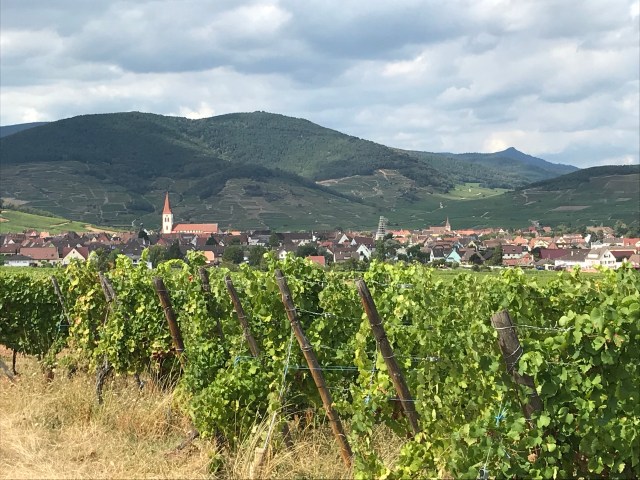
The villages around Colmar are all very picturesque. Some more so than others, of course. Each of the ones we visited on the first day was nice and we noticed that every church we came to had a shallow but large metal basket on the roof and in most of them were nesting storks. Andrew tells me that this solves the problem of storks nesting on chimneys and creating fire hazards!

We arrived in Kazenthal in time for lunch and the first restaurant we happened upon had a Michelin plate on the outside – a good sign!
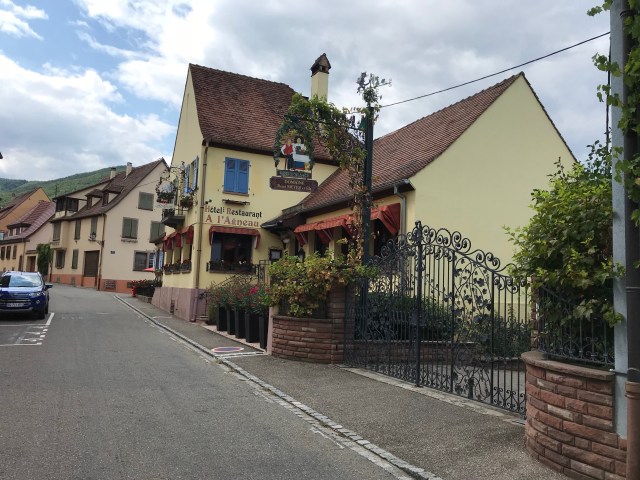
A l’Agneau (don’t ask me to pronounce it) was delightful. They didn’t raise an eyebrow at our sweaty faces or rumpled cycling clothes, despite the fat that everyone else there looked like they had a special occasion happening. We choose a €28 three course lunch that also included an amuse bouche and petit fours. All the food was deliciously fresh and perfectly cooked with lovely presentation. The manner of the staff was also excellent – despite a low level of English they asked where we from and recommended other things to see in the area as well as recommending wines to match each course.

I don’t think I could pick my favourite course, every element was superb. After drinking and eating so much we both had a cappuccino before getting on the bikes to continue our ride. I rarely drink coffee but I have come to understand its value after a heavy meal!

Thankfully most of the remaining ride was downhill and fairly straightforward. One of the downsides of this sort of sight-seeing is having to stop frequently to check the map as we didn’t know the area. It would’ve been good to have some way of attaching my phone to the handlebars to use as a satnav. I also wouldn’t have minded a rear view mirror when we were on the roads so I could see cars and how far Luke was behind me.

Our second day of riding was even more successful. This time I had the gears+electrics worked out and after a brief attempt to use my headphones with google navigation so we wouldn’t have to stop so often, we were on our way, hurtling through corn fields and feeling the wind in our hair. Well.. except when google maps took us into muddy fields and knee-high grass.

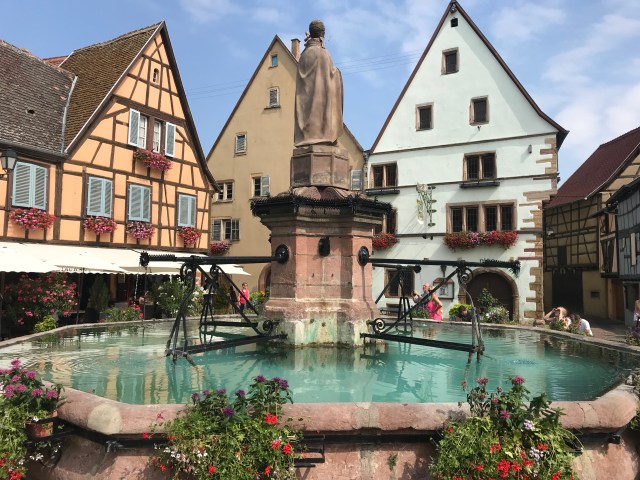
Our second day took us through the villages of Herrlisheim-près-Colmar, Eguisheim, Wettolsheim and Wintzenheim. If you’re planning on visiting any villages around Colmar I strongly urge you to leave Eguisheim until last because anywhere you go after that looks a trifle dull.

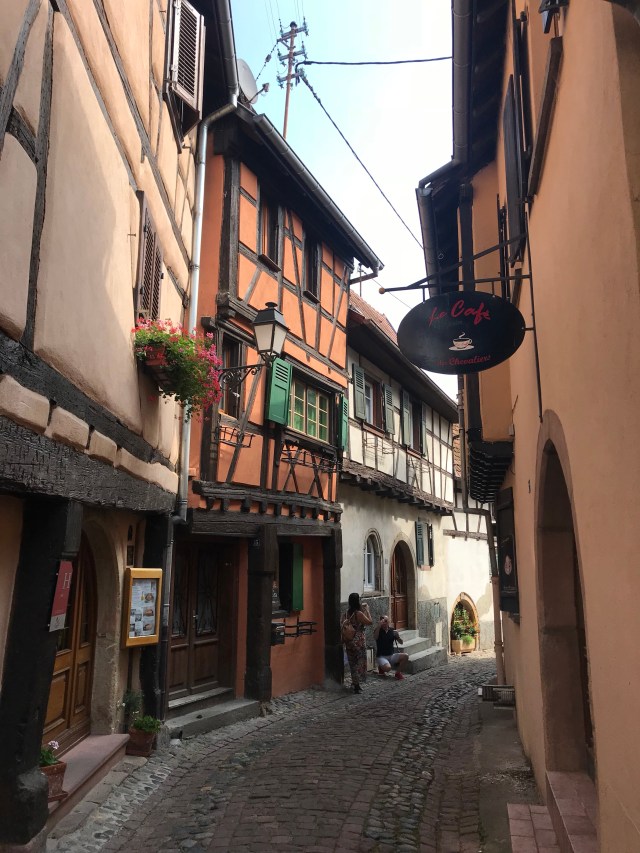
Eguisheim is even prettier than Colmar and is made up of roads that are concentric circles.

It makes it a very pleasant place to wander around, even if it’s hard to know when to stop. It’s full of places to do wine tastings – we wished we had booked a night there so we could have taken advantage of it all.
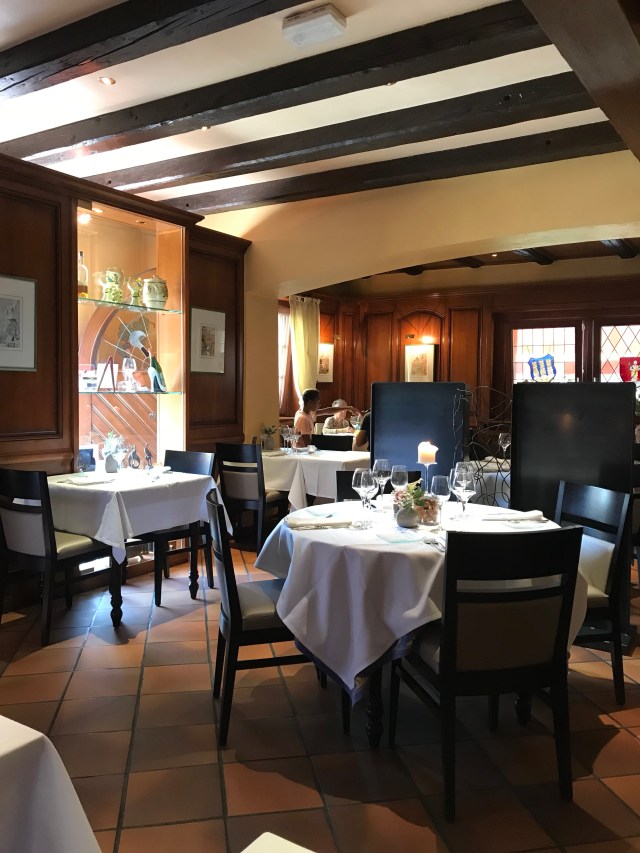
We ended up eating at Au Vieux Porche, another Michelin-listed restaurant and almost, almost, as good as A l’Agneux. If anything was missing it was possibly the attentiveness of the service. There was no effort to engage us in any conversation and when we were ready to pay it took twenty minutes for the maitre d to come to our table. Otherwise the food was excellent and it was about the same price – nearly €90 for the two of us to have three courses each, wine pairings and coffee. My first ever espresso – predictably dreadful but with the desired effect of allowing me to continue riding without falling asleep on the bike.

Unfortunately the lighting was quite dim so my photos are a bit rubbish but believe me, it was all delicious! Well, except the coffee and that wasn’t their fault.
Although we hired the bikes for four days we only used them on two due to rain and hot weather and being lazy. We really enjoyed both days despite the few issues and it is definitely a lovely and accessible part of the world for riding if you’re not super experienced.

Here’s a few more photos from Eguisheim to finish off!

Colmar, France

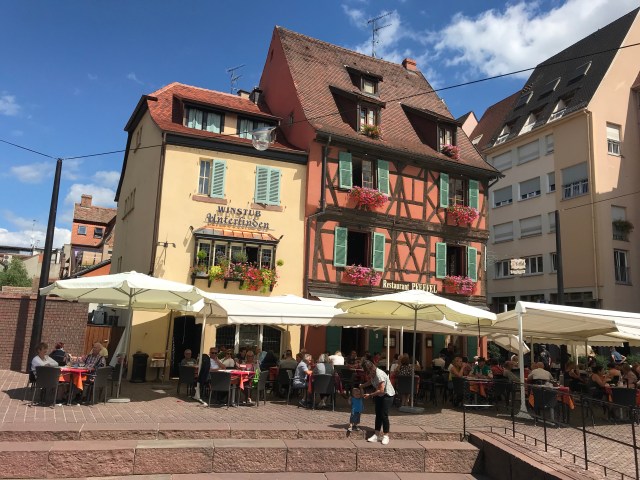
Colmar is the second largest city in Alsace, a north eastern province of France that borders Germany. Despite being right in the middle of a great deal of action in both world wars the medieval centre of town is astonishingly well-preserved.

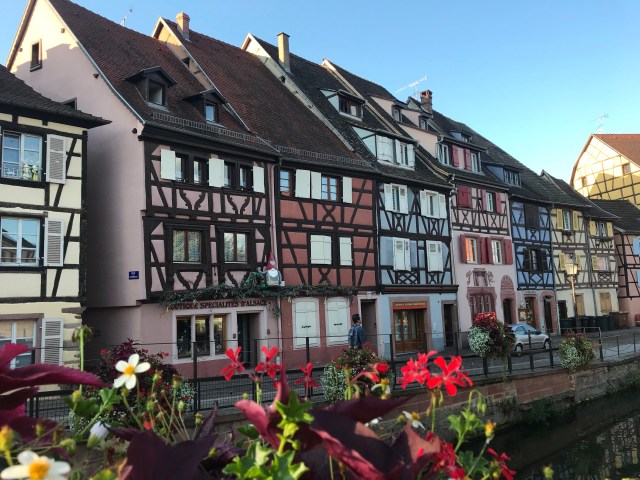
The style of architecture could well be categorized as ‘German gingerbread’. Or possibly ‘pastel dollhouse’. No matter what you call it, it’s delightful.

Since we’d chosen the place as nothing but a base for exploring a wine region, we had no idea that we’d hit on one of the most beautiful cities and most popular tourist destinations in the north of France.

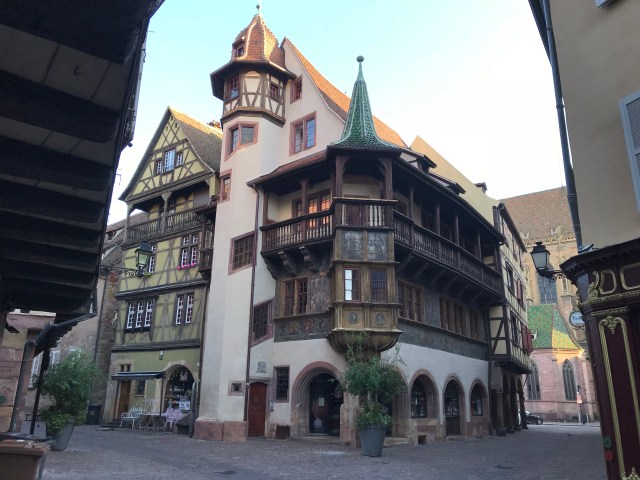
This is the ‘house of heads’ because it is decorated with over 170 heads. I like to hope that in medieval times they used the heads of people who stop walking right in the middle of footpaths. It was a more enlightened age.

On our first full day in town I got up at the crack of 7am and went for a wander through town so I could take photos that didn’t have families in active wear ruining the charm.

As it was, only myself and a handful of Japanese people wandered the streets, happily snapping away.

Through a small amount of research prior to booking we had ascertained that Colmar had at least one very pretty street in an area called ‘little Venice’ but it turned out that in reality Colmar has a positive maze of lovely alleys and byways and it is hard not to take hundreds of almost identical photos – as you can see!

Next: cycling around Alsace – we hire electric bikes and it is mostly successful.

Interlaken: Buses, Chocolate Making, Cable Cars and More.

Our Bernese Oberland Pass began today so we jumped out of bed at 6:30 to make the most of it. I’ll post more about the pass after we get to Geneva when we work out whether or not it was worth buying.

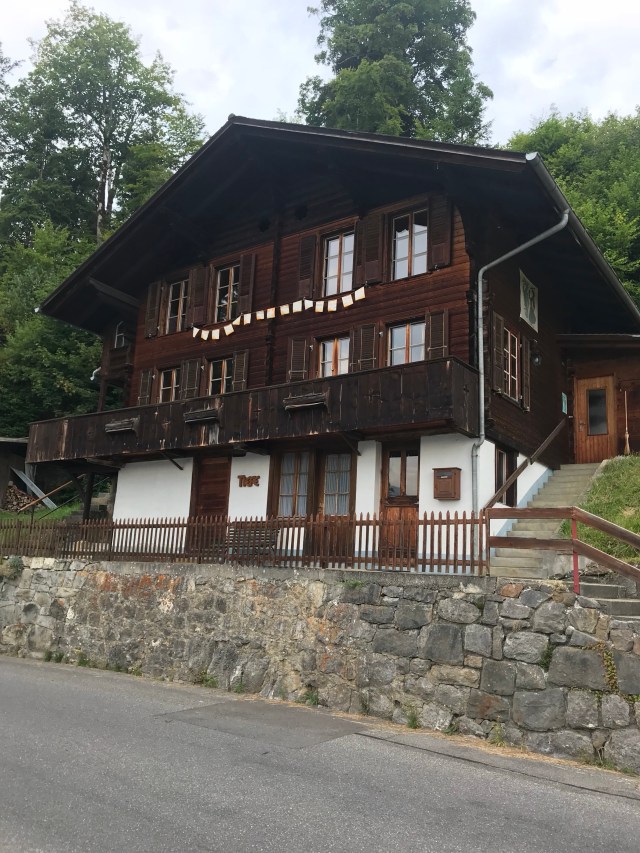
First activity for the day was catching a local bus to Beatenberg, a little village further up in the hills (I mean mountains… Switzerland’s mountains look like hills because there are even bigger mountains behind them). The bus ride took less than half an hour and we got out a few stops before the end of line and walked along the ridge that Beatenberg sits on, admiring the houses, the view, and enjoying the peace and quiet.

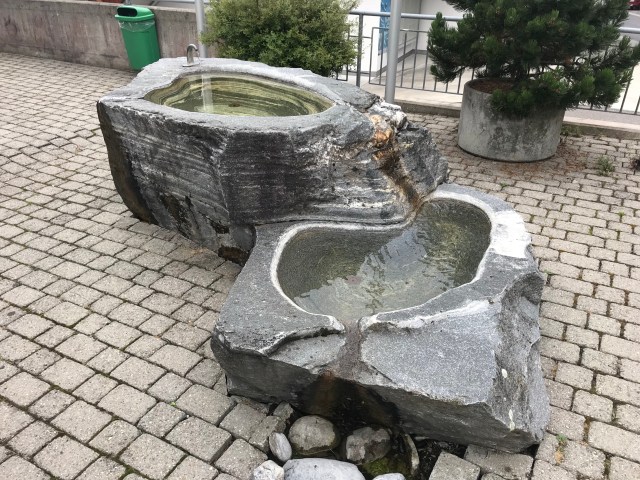
Everywhere around Interlaken are spring water fountains where you can fill up your water bottle with cold water. I think my favourite spring that I’ve seen so far was this one in Beatenberg.

So stylish!

If I could say that this part of Switzerland reminded me of another place I’ve been I would liken it to Japan. Equally clean, full of polite people, and the architecture, if you take away the geraniums, is very similar to wooden Japanese houses, only heavier and more ornate.

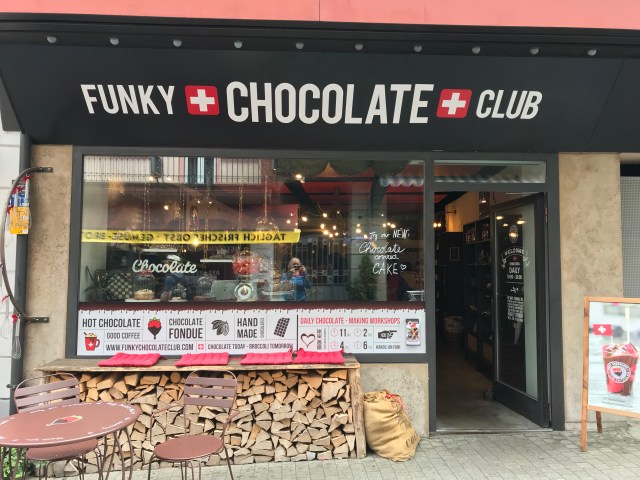
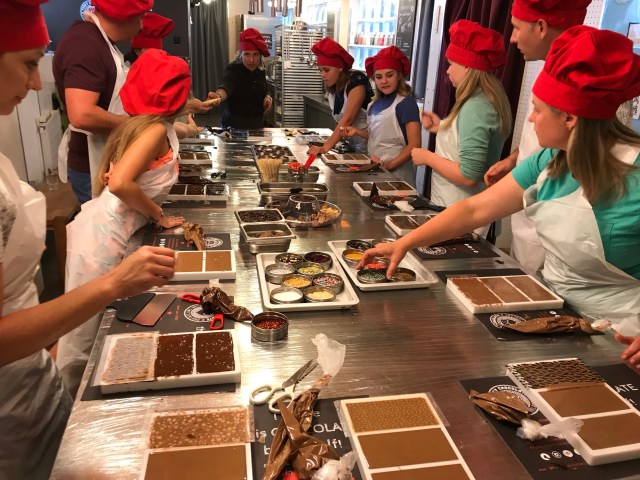
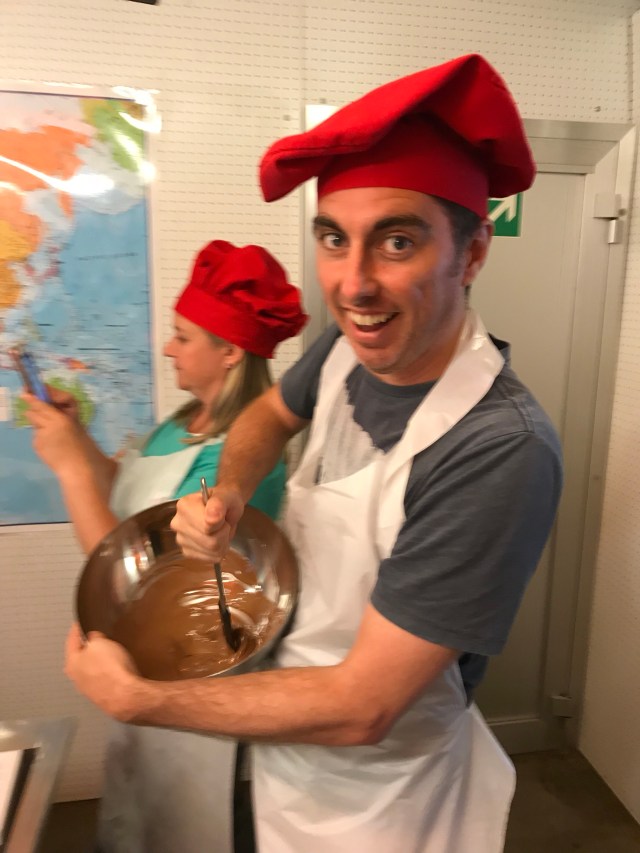
We bused back down to Interlaken in good time for our chocolate-making class at the Funky Chocolate Club. We were the only Aussies in a group of Americans but they were all very nice and we had a lot of fun.

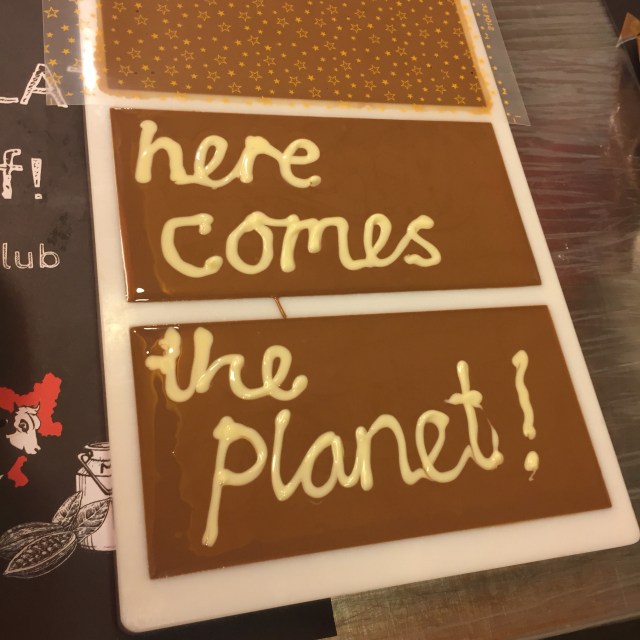
First we heard a bit about the history of chocolate and where in the world it comes from. Then we tasted everything from 100% cocoa (revolting) and pure cocoa nibs (not bad) through dark, semi sweet, milk, and white. We then learned to temper chocolate to make three blocks of our own.

My favourite part was learning that correctly tempered chocolate twirls in a ribbon rather than dropping straight from the spoon. I got to use my lettering skills to write on our bars. It was harder than it looked!

You’ll probably find this hard to believe, but Luke and I did not gorge ourselves senseless on chocolate and only ate half a handful of bits during the class. Therefore we felt we deserved a hearty lunch at the bierhaus our walking tour leader had recommended the day before.

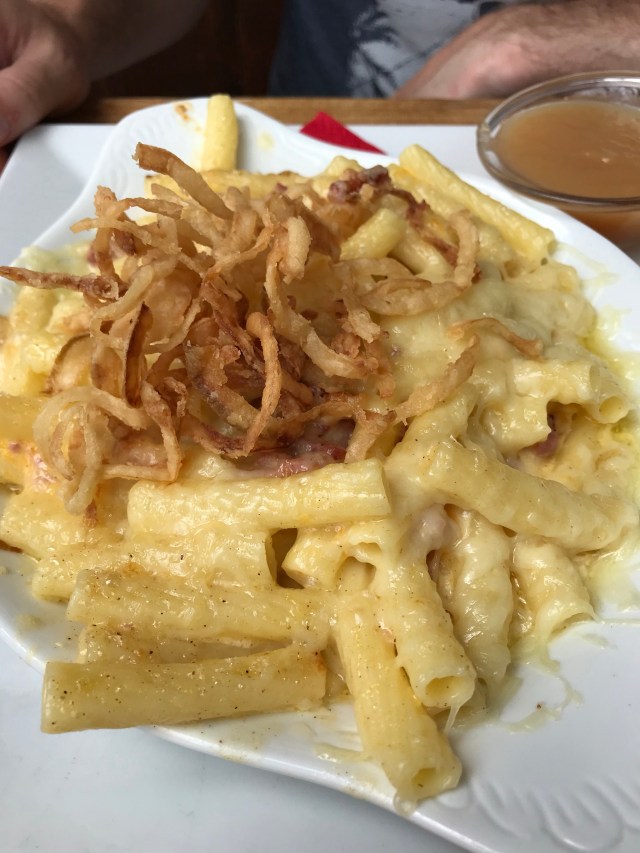
Specifically Alessandra had recommended the mac and cheese so we ordered one and a salad. It was, hands-down, the best mac and cheese I’ve had on our travels and I would’ve tried over a dozen in the US. This one was topped with fried onions, had plenty of cheese sauce and speck, plus it had a side of apple sauce. I don’t know if I’ll ever eat mac and cheese again without it – one of those unexpected pairings that turns out to be magical. Although we all know cheese and apples are good together… why did I not think of this already?

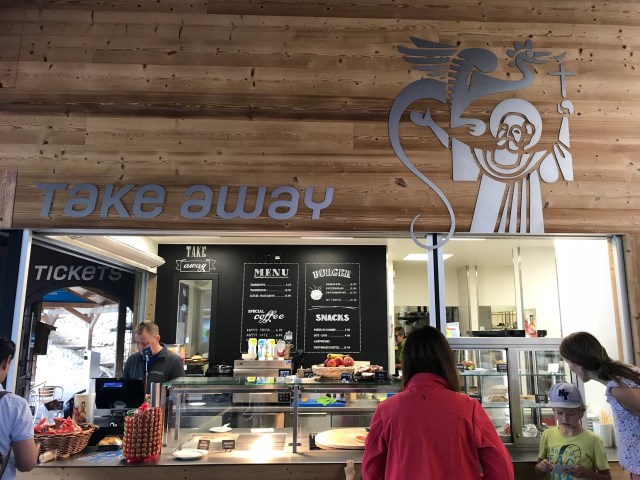
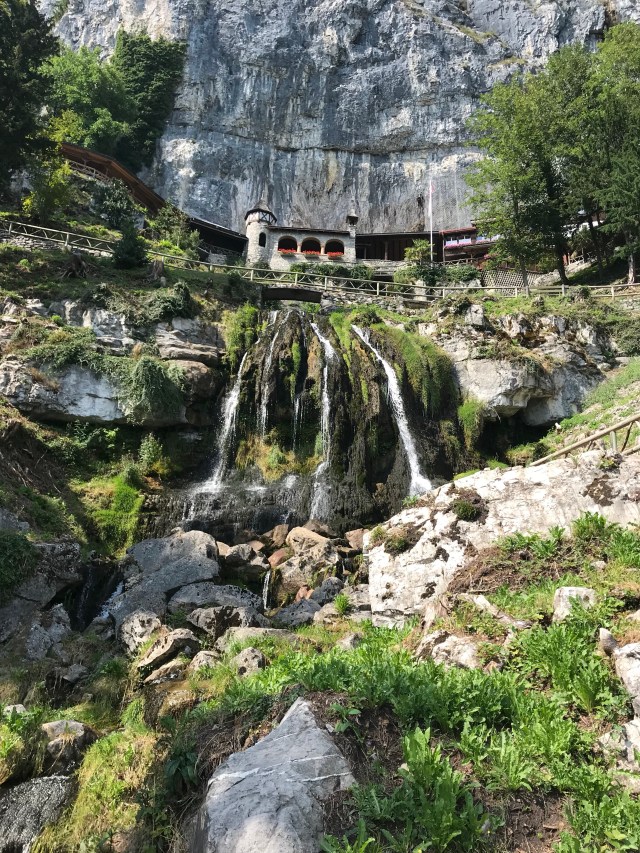
Next up was a bus ride along Lake Thun to reach a tourist attraction that I wasn’t at all keen on – the home of an ancient monk named Saint Beatus. He was possibly Irish and came to the area to convert the Helvetii and also claimed to have slain a dragon, which the Helvetii seemed to think was totally legit and so this monk lived in a cave and then had a take away shop named after him. This would’ve been pretty handy because the cave is miles from the nearest shops.

The site consisted of a long and steep ramp up to the little cave where the monk lived plus entry to an almost 1km stretch of tunnel that contained a river and stalagmites etc. Luke pestered me to give the caves a go and I said ok (I caved if you will. BOOM TISH) but we only got about 50 metres in before the roof got a bit low and I started quietly crying and had to leave. I was trying to convince myself it would be fine but the further I went underground the more a voice in my head kept saying ‘you are trapped!’ and I had to leave. Luke walked me back down to the gate and I sat outside and read my kindle. I felt totally fine when I got out and Luke went back to have a look but that’s it for me and caves. No more!

The outside was certainly attractive and worth a look. There’s a museum too but we didn’t bother.

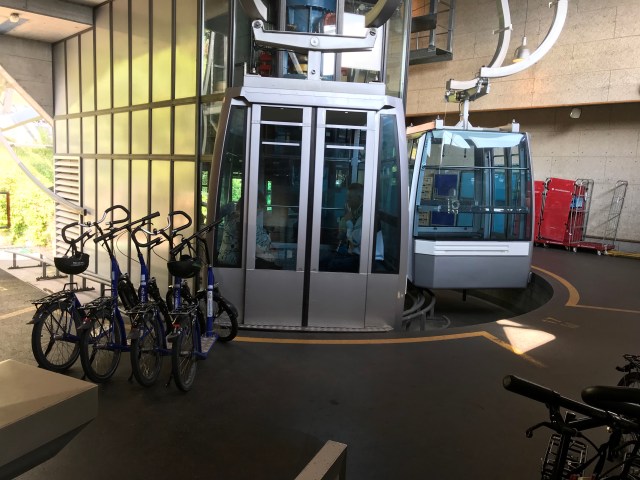
We went back to the bus stop and caught the next bus to the base of the Neiderhorn funicular and cable car. The cost of this was included in our travel pass.

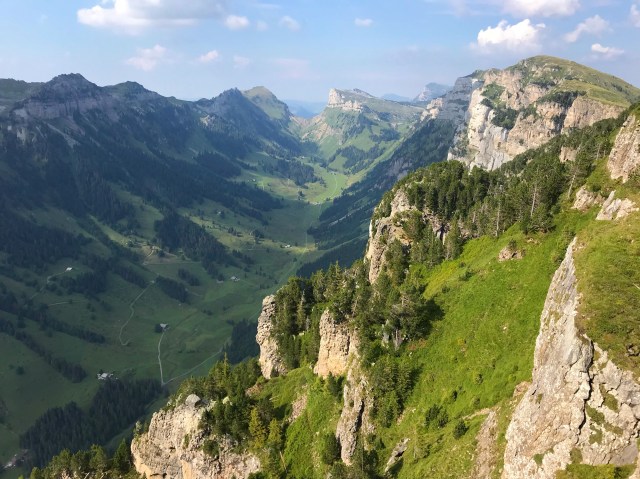
The view from the Neiderhorn was gob-smacking in every direction. The Neiderhorn is a long ridge so from the top you can see over the edge on one side and down towards Interlaken on the other.

On all the buses, the funicular, and cable car there’d been hardly a soul all day. That was to change, however, for our next activity. In the meantime we enjoyed looking at this Bernese Mountain dog being a bit lazy and catching the bus.

We don’t blame you, buddy. It’s 30 degrees out there.

Our last excursion of the day was another fantastic spot to see the sights.

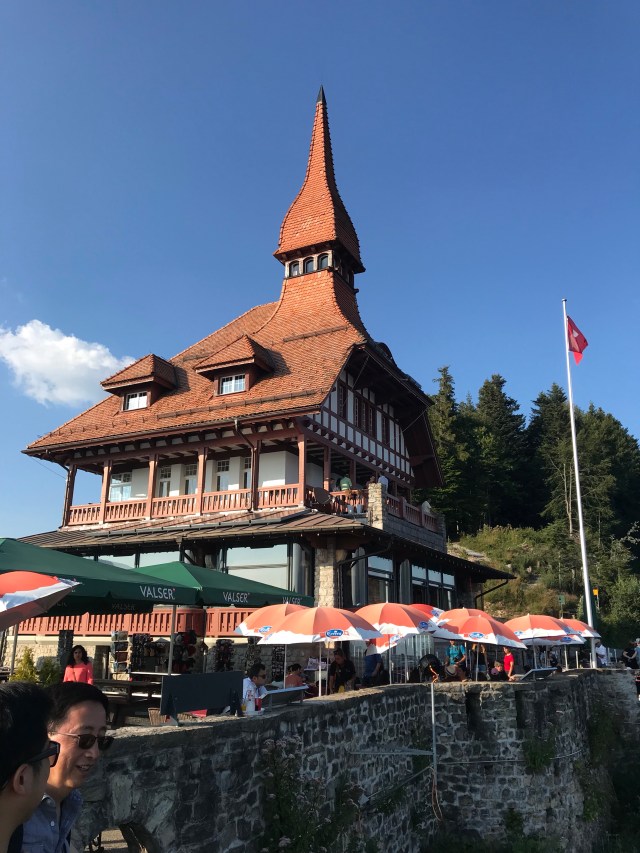
Harder Kulm ( or, as we like to call it, Heidi Klum) is a restaurant and viewpoint that is accessible via a long hard walk or a funicular from close to the middle of Interlaken, therefore it is very popular.

We crammed aboard the funicular to make it up in time for sunset and a lovely meal of schnitzel and salad. Despite some bad reviews on TripAdvisor we found the staff very friendly and welcoming. Luck of the draw, perhaps.

The space at the top has a viewing platform that extends out over the valley a little and was filled with people getting their photos taken.

We decided not to linger as we knew the funicular would be crowded on the way down and so we lined up and ended up having a nice chat with a high school girl from the Netherlands who was travelling Europe solo in her school holidays. How wonderful to be a teenager in Europe. In country NSW we had a choice between Queensland and Sydney for our getaways. Yawn!

We walked back to our hostel via a sculpture in town that I wanted to take a photo with – a Bollywood director who had filmed many of his hits in Interlaken. Our walking tour guide had even been in one of the movies as an extra!

We were exhausted by the time we got back to the hostel but I’ve been a complete trooper and finished this entry straightaway. What a champion I am!

A photo of me with an empty bowl. How intriguing!

Catching the Bus Along the Amalfi Coast, Italy.

We had booked four full days in Sorrento with the thought that we would use it as a base to see the Amalfi Coast.

Sorrento is not actually on the Amalfi Coast, it sits on the northern side of the peninsula and the AC runs along the south side. On the map below you can see Naples in the north, Mount Vesuvius and Pompeii in the middle and then the route the bus takes from Sorrento to Amalfi. To go from Sorrento all the way to Salerno to see the whole Amalfi Coast takes two buses and about 3.5 hours – you have to change at Amalfi. Amalfi is also where the buses leave to climb up into the hills to reach Ravello.

Screen Shot 2018-07-20 at 4.49.08 pm

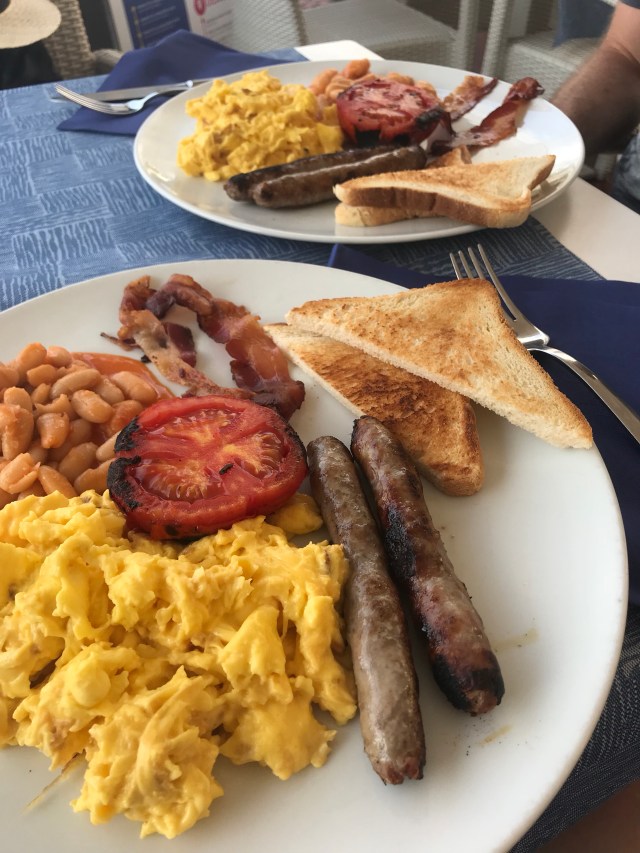
Although it is not far in a straight line from Sorrento to Amalfi or onwards to Salerno, the route is incredibly twisty-turny and the road hugs the cliffs. On our second day in Sorrento we bought the ten euro day pass and caught the 6:30am bus to Amalfi where we stopped for a hearty and not-at-all-Italian breakfast.

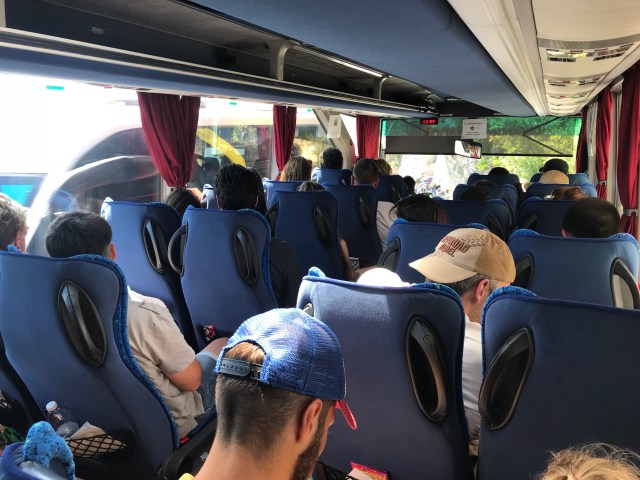
Then we continued on to Salerno and then back, stopping in Amalfi for lunch. While the first bus was less than half full when we set off at 6:30, it was standing room only before it got to Amalfi and every bus thereafter was full to the absolute limit, often turning away customers.

Just being on the buses along the route is an experience. The buses have a very loud and distinctive horn that they blast before all the sharp bends in the (often vain) hope that people will stop in an appropriate place so the bus can make it around the turn without having to stop. Usually people either don’t know what to do or don’t care and come on anyway, which means that they then have to reverse back around a corner. Traffic builds up so quickly that it sometimes takes quite a while for people to make enough space for the bus to move forwards and clear the road.

Frequently people have parked along the side of the narrow road, making the bus driver’s job even harder. There are tow-away signs all over but no-one seems to care.

People also seem to dump rubbish, either in bags or just in pieces, along the road and it’s kind of infuriating that Italians (and tourists I guess?) don’t seem to respect the unbelievable heritage and natural beauty they’ve been given – and on the other hand, if you’ve been elsewhere in Italy you just have to shrug and acknowledge that it could be so much worse.

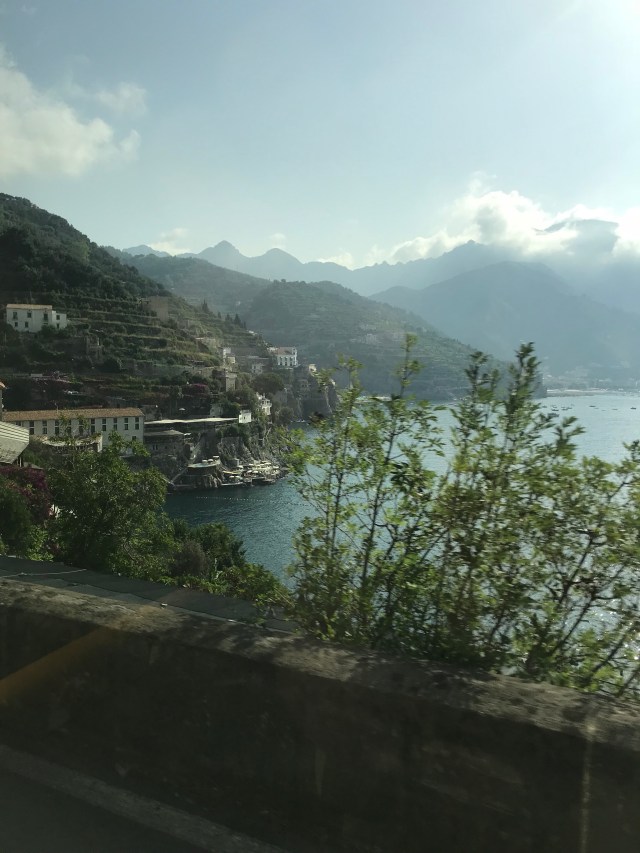
The coastline is stunning. Easily one of the world’s most dramatic and beautiful and enhanced by the ancient towers that dot the promontories, built over a thousand years ago to watch out for Saracen and Turkish raiders. The houses and hotels lean vertiginously over cliff edges and lemon and olive groves cascade down mountainsides.

Positano is the most steep, the oldest, and possibly most picturesque of the seaside towns.  We didn’t get off the bus in Positano but it is easy to admire from the road.

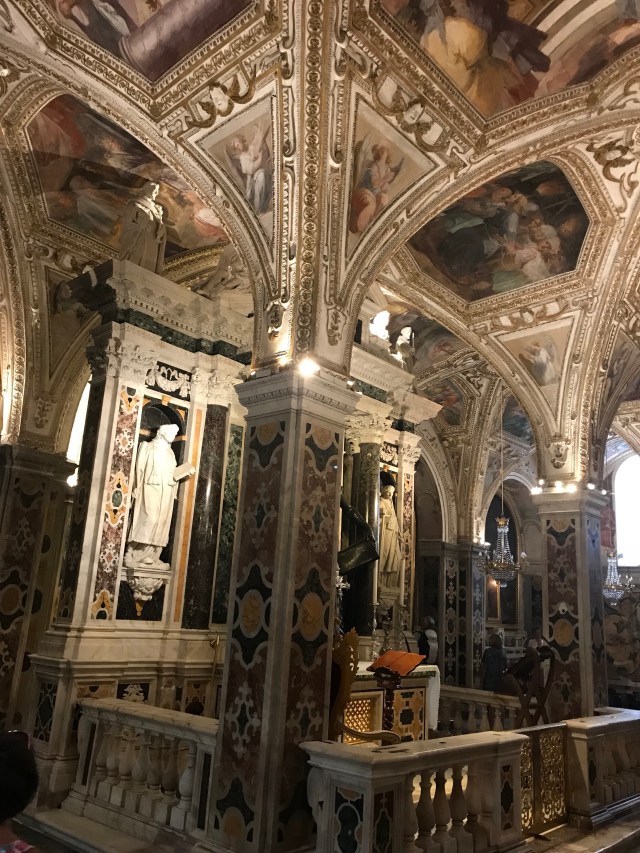
We spent some time looking around Amalfi and particularly at the cathedral, which is very grand for such a small place – this is because Amalfi was once a maritime hub, so powerful it minted its own coins. It was devastated by a tsunami and plague centuries ago but signs of its past wealth remain.

In all the towns along the coast beaches are divided into sections. The largest is for the people who rent loungers for the day and a much smaller part is sectioned off for people who just want to lay a towel down. I find this process offensive – beaches should be for everybody, not a select few, but at least in Amalfi people can put their towels down even between the loungers if there’s space.

Admittedly Luke and I didn’t swim at any of the beaches. Apart from the beaches consisting of boiling hot grey pebbles or grit, it is hard to enjoy a beach when there are only two of you. There’s no way we’d leave our bags unattended which means only one of us could get in the water at a time.

Fortunately Luke did some research and found that were at least three hotels in Sorrento that would let non guests use their pools for a fee. We found the Hotel Central was cheapest and enjoyed several cocktails and a peaceful swim in their small and quiet pool. Happy days!

Luke loves the blue drinks!

Also check out the little awning on the beach chairs here! You’ve probably all seen this before but I thought it was nifty. More useful if the chair is actually in the sun but you get the idea.

So, we spent one of our days in Sorrento travelling the length of the coast, then our last full day saw us head back to Amalfi, again on the 6:30am bus, to catch the next bus to Ravello. Obviously the next Ravello bus departed just as our bus pulled in (because Italy) so we waited for half an hour then managed to grab a seat. The ride up to Ravello is perhaps less hair-raising than the drive along the cliffs but the road is even narrower in places (at one point it is only one car wide) and the hairpin bends are even more tight.

Ravello town square.

We had breakfast and a wander around Ravello, looking at the Cymbrone Gardens (where parts of Wonderwoman were filmed) and admiring the views of the hills from higher up before heading back to the bus.

There was a huge crowd waiting to catch the bus back and Luke made it on before the bus driver cut everyone off. I called out ‘my husband!’ and pointed to Luke and the driver kindly let me board last. This meant I had to sit right next to the bus door with my back pressed against the front window and leaning against it so the driver could see his mirrors.

Going through a tunnel backwards in a bus.

Going through a tunnel backwards in a bus.

It was kind of fun in a white-knuckled way and an older lady in the front seat kept smiling and grimacing understandingly at me when we sped up or turned a tight bend. When people got up to get off towards the end of the route everyone was very courteous about making space and letting older people sit down, as well as letting the driver know what was going on at the back door of the bus.

By the time we got back to Amalfi to catch our last bus to Sorrento there was a huuuuuge group of people waiting in the bus bay and so I went off to investigate other options and we ended up deciding to pay an extra ten euro to buy a seat on the private ‘city explorer’ bus (you know those red ones you see in major cities) that only sold enough tickets to fill the seats. No standing room and better aircon. Totally worth it!

Catching the buses along the Amalfi Coast is quite an experience and can be exhausting. There are big scrums, people push and shove a bit and it’s frustrating if you don’t know precisely where the bus stop is. Staying in Sorrento worked out well as we were at the beginning of the line and therefore always got a seat in the mornings – important when the ride is nearly two hours long.

If you’re thinking of visiting the area and catching buses my advice would be to go out of season. Of course if you enjoy combat sports and the smell of sweaty strangers and bus exhaust fumes then by all means go in Summer!

The lady with the red bag kept my spirits up;-)

The driver who let me ride shotgun. He looks so relaxed!

Perfectly suited to a full size bus.

Eltham Palace, a Medieval Festival and NEON!

I spent a rather varied day yesterday. I discovered a medieval tournament was going to happen not too far away so I caught a train, then light rail, then a bus, and arrived at Eltham (pronounced elt-am) Palace just after the event started. I hadn’t really thought about the fact that the thing was going to be held in a field so I only ended up staying for two hours (hay fever) but they were very enjoyable!

Tickets to the tournament also entitled everyone to wander around the buildings.

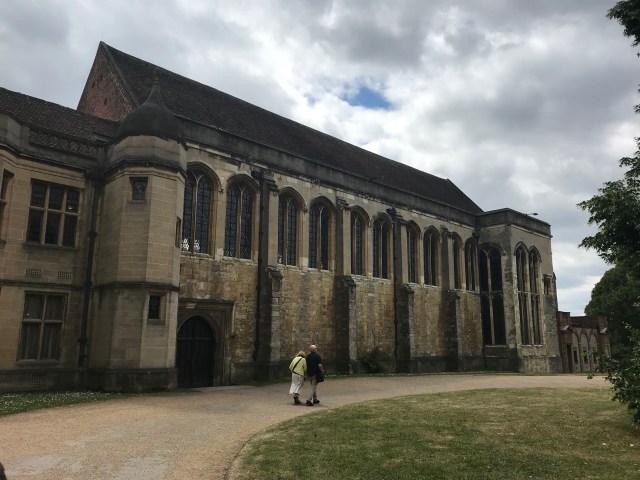
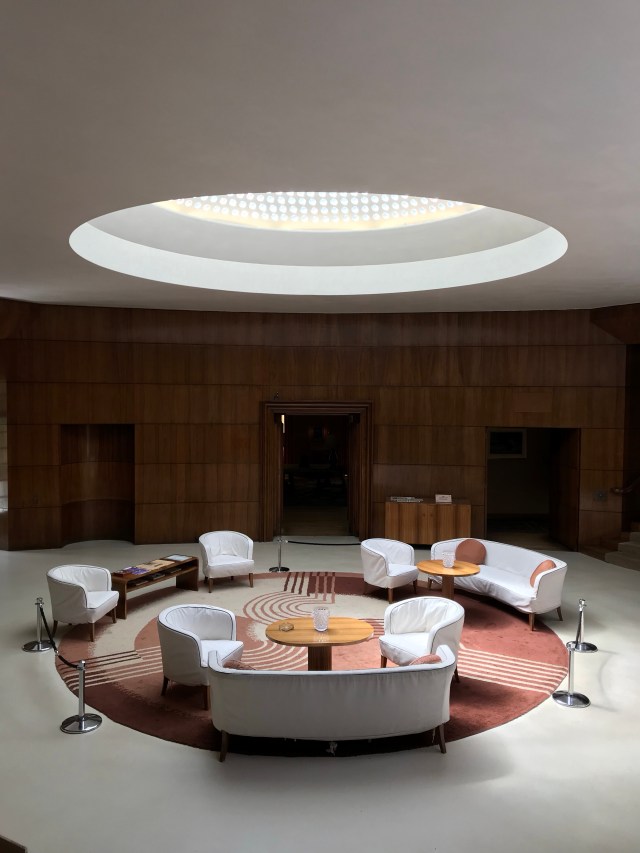
Eltham was originally a church, then a royal residence for one of the Henrys, then fell into disrepair. At the beginning of the 20th century it was bought by a very wealthy couple who restored it and built on a stunning art deco house.

They were keen entertainers and everyone from politicians and royalty to movie stars came here to get away from it all. The ceiling in the photo above was my favourite part – not lights, it’s a glass and cement dome.

However much of it was damaged in the Second World War and the owners moved away. Eventually it was taken on by the National Trust and is used today for a range of events including weddings.

The tournament was happening in a field out the back and so I had a wander around, watched the falconry show, and chatted to the guys in the beer tent who told me that rubbing nettles on myself might cure my hay fever. Nice try, I said, and didn’t.

I drank some rhubarb cider…

And ate a traditional medieval burger…

And listened to some story-telling…

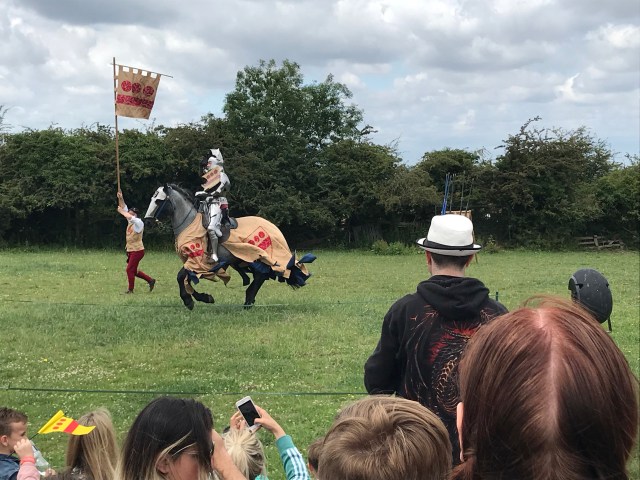
Then it was time for the main event! The jousting!

The jousting was an entirely authentic experience (well, as much as could be). The four men and horses who performed the jousts were professional jousters, which I didn’t realise was a thing, and I learned ( in the beer tent) that each horse cost a thousand pounds to insure for the day.

The jousting, once the talking-it-up and the make-the-crowd-hoarse-with-cheering bit was over, was quite fast paced and very impressive. The rules were explained and everyone in the crowd got right into it.

If my eyes hadn’t been filled with pollen or grass seed or whatever I would’ve stayed all day.

Before I left I had a walk around the interactive tent-displays and chatted to various stall holders about how they got into doing what they were doing and historical accuracy and the SCA (Society for Creative Anachronism, a global medieval revival group that I was once part of) which is not very big in the UK, since they probably had all their historical recreation stuff in full swing before the SCA got going in America.

After leaving Eltham I caught a dizzying array of public transport to Walthamstowe. Even though I had to change buses and trains a bunch of times the longest I had to wait was 10 minutes and having Google maps to direct me at every stage made the whole thing so painless I couldn’t help but reflect on what a difference technology has made to travel in the last two decades.

I was in Walthamstowe because I’d read there was a neon store that was Instagram-tastic.

And there was.

God’s Own Junkyard was terrific.

It was glorious. I love lights and colour and this place immediately lifted the spirits.

I think I heard someone say all the signs were for sale!

When I win the lottery I will come back.

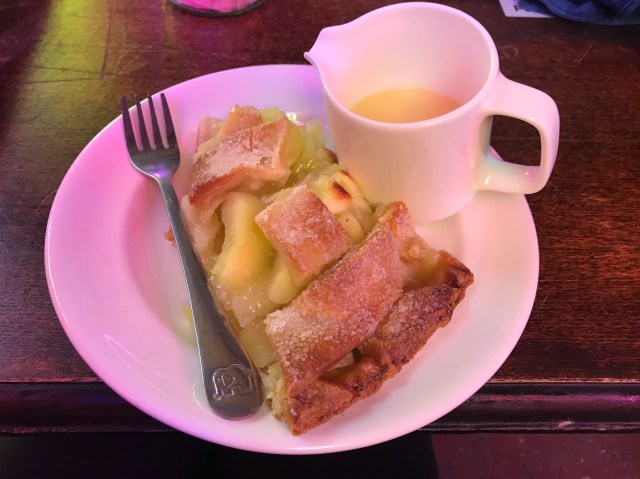
There was also a craft brewer and a gin place next door. If you have time and you’re in east London on a weekend I highly recommend making the trip and trying the apple pie, which I feel goes well with something as all-American as neon.