Oxford: Authors, Ancient History, and Artifacts.

We caught the bus from Cambridge to Oxford via Milton Keynes. There was a man on the bus who smelled so strongly of cigarette smoke that we had to move away from him. Still, at least he wasn’t cutting his toenails like the guy on the bus we caught to Heathrow a while back.

We arrived in Oxford around 1:30 and paid to leave our bags at the Oxford Backpackers. Four pounds per bag wasn’t a bad deal and the staff let us use the toilets too, which was nice of them.

We set off for a wander around town. Obviously I had to take a photo of this pub, almost next door to the school Ronnie Barker attended and named after one of the most famous Two Ronnies comedy sketches. We would’ve stopped in for a drink but it’s a Wetherspoons – urgh.

First stop was lunch at the Eagle and Child, the pub frequented by the illustrious Inklings, who included JRR Tolkien and CS Lewis.

It’s a smallish, dark and pokey pub that was heated to a startling temperature, but at the very back was a room that was less like a Saharan midday and had enough light to read the menu. We shared a chicken and chorizo pie that wasn’t half bad and left feeling fairly satisfied.

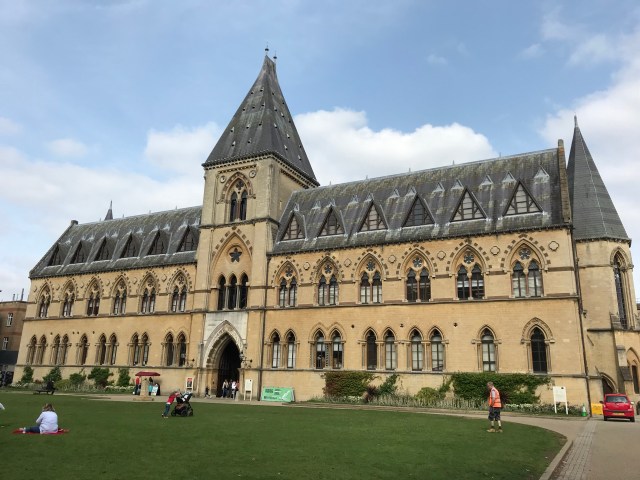
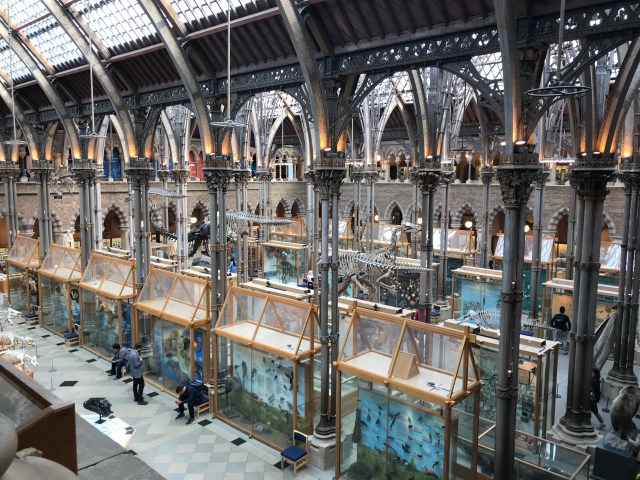
Next was a walk around the Natural History Museum. It looked a lot like the one in London but on a much smaller scale and was also free to enter.

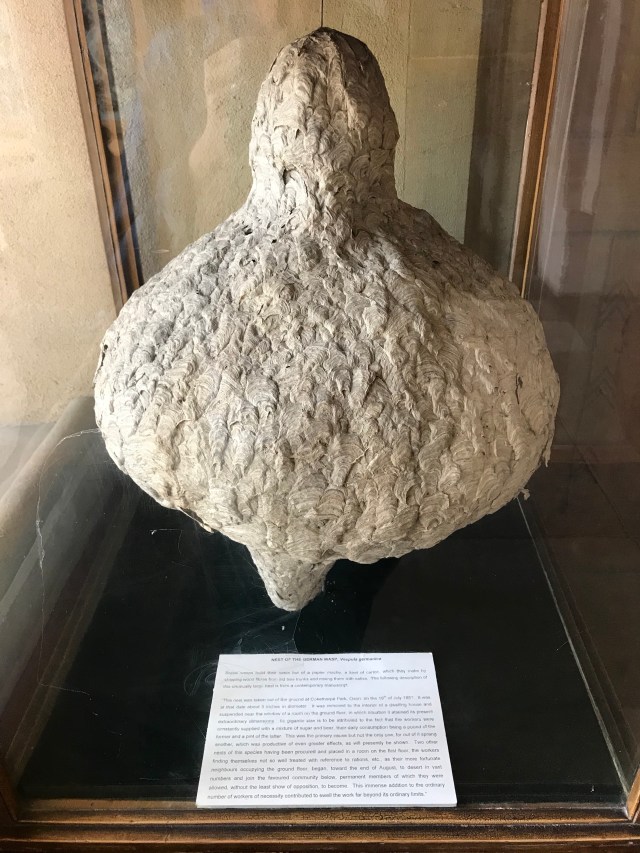
There are a lot of interesting things to see. One of the exhibits that grabbed my attention were a gigantic wasp nest that was grown deliberately by some psychopath.

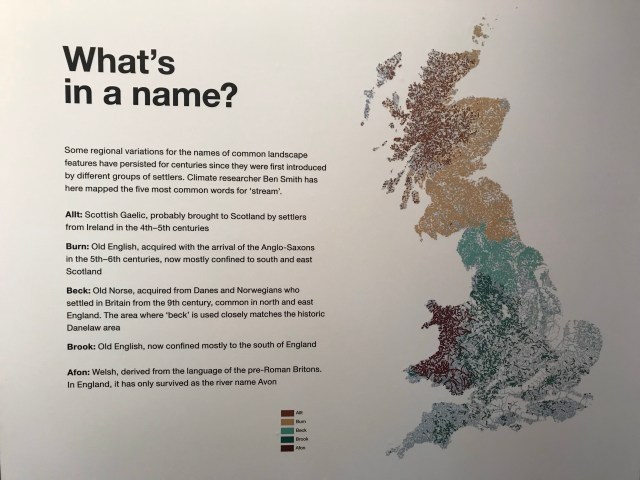
They had a good insect display with a few cases of live bugs including giant cockroaches. Another good section was a history of British culture with some great graphs showing immigration patterns across the centuries and one showed how different languages affected place names.

Our last stop was a Tolkien exhibition in the library that is opposite the Radcliffe Camera. Although it wasn’t large it did have a good number of original items on display and I thought the artwork was most interesting. Tolkien designed the dust jackets and illustrations for early editions – and drew all the maps of course. I had not known that he was born in South Africa, although his family moved back to England when he was three. Sadly photography wasn’t allowed so here’s a photo of the Radcliffe Camera instead.

We had a short walk through town before picking up our bags and heading to our Airbnb. As we booked this trip quite late we’d decided on just a room in an apartment. When we arrived the owners told us we’d have a continental breakfast provided every day – a nice surprise!

Next: Blenheim Palace.

Two Days On The Essex Way

As Luke’s aunt and uncle live in Dedham we decided to incorporate a visit with a leg of the Essex Way, a long distance walking trail that stretches from the English Channel to the eastern edge of London.

Dedham sits close to the middle of the Way. We decided to walk from Great Horkesley to Dedham on the first day, stay the night then walk from Dedham to Manningtree the next as it would be easy to catch the train back to Cambridge. Also the part around Dedham is considered one of the prettiest on the Way as it’s an official Area of Outstanding Natural Beauty (AONB).

We left Cambridge mid morning and caught the bus from Bar Hill into town then a train from Cambridge to Ipswich then another train from Ipswich to Colchester. The train to Colchester was supposed to go on to London but due to a fatality on the track it was delayed in Colchester indefinitely.

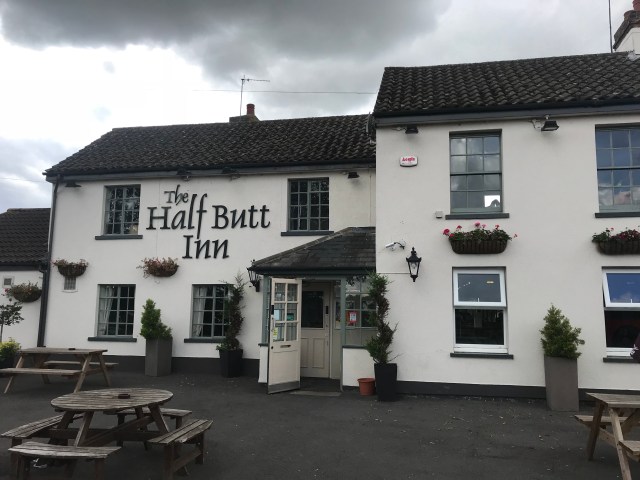
From Colchester we caught a bus to Great Horkesley where we shared a steak and ale pie at the amusingly-named Half Butt Inn.
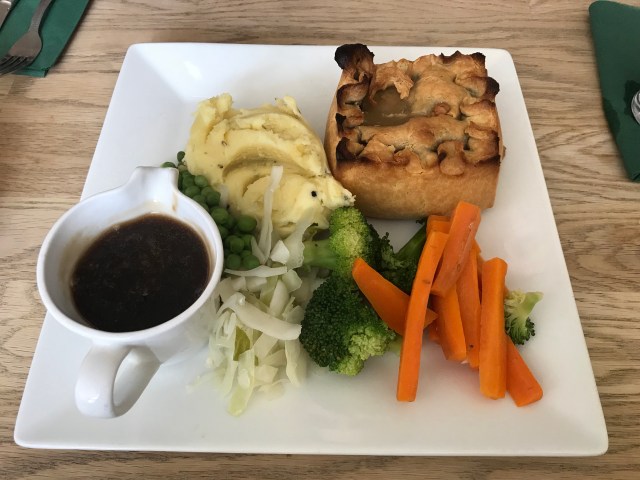
I had about a quarter and Luke had the rest, primarily because I’d weighed myself at Andrew’s and been mightily displeased with the results.

Anyhow, a little bit of pie was just as delicious as a lot and it’s good not to set out with a bursting stomach.

We set off up the road looking for the Way markers and were soon on the right track.
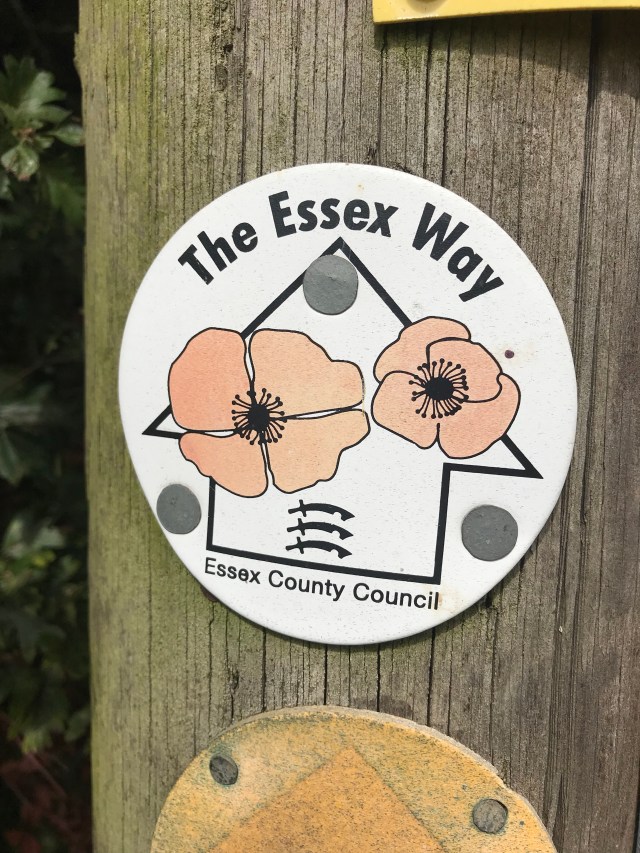
The Essex Way turned out to be much, much better marked than the Cumbria Way. Almost every time there was a turn it was clearly signposted. We only missed one marker and took two wrong turns, each of which only cost us a few extra minutes. I wouldn’t recommend doing it without a map but we coped quite well with a combination of a printout from from the website and google maps. On the Cumbria Way I would recommend the full OS maps but they weren’t necessary here.

A lot of the Essex Way seemed to be through fields.
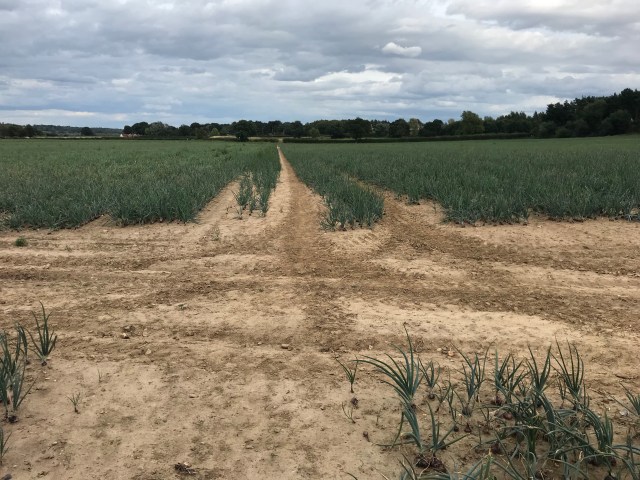
A lot of them weren’t particularly scenic.

Maybe it wasn’t the best time of year to do it? We saw a lot of onions and beets, anyhow.

Essex is also very, very flat. We only walked up and down perhaps three small slopes in the two days of walking. This would make it an excellent walk for people with little experience doing long walks, plus you’re always within sight or sound of a road so it would feel a lot less daunting than being out on the moors or up a mountain. The trade off, off course, is that it’s nowhere near as beautiful. If the Lake District was a ten then most of what we saw on this trail (which admittedly wasn’t much) rates about a two. There are some pretty vistas across gently undulating fields with church spires in the distance but half the trail is between hedges and you can’t actually see anything.
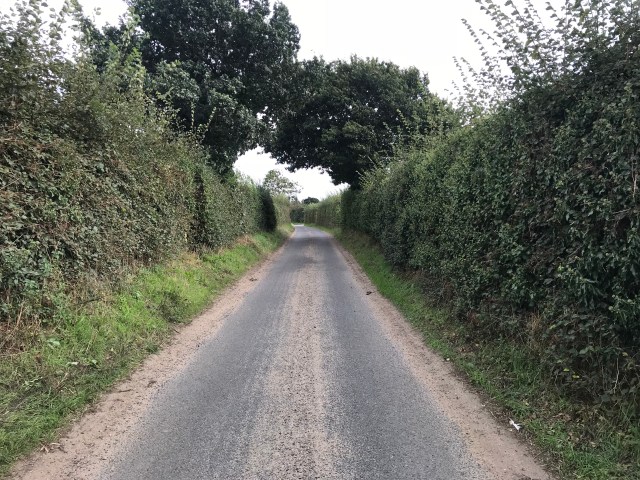
Also not great if you’re a bit nervous of cars. Good for snacking on blackberries though, of which there was an abundance!

The little villages are very picturesque and if you like that he’s cottages you’ll be in heaven.

I particularly like all the churches and their fancy lych gates. Lych gates originated in the medieval period as a place for mourners to bring the corpse (litch) to be accepted by the priest. The lych gate was a covered place for them to wait.
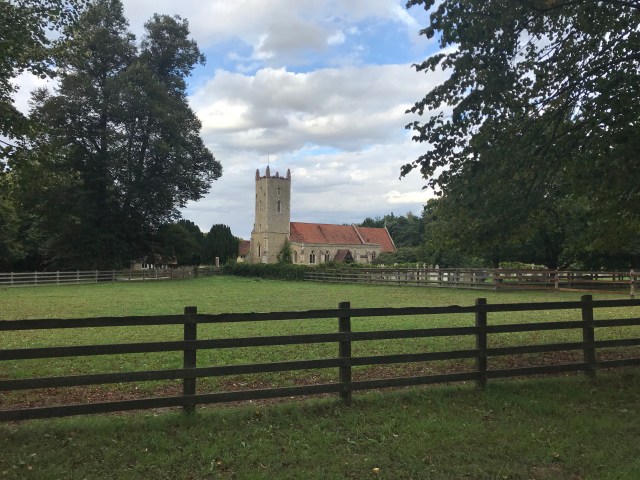
This part of England is known for horse breeding and racing so we saw a few horses along the way too.

As we neared Dedham our feet were aching so we stopped for a drink at Milsom’s, the fancy restaurant that we’d visited on our previous visit to Mark and Sue. They didn’t bat an eyelid at our sweaty clothes and red faces, which was awfully good of them.

After a half pint and a rest we felt slightly refreshed and didn’t find the last kilometre too taxing. We walked nearly 19 kilometres on our first day, a good effort after a number of weeks of slacking off. We also managed to get in just before the clouds opened. Lucky!

The following day we had a delicious cafe breakfast that was as good as anything you’d get in Melbourne and had another look at the renovations of Mark and Sue’s place. It’s really come along since we were last there! It’s all going to look amazing when it’s done and there’s lots of neat little aspects, like windows that close automatically when it starts raining.
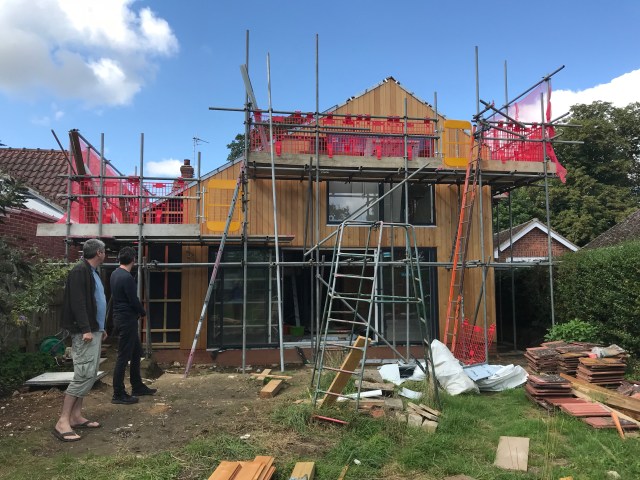
I took a few photos of Luke with his cousins Alice and Isabel. Luke is the oldest of his generation of cousins as his mother is the eldest of nine Dempsey children. Luke’s uncle Mark is the youngest of the nine (and only four years older than me!) so his children are the youngest of that generation of cousins. Does that make sense?

It was lovely to see them all again!

Our second day of walking was from Dedham to Manningtree. It wasn’t anywhere near as far as the first day but that was probably just as well as we were a bit stiff. The views on day two were a bit better and we only went off track once right at the end. It did mean climbing a fence and crouching through some trees but we emerged on the footpath only a couple of hundred metres from Manningtree station.

We stopped off at the surprisingly nice Station Hotel in Ipswich for lunch (surprising because hotels that are next to train stations are often rubbish) and then continued on the Cambridge.

All in all, a good walk for our level of fitness and experience but not terribly scenic. Perhaps it would be better in Spring? It did seem like a walk that wouldn’t get too muddy (unlike the CW) and is much more accessible. That being said we only saw one other walker in the whole two days and he was also doing the Essex Way. We stopped for a moment to chat and he expressed surprise as well that we were the first people he’d seen and he’d been walking all day. I’m glad we saw at least one other walker so Luke could have a small taste of what I’d experience on an hourly basis in Cumbria. Often chatting to other walkers took up several hours of my day! How strange that, this close to London, we only saw one person.

A few more photos to finish with – and could someone tell me what plant this is?
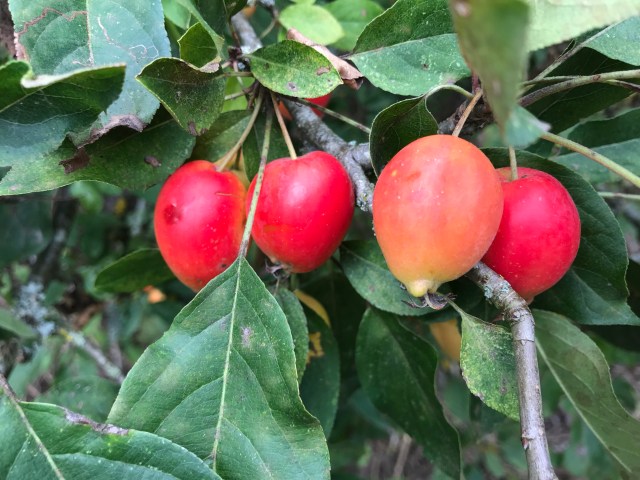
Crabapples?

Carlisle – Not As Bad As They Say!

This post, like the last one, is out of order – apologies again! I wrote it ages ago and then didn’t post it so here it is.

Every single person I had spoken to about The Cumbria Way and the last day of it towards Carlisle had spoken with no small amount of disparagement about the city – and quite a few of these people had lived there for a time. Therefore my expectations were about as low as could be when I finally arrived after a taxi, plane, bus, and then train journey from Belfast via Edinburgh. My plan was to walk back to Keswick over two or three days and finish my first proper long distance walk, having already done Ulverston to Keswick a few weeks ago.

I don’t know how anyone could arrive in Carlisle by train and not be at least slightly impressed by the way the castle turrets dominate the town (I didn’t take a photo sorry), not to mention that the station building itself is also quite lovely.

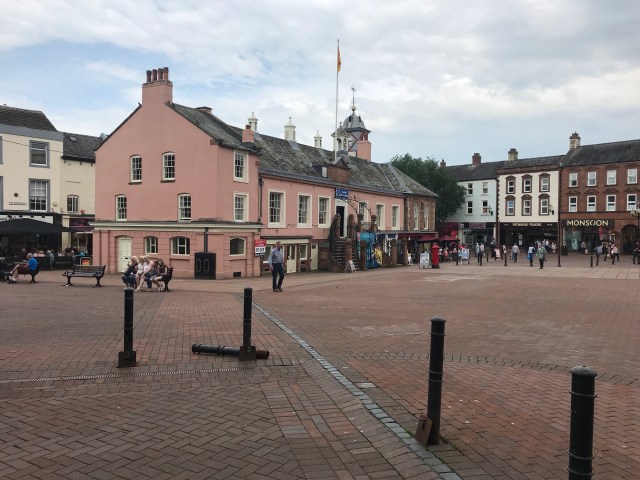
The pedestrian centre is a short walk west from the station and is a large open square. After the very helpful man in the pretty pink tourist information building gave me a printed list of bed and breakfasts and pointed out which were closest, I went for a wander in their general direction.

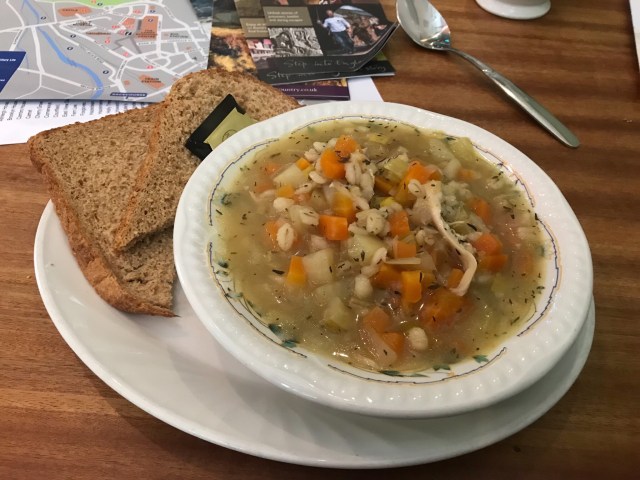
Being about lunch time, but still full from my big fry-up at Belfast City airport, I was looking for something light. I walked past a church hall that was operating as a cafe and went in to find that it was full of locals enjoying home-cooked food at bargain prices in an atmosphere not dissimilar from an inner city soup kitchen.

The soup was lovely and the cakes looked even better (the old man next to me had a huge slice of lemon meringue pie that looked to be the stuff dreams were made of) but I was determinedly Being Good. Especially after all the gourmet treats and potato bread in Ireland.

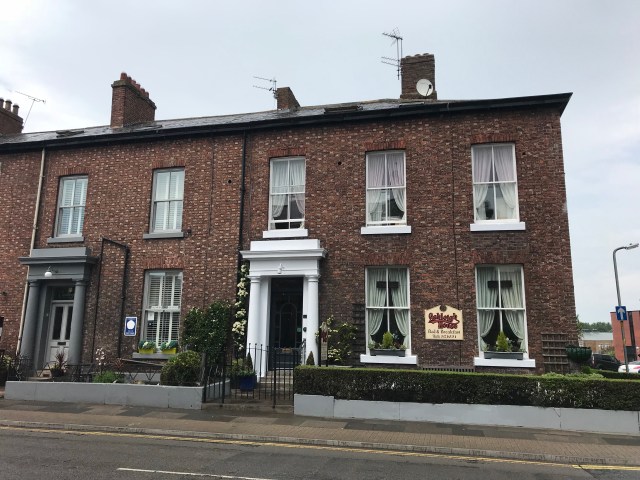
From there I found a room at a nearby B&B so I dropped off my bags and went for a walk around town.

Unlike Belfast, which was bombed to bits during the world wars thanks to its huge docks, Carlisle got through relatively unscathed and has many buildings that reflect its history from Roman times onwards. It sits along Hadrian’s Wall and has a large museum that is partially devoted to it, with terrific hands-on stuff, like typical tents for legionaries and leather vest mail that the soldiers would’ve worn. The museum also creates an effective soundscape that really adds to such display.

Did you know that the Romans actually built two walls?
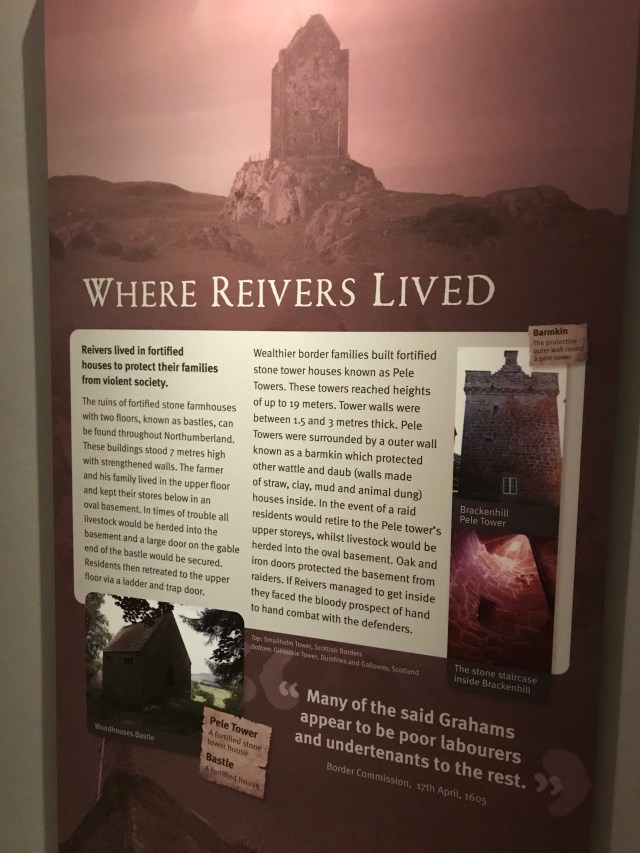
I was interested to learn about the reivers and pele towers, having read about them on other blogs.

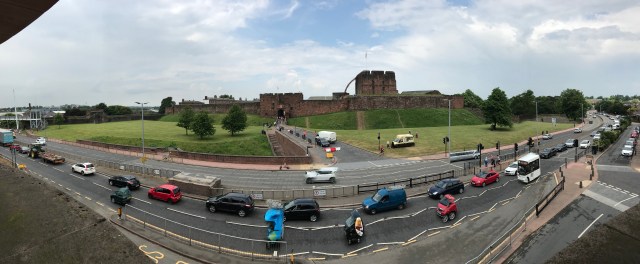
The outside of the museum mimics the shape of the round castle towers near the station.

View from the museum across to the castle.

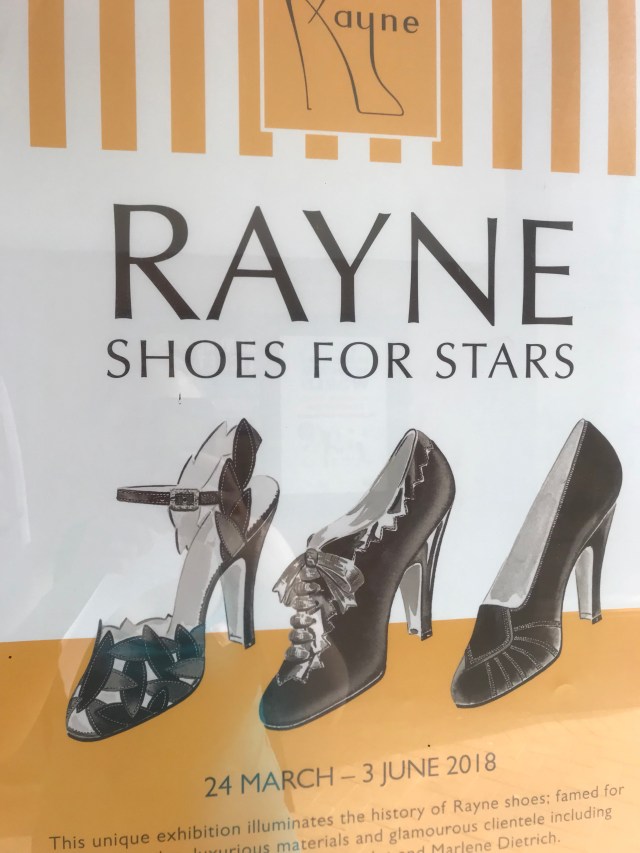
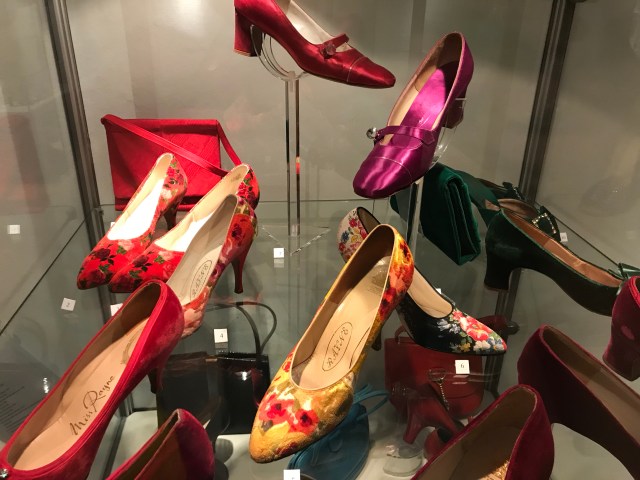
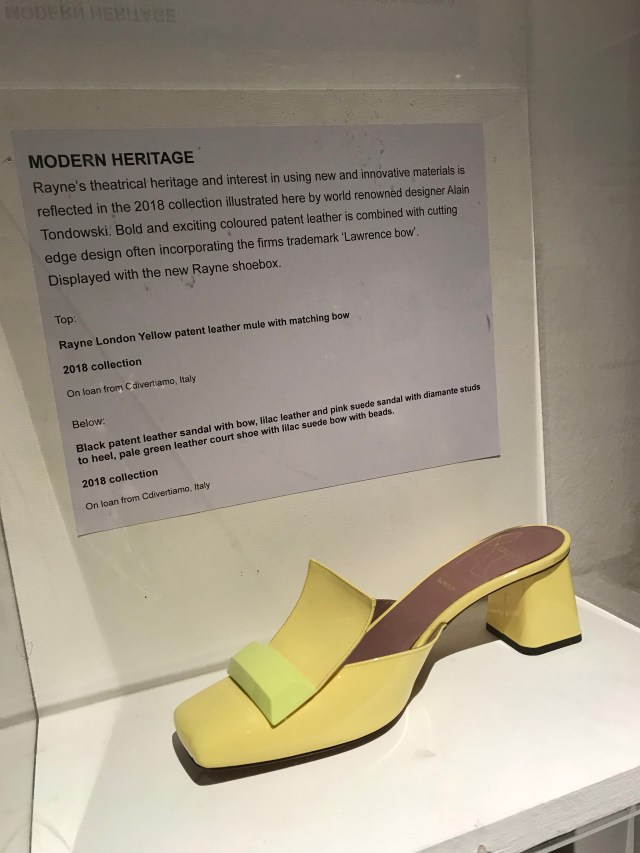
The featured exhibition in the museum was on fashion, focusing on shoes designed by a family who began in London in the 19th century, outfitting stage performers but eventually being given the royal seal.

The museum also has a nice little collection of Pre Raphaelite art. My favourite! I particularly loved this drawing. So curvy.

Imagine that as a stained-glass window!

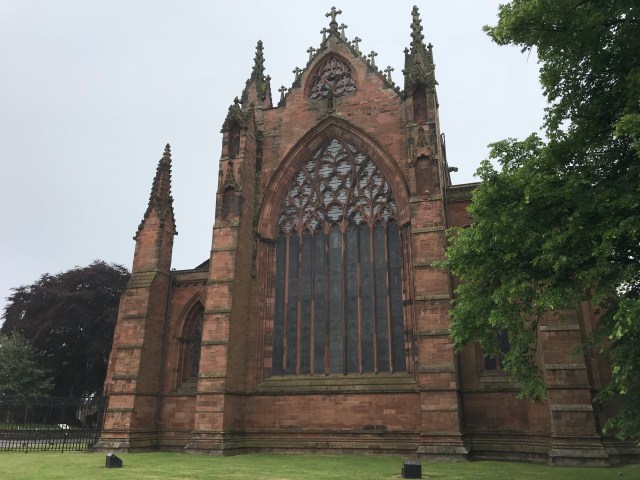
Outside the museum is the castle and on the other side is the cathedral. Apparently the cathedral is a shadow of its former self, parts having been taken over the centuries for other purposes. It’s still a magnificent structure though and worth a visit just for the cathedral ceiling. I didn’t have any change on me for a photography donation so I didn’t take any photos so you’ll just have to go visit yourself and take a look.

One interesting fact that I noted inside the cathedral is that the monks weren’t supposed to sit for services (which were no doubt interminable) so they made hugely ornate perches along the sides so they could rest without sitting. It’s nice to think even medieval monks were lazy dodgers.

This house was for sale across the road from my bed and breakfast. What a bizarre structure!

After a wander round town and the purchase of a second pair of shorts, I stocked up on reasonably sturdy food (tortillas, apples, hummus and hard cheese) for the following day’s walk. I also bought some eggs which I hard boiled in the kettle in my room because I am a genius.

Geneva

I wrote this post just after we left Geneva and then completely forgot to post it. So here it is, three weeks late and completely out of order.

It would be fair to say that we probably didn’t get the most out of Geneva. The hot weather combined with uncomfortable accommodation meant that we felt fairly flat. We had three nights and spent almost all but one of our days just relaxing. We did manage to see a few things though and we both agreed that CERN was the highlight.

We did do a few other things though. If you look up ‘things to do in Geneva’ the list is pretty sparse.

We looked (sniggered) at the floral clock.

I’m not saying there’s anything wrong with clocks or flowers… well, certainly not with flowers, but if you’re a pretty major city and your floral clock gets mentioned in every ‘Top Ten Things To See and Do’ list, well… that’s not good, is it? Also when we went to Budapest years ago our walking tour guide said that their moving clock was the most over-rated attraction in the city and we couldn’t help but agree. I mean, if you’re a clock fanatic, go for it! You have every right to get excited. But if you’re not normally into clocks then it’s not really a draw card.

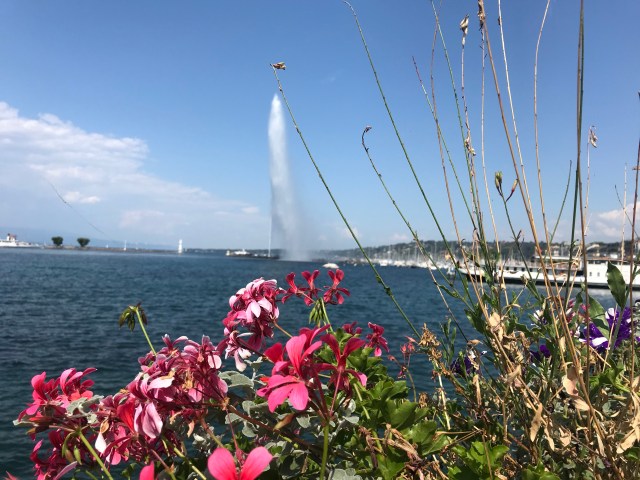
We walked along the shores of Lake Geneva. It is a nice lake. People swim in it and the water looks beautifully clear and blue. It has a huge jet of water, much like the one in Canberra. Probably because a single huge jet of water is something I associate with Australia’s underwhelming political capital, I didn’t find the jet in Geneva particularly impressive. We dutifully trotted out along the pier to stand very close to it but it didn’t even reward us with a cooling spray. Lame.

We took a walk around the Old Town too. Thanks to Martin Luther’s no-frills approach to life (he’s the reason Swiss jewellers turned to watch making when they were banned from making fripperies) the old town is kind of lacking in ornamentation. Nice but it’s more plain than most other cities we’ve visited. Apparently it’s more fun now than it used to be…

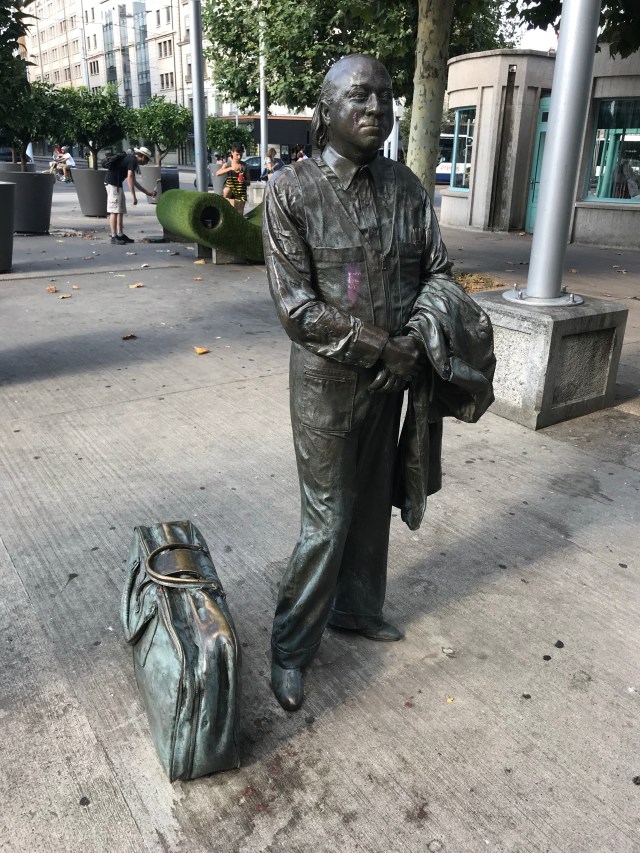
Geneva does have quite a bit of art and some interesting architecture, possibly due to being seriously multicultural. I probably should’ve mentioned this first because it was actually the best bit. We were staying near Plainpalais, a huge, desert-like square that made us feel like Lawrence of Arabia every time we struck out across it in the Saharan heat. It was the size of a soccer field but all gravel and it must be just as inhospitable in winter. However, there were a number of statues around it, mostly bronze figures that each had a story to tell. Not literally – in fact there was no information anywhere we could find near the sculptures themselves, but I looked them up online and it was fascinating.

One of the sculptures was of Frankenstein’s monster.

Apparently in the book Plainpalais is where the monster kills his first victim and the sculpture has layers of meaning referring to the homeless people and disenfranchisement. Mainly, though, it’s just really neat.

The others you’ll just have to come see for yourself. Also I didn’t take any photos and can’t recall their meanings. Apart from the bronze statues there are several other monuments to various things and the descriptions online are delightfully pretentious. The first night we arrived we walked around the area and saw a bunch of huge neon signs on top of many buildings and couldn’t work out what was going on as they didn’t seem to be the names of businesses or have any intelligible meaning. Turns out they were also art and had certainly achieved their aim of creating dialogue and challenging perceptions. Great stuff.

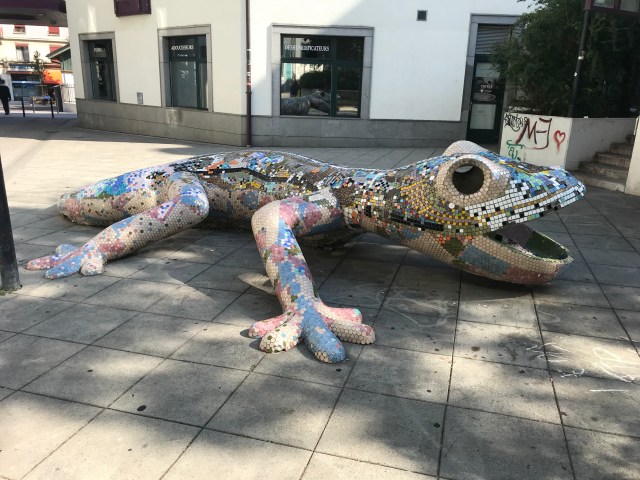
All over the city were large and small examples of street art. One of the ones I liked best was near our apartment.

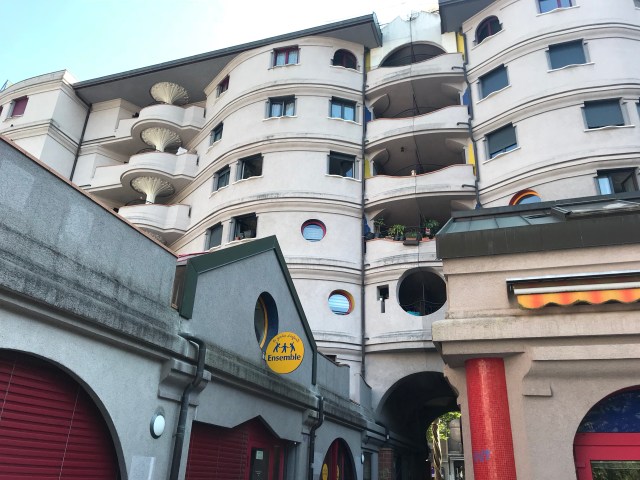
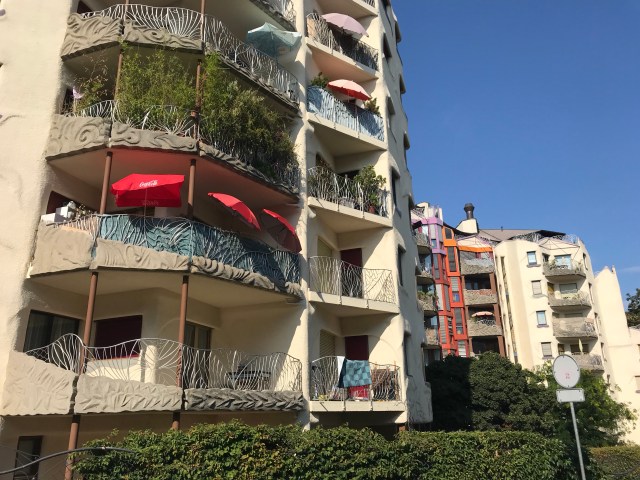
We also spent an hour walking around a suburb called ‘Le Grotte’ (somewhat unfortunate) where a bunch of architects had been influenced by… well, can you guess?

If you’ve been to Barcelona you’ll have shouted ‘Gaudi!’ At your screen, and you’ll have been right. In fact if you have any interest in architecture at all you’ll have picked it up. Lovely organic lines and detail, bold colours and lines. Well worth a look around and right next to the main station too. My photos are a bit rubbish but hopefully you get a bit of an idea.

I think we should’ve seen and done a lot more if we hadn’t been crippled by the heat, but at least we saw more than just the floral clock and that’s worth something, I think.