Keswick

The weather has become colder and today I had a few jobs to do before leaving to go south and then fly to Spain on Friday.

First, a quick trip to the post office.
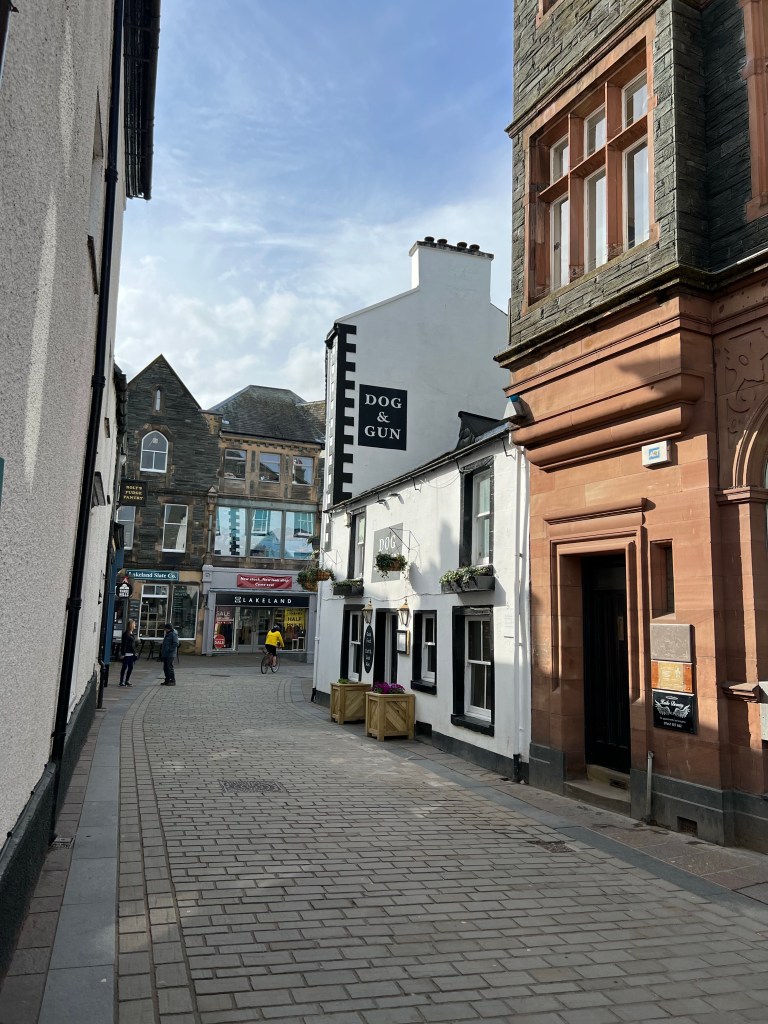
It was not, in fact, a quick trip. It took over an hour thanks to me not reading the instructions properly on the stickers I had to fill in and having to re-line-up several times. Oh well!

Still, a literal weight was lifted when I passed it all over the bench and I went off to the museum.

The Keswick museum is small but contains some very interesting items.

Birds’ eggs. Very pretty!
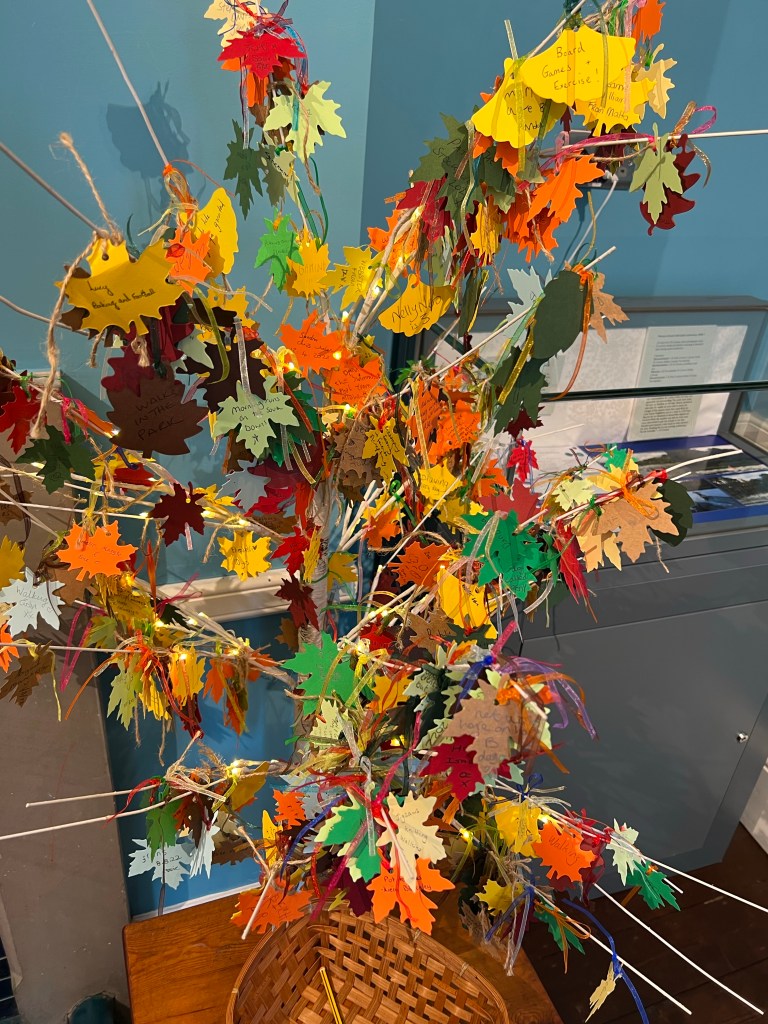
A little tree hung with people’s methods of getting through lockdown.

And a giant musical instrument that was like a xylophone but made of pieces of slate. They had buttons in the display that you could press to hear the music, which was surprisingly ethereal.

Next I was going to buy myself a pair of hideous but comfortable hiking sandals (Spain being a lot warmer than Cumbria) and I like to think I succeeded and then some.
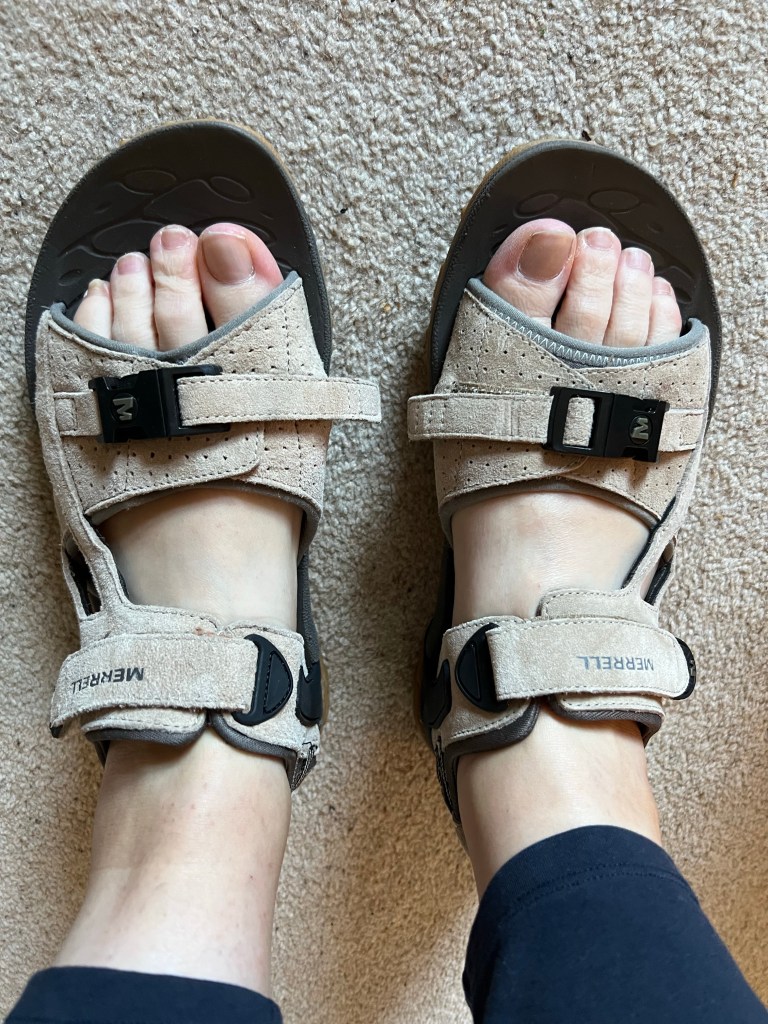
They fit perfectly, why do they look so huge? Like I’m about to go snorkeling.

I stopped in at the Oxfam shop too. No matter where you go in the UK there seems to be a plethora of second hand clothing shops.

I was excited to find a copy of The Idler, a book-style magazine that was the forerunner of one of my favourite books ‘How To Be Idle’. The magazine is full of articles on idleness. I’m generally a busy person and I live a busy life, but after I read this book years ago (and got two of my book clubs to read it, with mixed results) I re-examined my attitude to life. I make more time to do nothing now. I used to love doing nothing when I was a child, pottering around, or even just staring into space. Now I don’t feel guilty if I do nothing at times.

Anyhow, the magazine serves two purposes. First, I can read it, and second, I can cut it up to make some mail art. A few years ago my friend Fish and I did a collage course at a library. It was fun to just mess around with shapes and images. I thought I might make something to send to Kat, a friend of mine who loves getting things in the mail. Let me know when it arrives, Kat!

So I later spent several happy hours in the lounge of the B&B being creative, using receipts and fliers and bits and pieces I’ve collected in the last week to make a little fold-up collage that I could send tomorrow. As I was sitting there I wished it would rain and then it started raining, how lucky is that?

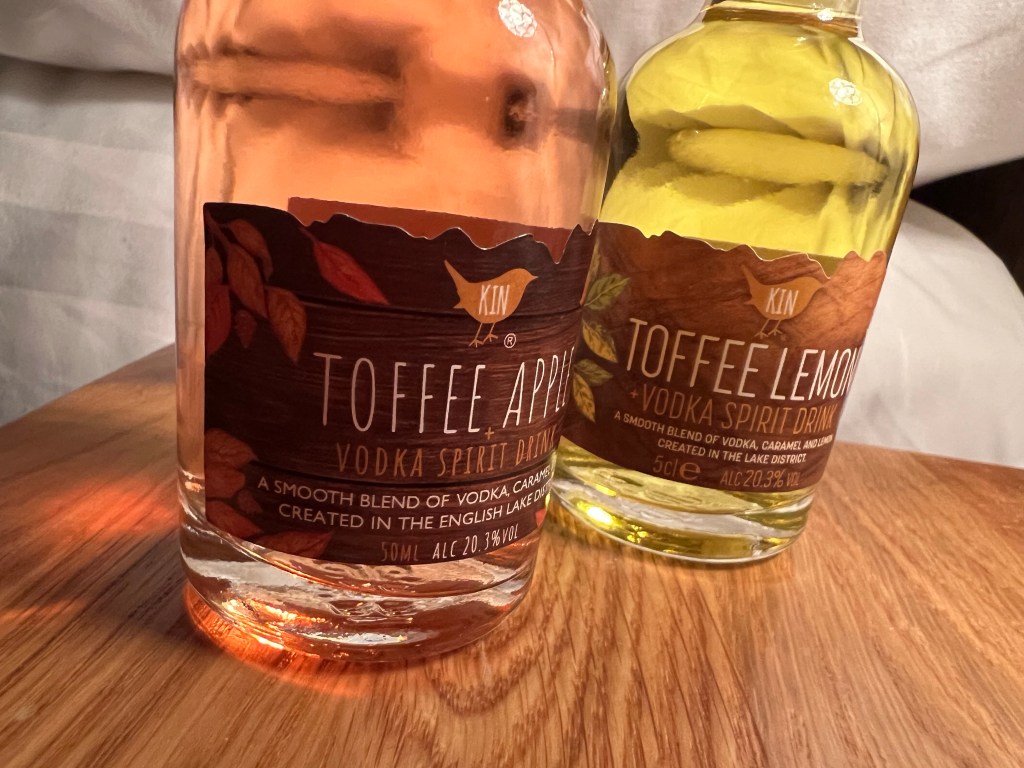
Other than that, I bought some insanely-priced hiking socks and a couple of tiny bottles of the other Kin vodka flavours so I could try them while I was here. A little toast to the first chapter of my journey ending and being such a success.
Hiking: Askham to Winter Crag via Pooley Bridge

I realise those names aren’t going to mean much to most people but it was my first day of real hiking! Very exciting! And all to places I’ve never been before. Last time I mainly stuck to the Cumbria Way, which heads through the middle of the LD, north to south, but this time I’ve started in the far east.

Last time I was here in the Lake District I used waterproof paper maps, but this time I’ve downloaded the OS map app and it’s saved a lot of room in my pack! I had to carry four giant sheets for the entire region, it’s nice to have that space free for other things now.

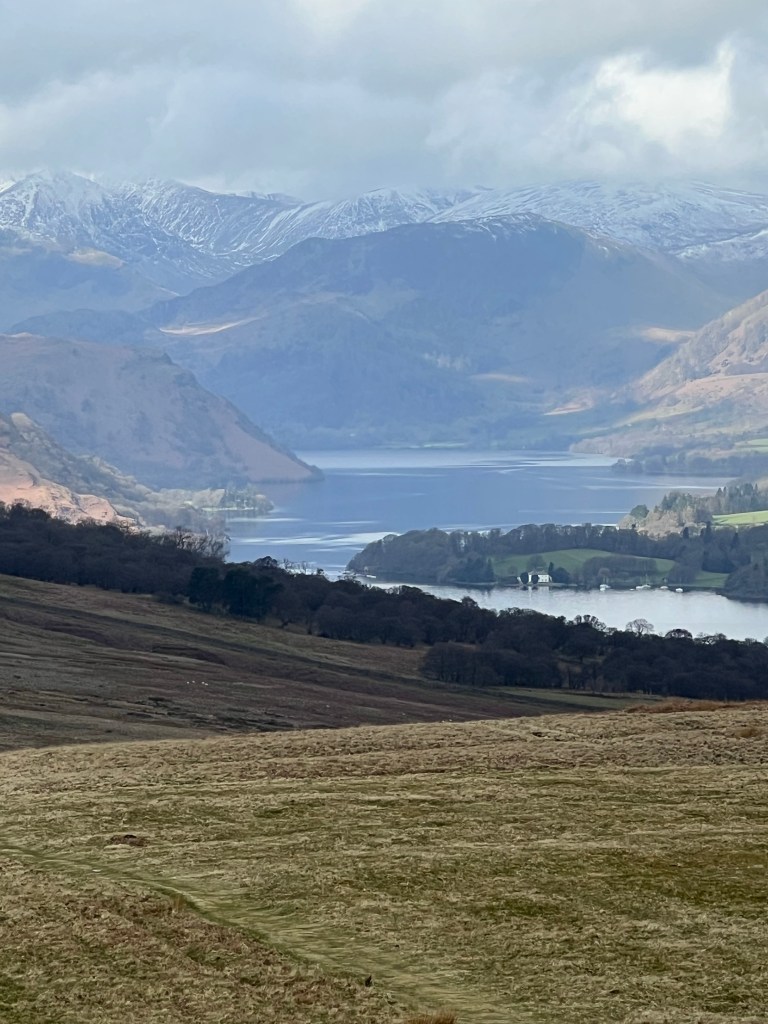
After a marginally better night of sleep I had French toast and bacon for breakfast (it’s really the best thing for my health to be leaving the Punchbowl, I think I’ve had too much of a good thing) and found an Airbnb property in a valley off Ullswater, the closest and second largest of the lakes in Cumbria.

Goodbye Askham, I’ll be back!

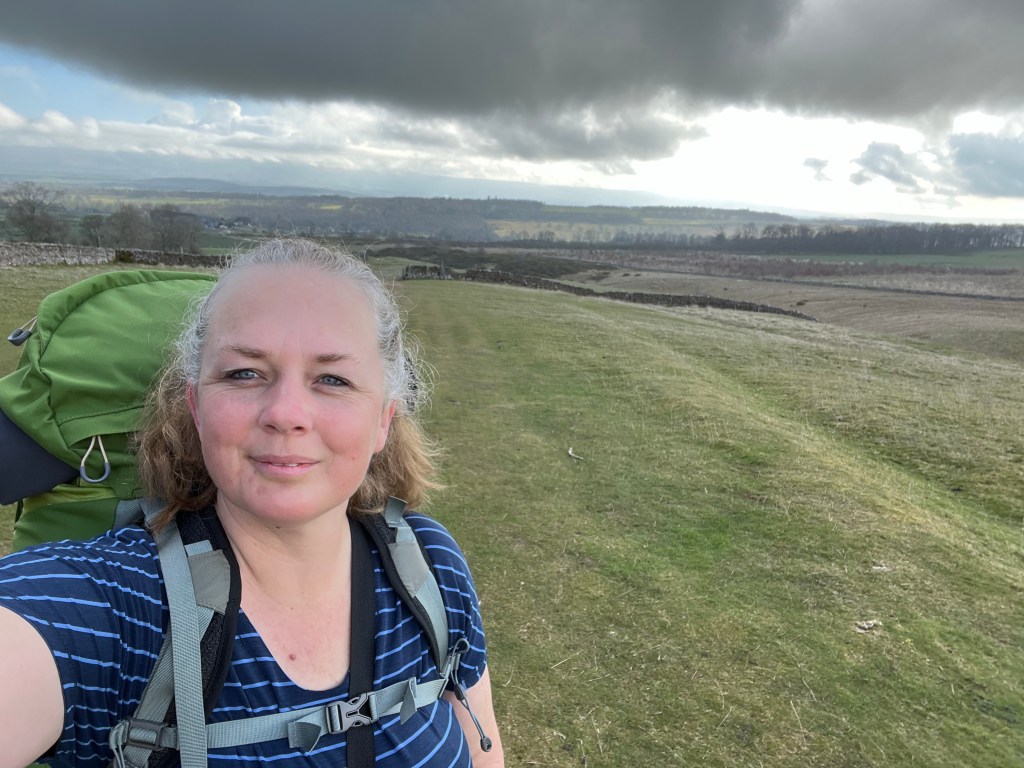
I set off in beautiful sunshine and headed west through the village. Most villages are in valleys so they are close to water, but this means every hike starts with an uphill climb, so by the time I’d got to the top of the rise I was in short sleeves, despite it being about 5 degrees.

A panorama of fells, snow-capped in the distance, ringed the horizon and I felt my spirits soar.

I took a little deviation from the path to get to the highest point on Heughscar Hill, where I had a wonderful surprise.

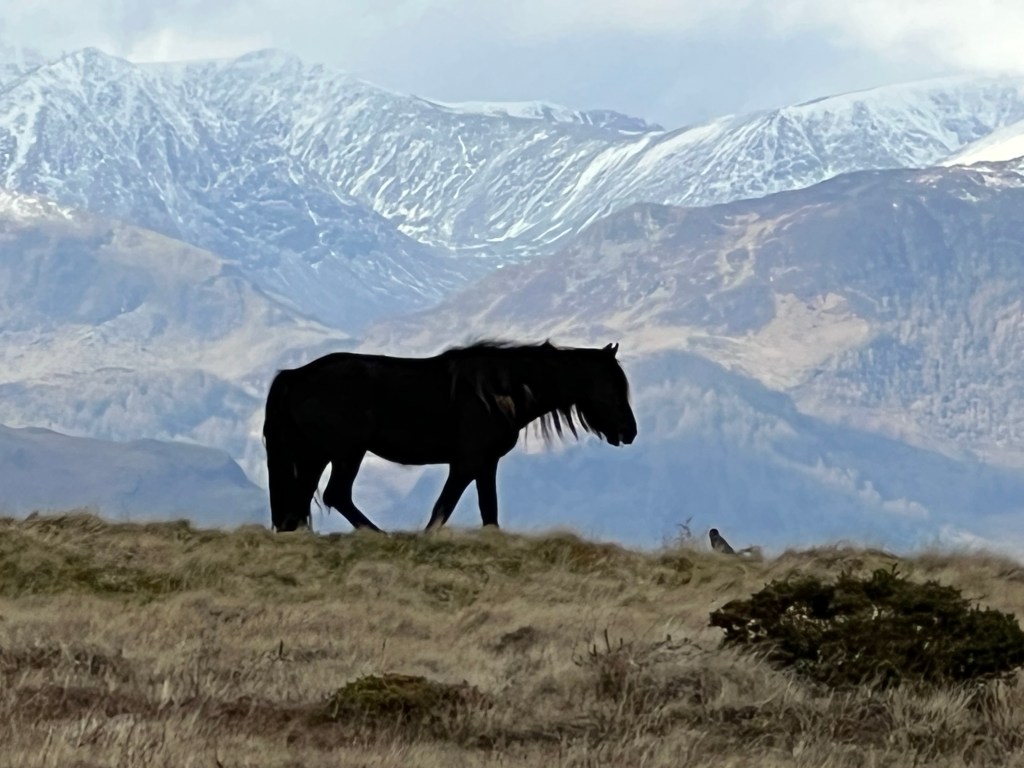
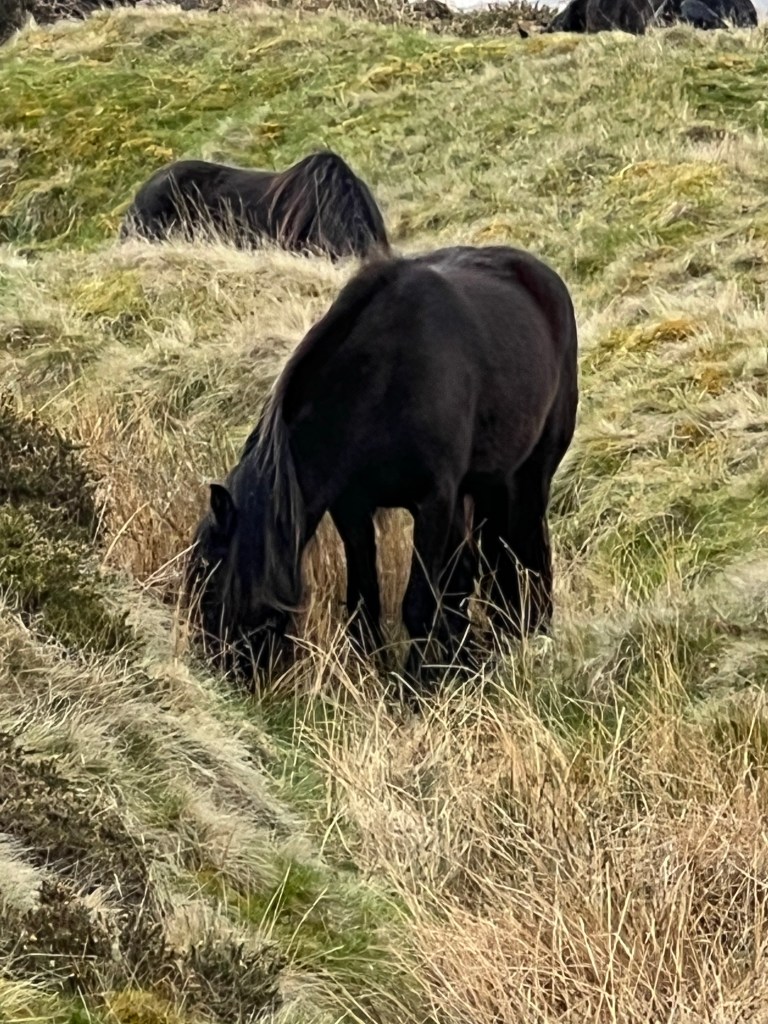
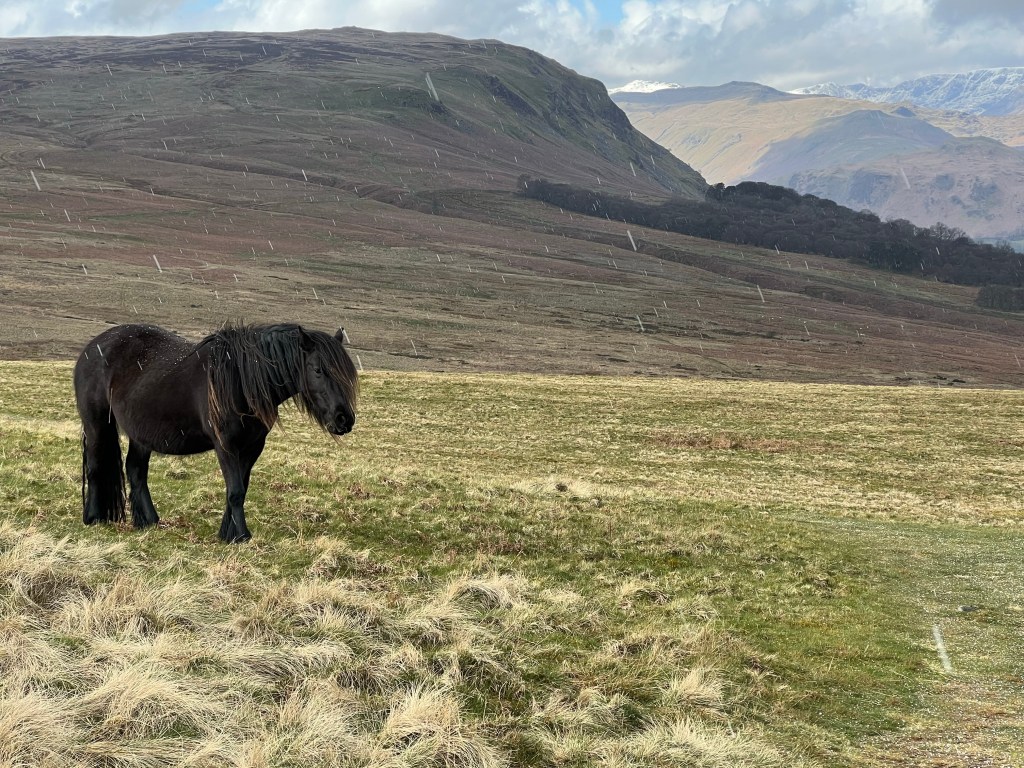
Fell ponies! I had no idea if they were the sort of wild animals you could get very close to. Like any sane person, I’m wary of animals that weigh five times as much as me, but they seemed extremely unconcerned by my presence and the track brought me closer.

…and closer
… and closer!

They had very long manes and were middle-sized, bigger than Icelandic ponies but not huge. There were 14 in total, one grey and the rest dark brown. After a bit of research I learned that wild fell ponies are quite rare and have been in England since before Roman times. Around Ullswater and north of Kendal is the best place to see them.

The it started hailing.

Fortunately the hail was tiny – smaller than a pea, so I put on my hat and coat and I was fine. It didn’t last long and it was preferable to rain as it just bounced off.

After I got to the top of the hill I started seeing other hikers in the distance, all heading towards High Street, an old Roman road and ridge that runs 20 miles from near Askham to Windermere. Walking it had been my main goal for this trip but now that I’m seeing the tiny little people on top it seems very high.

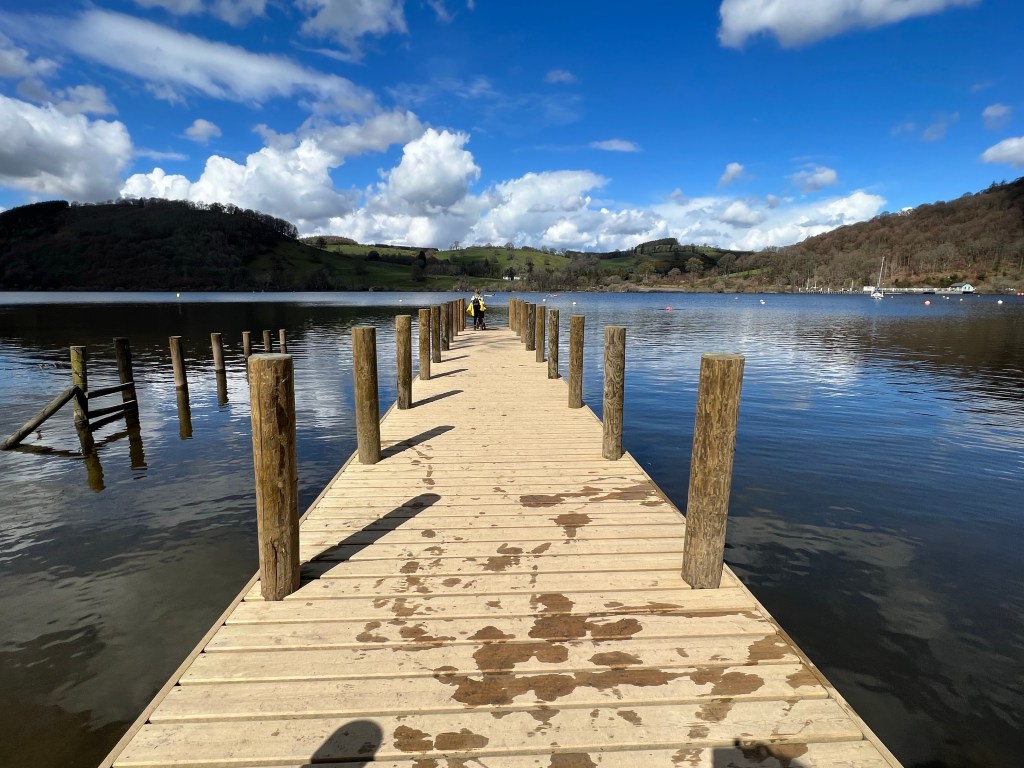
I walked over the hill and down into Pooley Bridge. The sun came out again and the small town was heaving with day trippers and campers. Ullswater is ringed with campsites and hotels, and there’s a 20 miles circuit walk of the lake.

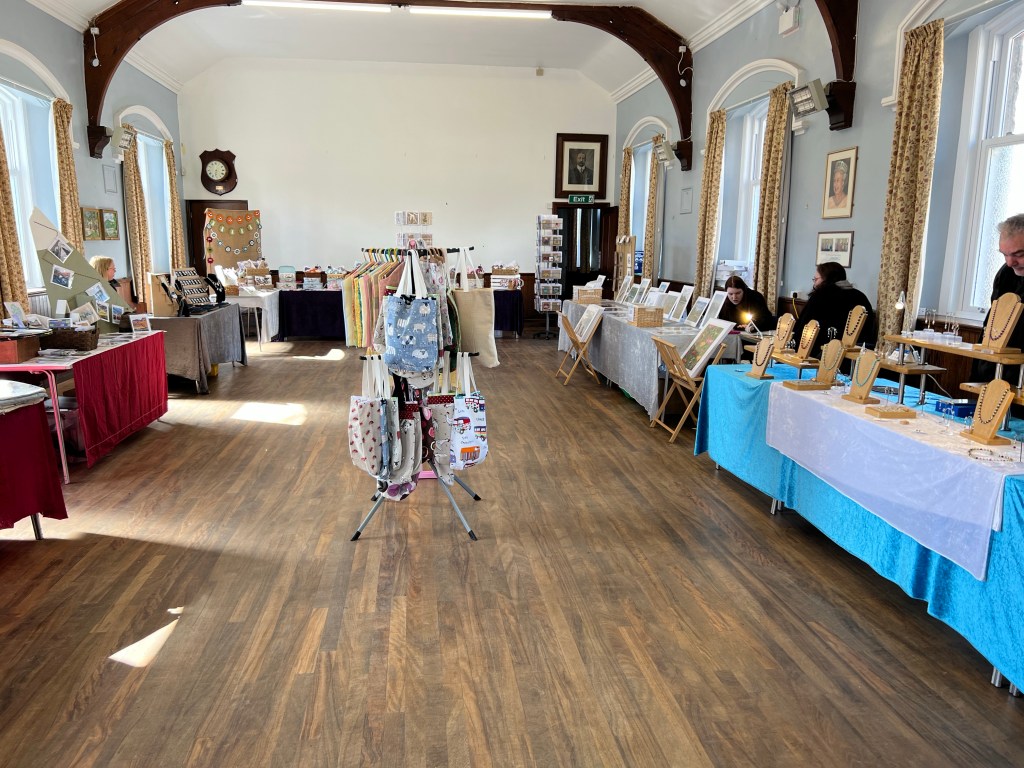
I stopped in the town and first looked at a church hall craft market, where I definitely wasn’t going to buy anything.

I bought three things. In my defence, they were all very small things.

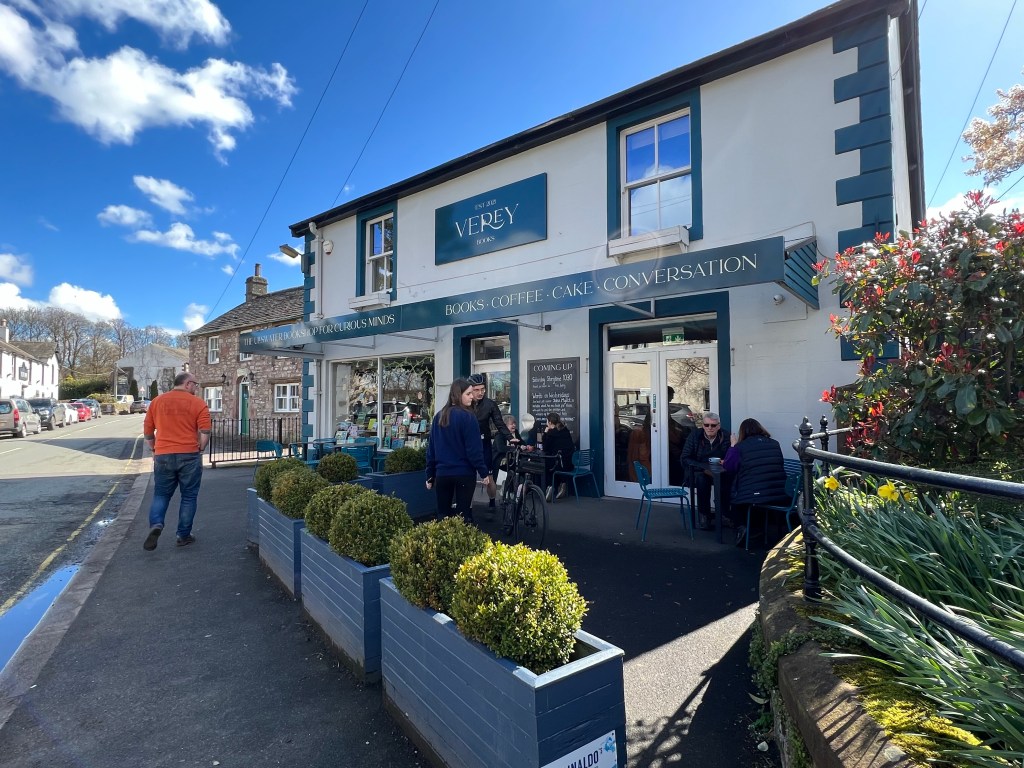
I asked one of the ladies where to get coffee and she recommended a cafe/bookstore around the corner. I can’t think of a better retail combination!

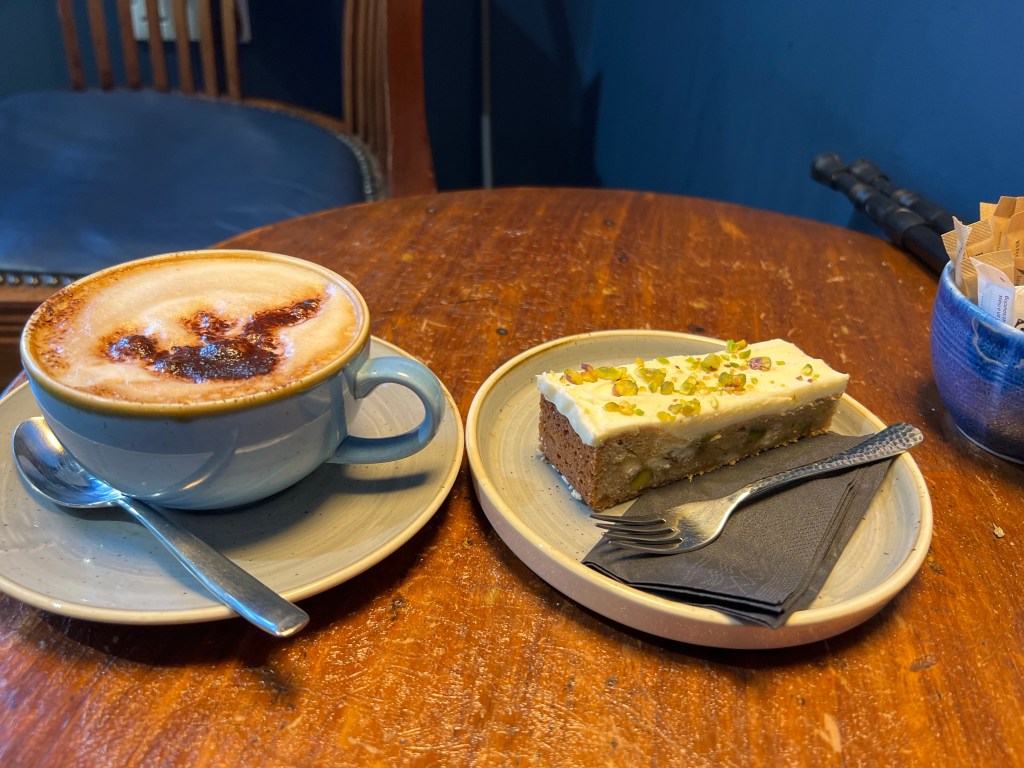
I had a very nice coffee and a slice of a citrus something-or-other.

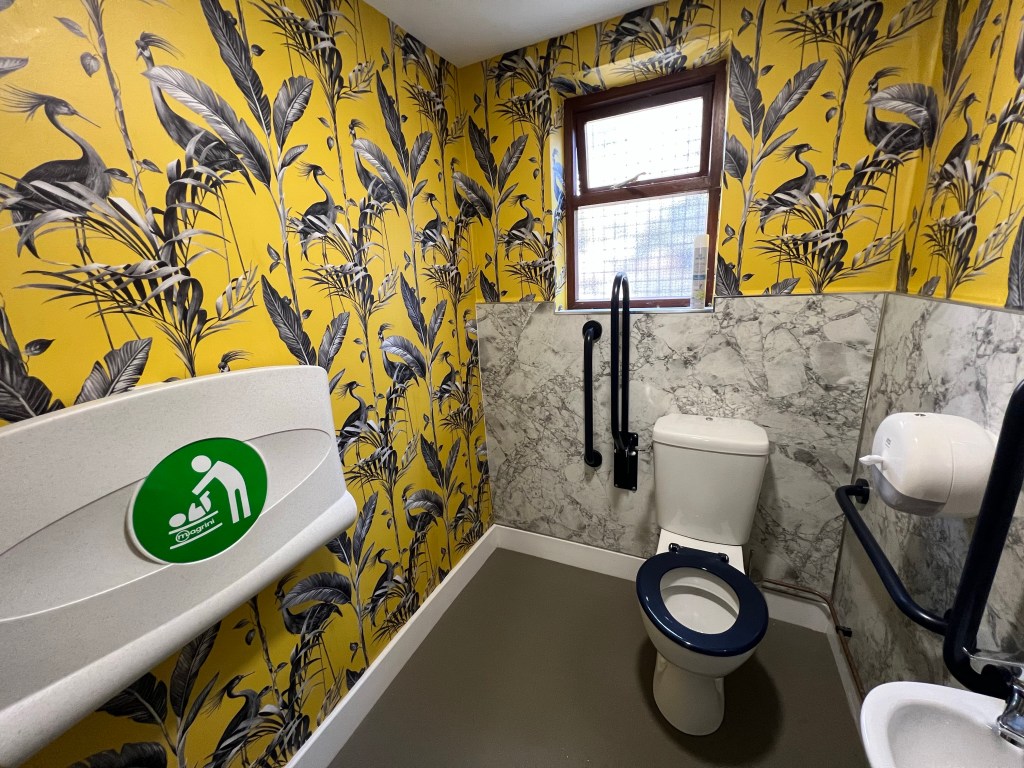
I also used the bathroom, which is something I wouldn’t normally mention on the blog, but check out this wallpaper!

Exotic!

The owner of my accommodation for the coming night had recommended talking the lake steamer down the the far end and walking from there, but I had all day (it was only 11am) and it didn’t look far on the map, so I decided to walk.

Once out of Pooley Bridge the crowds subsided to a constant stream rather than an impenetrable scrum, and I saw lots of sodden spaniels, romping retrievers and dripping dachsunds, all enjoying the water.

I looked longingly at the little sailboats out on the water, but apparently they are all privately owned, all the boats for rent were motorised or of the paddling variety.

To be honest, after two lessons this year I’m not sure I’m entirely qualified to take one out, but still…

I took a few breaks along the side of the lake as there didn’t seem to be much rush. The path eventually moved away from the water and up into the hills, where the ubiquitous streams and bogs started to appear. In Australia, if you went out bushwalking, a stream or river would be something you’d come across a couple of times a day, if you were lucky. Here it’s more unusual to not be walking over shallow running water or wading through mud at every gate.

Yay.

At one point a nice family helped me hoist my bag over a drystone wall and I got my first injury on the pointy slate but it was just a little cut on my leg.

It’s funny how distances on maps can look so short in the morning and turn out to be so very far by mid-afternoon! After several hours I still had several valleys and hills to negotiate, but I finally got to my destination; Wintecrag Farm.

Altogether I did 17km (or, less impressively, a bit over 10 miles) carrying about 10kg and only one blister to show for it. A good first day!

Chiang Mai, Thailand: A Day At The Elephant Nature Sanctuary.

This was our first trip to Chiang Mai and I hadn’t heard a bad word about it from anyone – but I also didn’t really know what to expect either, except for markets, markets and more markets. My only goal for the week was to find a decent tailor and Lea wanted to spend a day with elephants.

Flying into Chiang Mai was certainly more impressive than landing in smoggy Bangkok. Big green hills covered in tropical forest sit quite close to city and, for the second largest city in Thailand, it has a relatively small airport and few tall buildings.

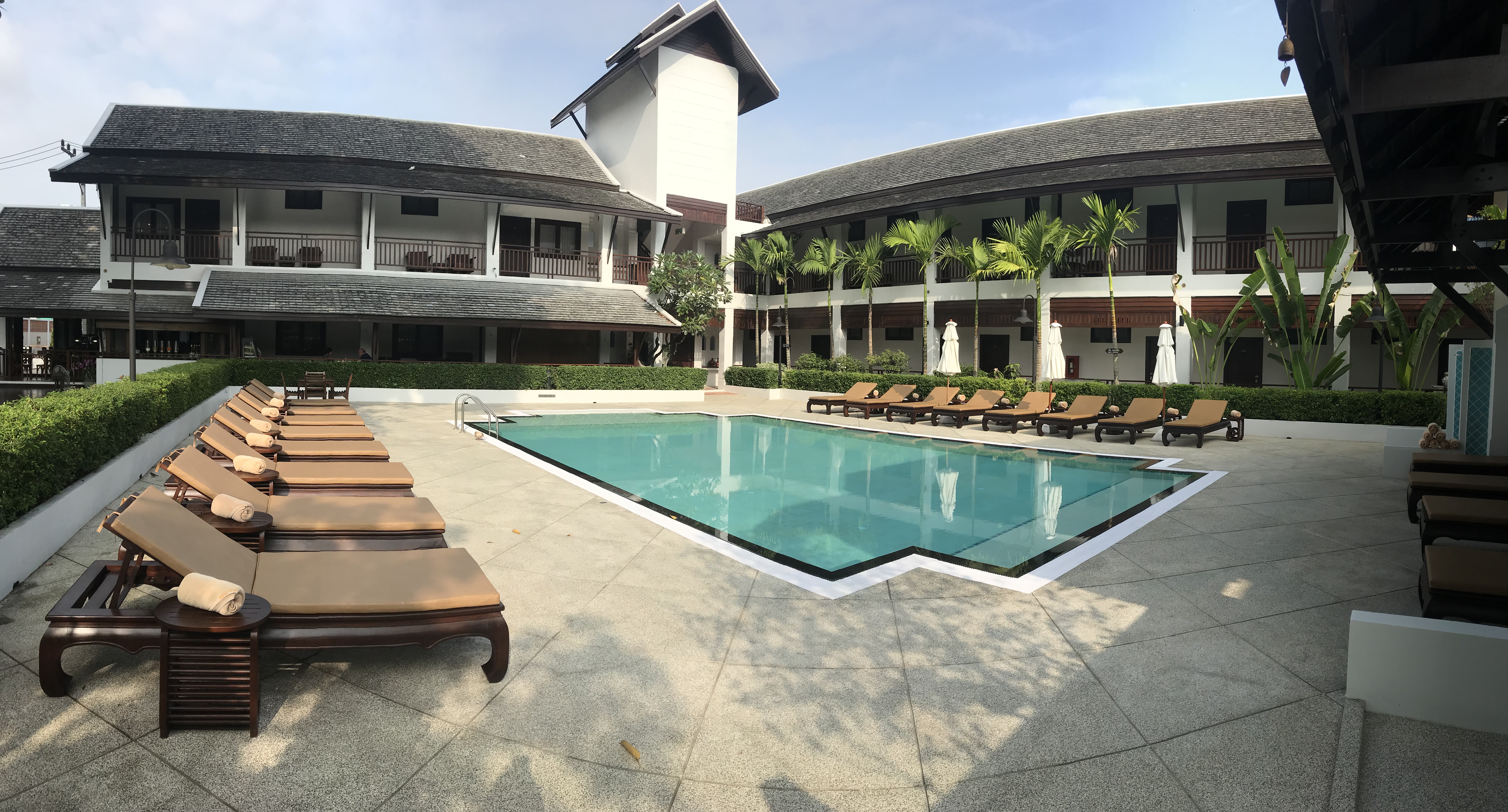
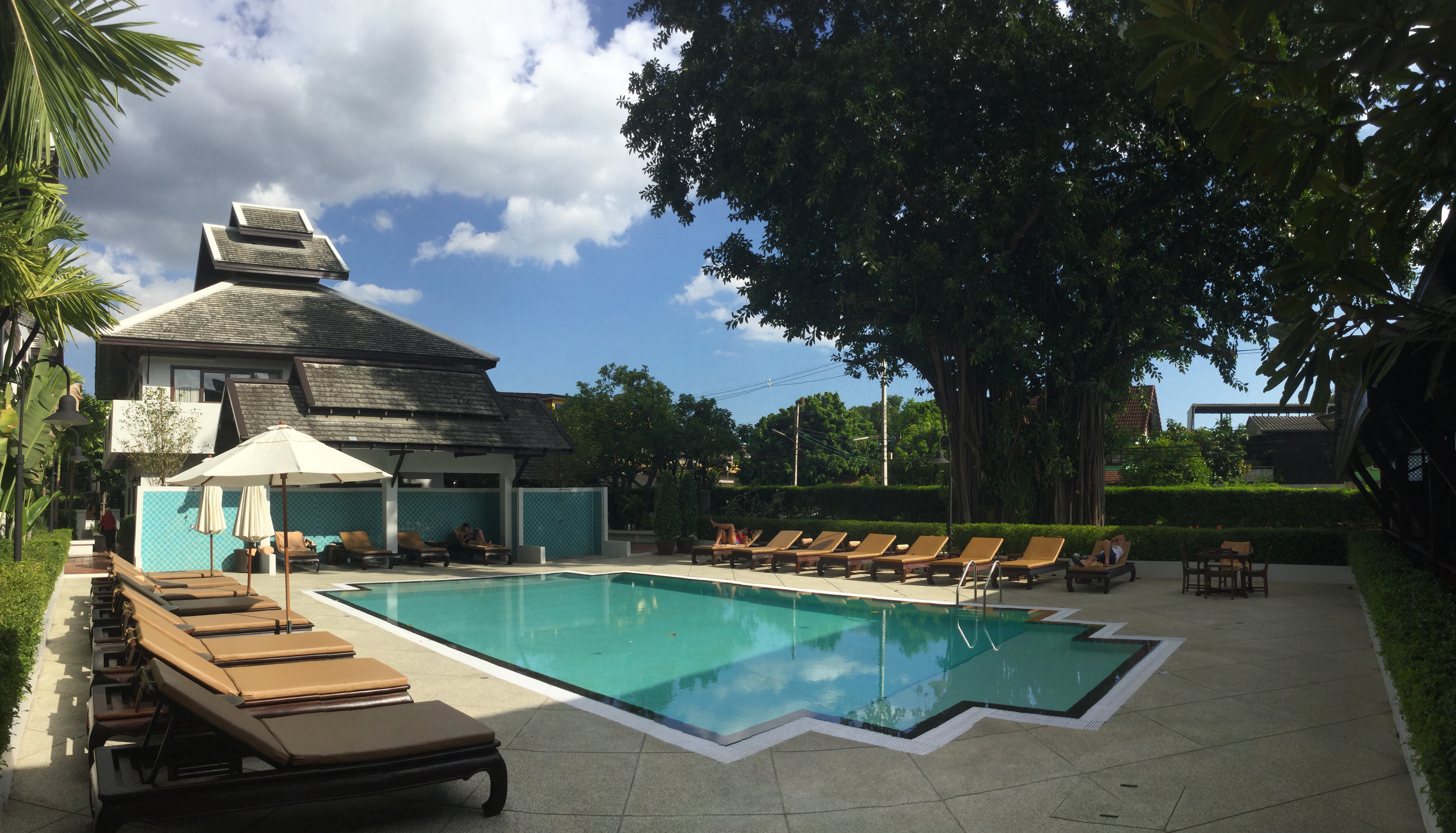
We caught a taxi to our hotel – Rimping Village. Sitting just over the Ping River from the heart of the city, the hotel had quiet and green grounds and a decent sized pool sheltered by an enormous rubber tree that was filled with epiphytes.

The hotel grounds were full of orchids of various colours, shapes and sizes as well as several frangipani trees. A little oasis in a very busy city.

One of the first Chiang Mai icons we became familiar with was the Iron Bridge (locals pronounce it ‘eye-ron’, this is important to know when telling a taxi driver where to go!), which didn’t look at that impressive to us by day but certainly attracted hordes of self-taking teenagers and fishermen at night. It also just seemed, despite being quite narrow, to be a place to just hang out. People of all ages draped themselves like wet socks over the rails as soon as dusk descended.

While the locals assured us it was winter (ha!) and did indeed walk around in jeans and jackets, it was still 34 degrees during the day and felt about 40 if you were out in the sun in the breeze-less city. We mostly stuck to the pool during the day and wandered out at night.

The Elephant Nature Park

This was our only whole day, relatively expensive, excursion in Chiang Mai. There are many elephant parks around the city but this one is exceptional as a refuge for elderly, injured, and mistreated animals (dogs, cats, buffalo, horses and more as well) and the respect and love the staff have for the animals is evident everywhere. If you are thinking of visiting an elephant sanctuary I highly recommend this one.

We were picked up at 8:30 from our hotel and our group of six for the day included a nice couple from the UK – Duncan and Fiona. During the hour’s drive out into the forest we watched a video on the rules of how to behave around elephants – most of which we ended up breaking at some point during the day.

Our guide was a funny young man named Dave whose love of elephants became more and more obvious as the day progressed. He told us about his favourite elephant dying recently of old age and how, for weeks after, he could not talk about him without crying.

Our first stop was a walk along a forest track with three female elephants. Dave and the mahouts gave us bags of bananas and sugar cane to put in the elephants’ trunks. It was a bit intimidating as they could almost eat them faster than we could get them out of the bags and being followed closely by a hungry elephant is quite a memorable experience.

Pete is pestered by a persistent pachyderm.

Next was a tasty vegetarian lunch in a hut where we waited for the next group of elephants.

We helped prepare food for elephants who were on a high-calorie diet after being semi-starved by their previous owners who wanted to keep the elephants small to make it seem that they were younger than they really were – younger elephants can be sold for more money.

We chopped up watermelon and made balls of rice and dried fruit that had to be put directly into the elephants’ mouths so they didn’t fall apart.

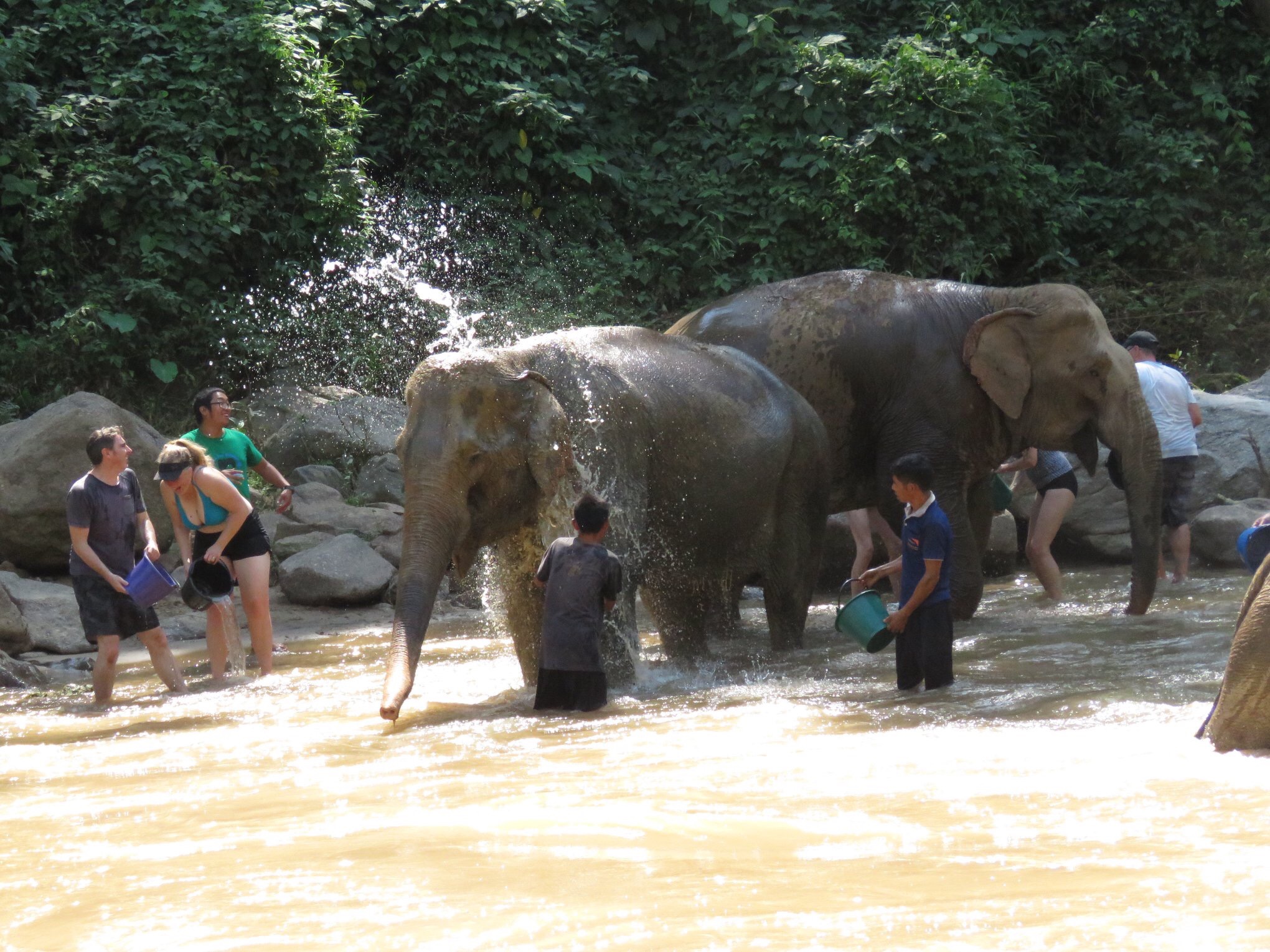
Apparently elephants don’t have to wait an hour after eating before going for a swim as we went straight to the river and got in with buckets so we could splash water all over the elephants. One went out into the deepest part of the river and completely submerged itself and rolled around. I was very glad to have my reef shoes for this part of the day as submerged and slippery rocks were a bit of a hazard.

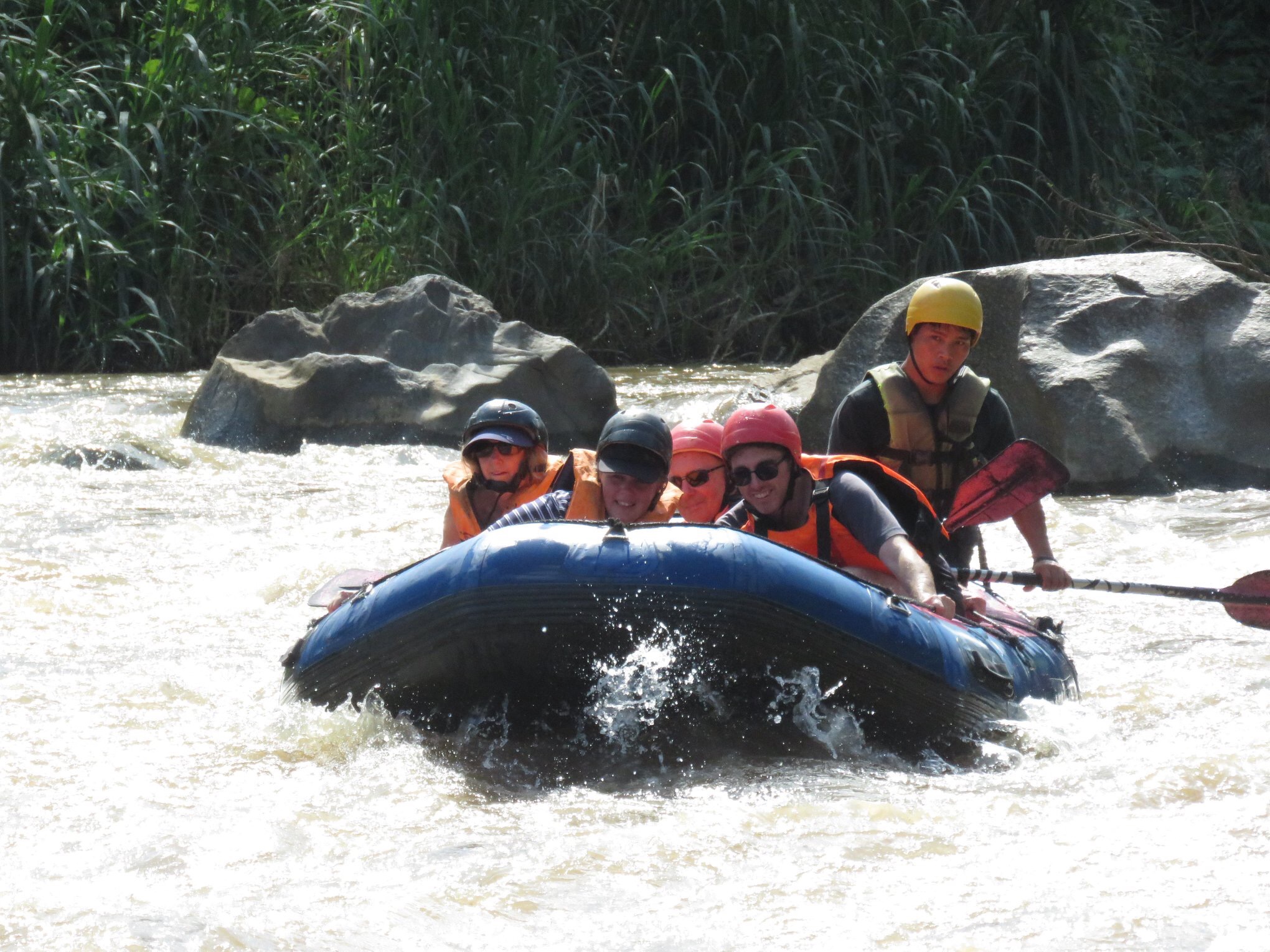
To get to the main camp we got into rubber boats and did a little bit of white-water rafting down the river, passing some bathing elephants along the way.

The Elephant Nature Park lets most of its elephants roam free around the reserve with their mahouts, who are there to protect and help feed them. Newcomers are restricted to the inner grounds and sleep overnight in shelters with sand heaps(for lying against), water and four nightly feedings.

Dave with one of the oldest elephants at the park. I think she was in her 80s!

It was interesting to learn that the elephants at the park choose their mahouts rather than the other way round. Some mahouts come with their elephants to the park and some meet when they arrive. All the mahouts seem to spend most of the day lying in little cabana shelters or wandering next to their elephant. It would have been very interesting to talk to one of them about their job.

The last thing we did was walk around the sanctuary and see the newer or more injured elephants. One was completely blind thanks to a cruel owner’s punishment. Another had a deformed foot after stepping on a land mine. While the stories at the ENP are often tragic, it is heartening that places like this exist and so many people come to volunteer their time to take care of the animals.

An incredible and emotional day that we all enjoyed!

To finish, here are a few of the gorgeous dogs that are up for adoption should anyone visit the sanctuary and want to take them home.

Every one of the 600+ dogs at the sanctuary is named and many are adopted by people in other countries, especially Britain. No surprise to me after seeing all the dogs in the UK!

Here Comes The Planet 69 – Split and Hvar (2018)

We visit the Croatian town of Split and its nearby island Hvar.

More info about Pičigin

Interesting articles about cruise ships in Dubrovnik:
(1) Crowds and cruise ships have ‘ruined’ Dubrovnik
(2) Has Dubrovnik solved the problem of overcrowding from cruise ships?

Click here to read Amanda’s entry about this part of our trip!